
Dierks Bentley feat. John Anderson & Riley Green – “Broken Branches”
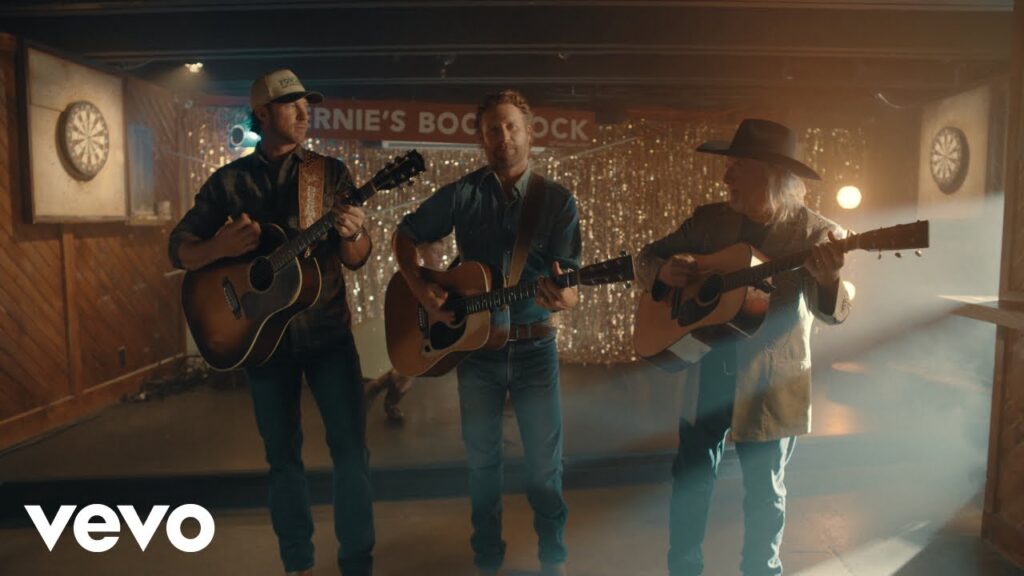
“Broken Branches” is more than a collaboration — it’s a generational torch pass, lit with sorrow and reverence. When you put Dierks Bentley, John Anderson, and Riley Green on a track together, you’re not just making a song — you’re stitching together a story that spans decades of country grit and grace. This one’s all roots, no gloss. From the first guitar strum, you feel it — the weight of time. The arrangement is sparse but full: acoustic guitar and steel weep together under a slow-moving rhythm that never tries to rush the pain. It’s the kind of track you play with the windows down on a cold morning, just to feel something real again. The title “Broken Branches” works on every level. It’s about family trees damaged by time, distance, and bad choices. It’s about the pieces we try to mend — and the ones we learn to live without. It’s personal, but the kind of personal that hits everybody square in the chest. Bentley handles the first verse with that smooth, modern-outlaw touch he’s perfected — a little weathered, a little clean. Anderson steps in like a damn ghost from the glory days, voice cracking in all the right ways, full of worn-out wisdom. And Riley Green brings it home with that youthful but grounded tone, tying the old and the new together like a backroad fence post lashed with baling wire. The chorus lands with quiet devastation:“Some names carved in the bark are fading / Some stories we never got to hear / Broken branches don’t grow back / But I still keep ‘em near.” That’s not songwriting — that’s truth. The kind you hear at funerals and family reunions. The kind you carry with you long after the music stops. Production stays respectful — no over-polish, no Nashville pop shine. Just space, breath, and emotion. The harmony sections are raw enough to feel human, and clean enough to honor the craftsmanship. You can hear the air in the room, and that’s exactly how it should be. This song isn’t made to chart. It’s made to last. To be played when you’re sitting in your truck outside the house you grew up in, wondering why things couldn’t stay simple. It’s made for the folks who’ve got pictures in shoeboxes and empty chairs at the table. “Broken Branches” is a slow-burning tribute to the things that made us — and the pieces we carry when they fall apart. And with these three voices on the mic, it’s as close to country gospel as modern outlaw music gets.
🎵 Adam Gabriel & The Cavaliers – “Still Standing”
There’s a lot of noise out there — especially in the independent outlaw world — but every now and then, a voice cuts through it like a bootheel through brush. That voice belongs to Adam Gabriel, and in “Still Standing,” he doesn’t just introduce himself — he declares himself. This isn’t just a song about survival. It’s a fist raised from the dirt, bloodied but proud. From the first few bars, you get the feeling this track’s gonna hit differently. The guitars don’t strut — they stomp. The percussion’s got that slow, heavy roll that feels like it’s dragging chains behind it. It’s southern rock swagger dipped in molasses — thick, deliberate, and full of fire. Gabriel’s voice is gravel-drenched and ragged in all the right ways. It’s not perfect — it’s honest. You can hear the miles in his throat. The road. The struggle. The failure. And more importantly — the refusal to let any of that define him. When he hits the chorus — “Still standing, still fighting, still got more to give” — it doesn’t sound like a line. It sounds like a damn oath. Lyrically, the song walks that fine line between vulnerability and defiance. He’s not pretending everything’s okay. He’s not pretending the past didn’t try to break him. But he’s also not letting it win. There’s power in that — especially in a genre where too many guys are either drowning in self-pity or chest-thumping without a cause. “Still Standing” feels like it comes from the middle — the place where real people live. The folks who’ve taken the hits, but keep showing up. The ones who know what it feels like to be down to their last dollar and last ounce of pride — and still lace up their boots and face the damn day. Production-wise, The Cavaliers give Gabriel a rock-solid foundation. There’s a unity in the sound — no one overplaying, no gloss layered on top. Just grit, soul, and a slow-building storm that leaves room for the words to land. This song might not top charts. Hell, it might not even hit the mainstream. But it will hit people — the right people. The ones who need to hear that they’re not the only ones still scraping by, still standing tall even when the wind won’t let up. Adam Gabriel isn’t just another outlaw voice trying to be heard. With this track, he’s proved he deserves to be listened to.
Shooter Jennings feat. Waylon Jennings – “Songbird”
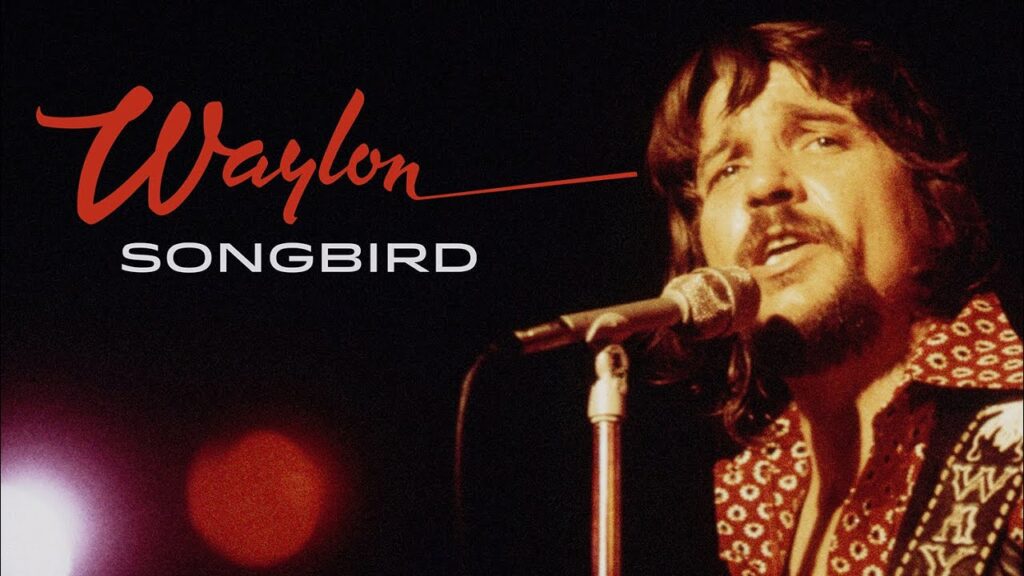
“Songbird” hits like a message from beyond the grave, and damn if it don’t make the hair stand up on your arms. Shooter Jennings teams up with his legendary father, Waylon, to breathe life into a track that’s less about music and more about legacy. It’s haunting, heartfelt, and built like a slow-burning fire in the corner of a dimly lit barroom. You hear that familiar grit in Waylon’s voice — the one that shaped generations of outlaws — and you can’t help but stop what you’re doing. He’s not just singing. He’s testifying. Shooter doesn’t try to outshine him. Instead, he weaves his own soul into the gaps, like a son finishing a story his father started long ago. Musically, “Songbird” moves slow, but not sleepy. It’s wrapped in pedal steel and piano, carried on a breeze of acoustic guitar that feels more Southern gospel than honky-tonk. There’s no rush. No flash. Just weight. You can almost smell the cigarette smoke and old wood in the studio. The real heart of the track lies in its tone. This isn’t a power duet or a flex. It’s Shooter sitting across from the ghost of his father, saying, “I remember.” And Waylon? He answers, not with thunder — but with calm, steady truth. “Songbird” sounds like it was always meant to exist. Like it was just waiting for the right moment, and the right bloodline, to bring it out of the ether. Lyrically, it’s tender — not the kind of thing either Jennings is most known for, but that’s what makes it special. “Fly away, songbird, into the night / Let your melody carry me through the fight” — that’s not outlaw bravado. That’s a man looking for peace. There’s no doubt about it: this is a song born of love, loss, and the kind of reverence you only carry for someone who shaped your soul. It’s raw in a way that doesn’t beg for attention. It just is. And that’s about as outlaw as it gets. “Songbird” doesn’t scream. It whispers. And in doing so, it echoes louder than most tracks ever could. This is blood, spirit, and southern grace all stitched into one damn fine song.
Cole Goodwin – “Girlfriend’s Got a Boyfriend”
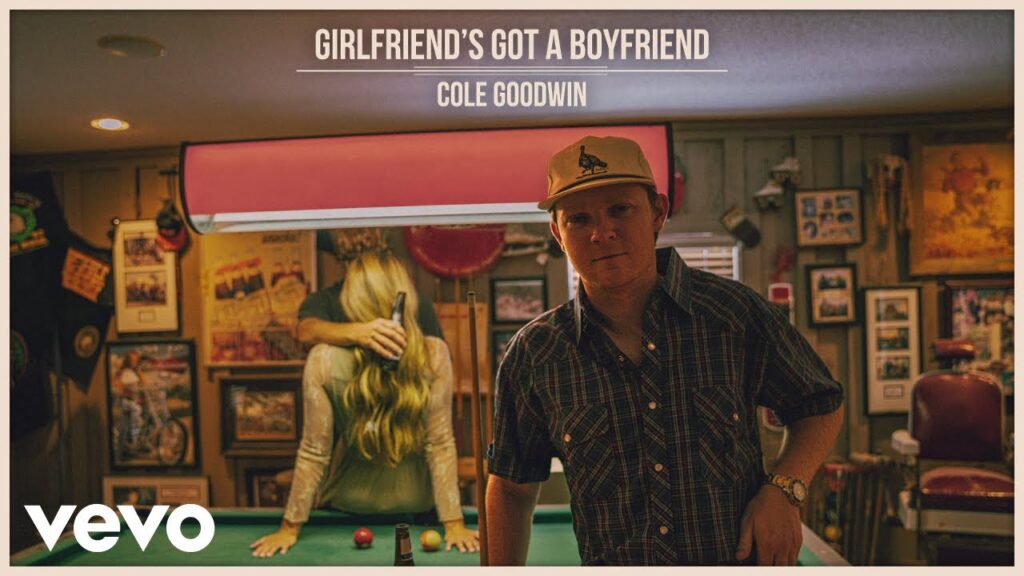
Cole Goodwin’s “Girlfriend’s Got a Boyfriend” is a honky-tonk gut punch with a sly grin — the kind of song you laugh at until the truth catches up with you. On the surface, it sounds like a bar joke wrapped in a bar chord. But underneath, it’s pure classic country: a man trying to make sense of his feelings while drowning them one beer at a time. This one’s built to be played loud in a bar that doesn’t serve cocktails. The guitar riffs are lean and mean, with that slightly twangy Telecaster snap that says “trouble walked in.” The rhythm section shuffles like it’s had too much to drink but still knows how to dance. Goodwin’s voice ain’t polished — and thank God for that. He’s got a touch of gravel in the throat and a whole lot of ache just under the surface. Lyrically, he’s walking that tightrope between clever and bitter. Lines like “Guess she found her a fella with a truck that ain’t broke” and “He wears cologne and I wear stains” say everything you need to know about the narrator. He’s down, but he ain’t done. He’s still got enough spite in him to keep singing — and enough charm to make you sing along. What makes this one stand out isn’t the storyline — it’s the delivery. Goodwin doesn’t wallow. He swings. He leans into the absurdity of it all. The hook lands hard and catchy: “Girlfriend’s got a boyfriend — and he sure as hell ain’t me.” That’s country gold right there. It hurts, it’s funny, and it’s true. The production’s tight but not sterile — sounds like it was recorded in a room with neon lights and sawdust on the floor. There’s room for every instrument to breathe, and nothing feels forced. It just fits — like a pair of boots that’ve been through hell and still kick. What we’ve got here is an anti-love song dressed like a jukebox hit. It’s got all the ingredients of a future barroom classic: humor, heartbreak, and just enough redneck wisdom to keep it grounded. Cole Goodwin might not be a household name — yet. But if he keeps turning out songs like this, he’s gonna have a damn hard time staying unknown.
Hudson Westbrook – “Texas Forever”
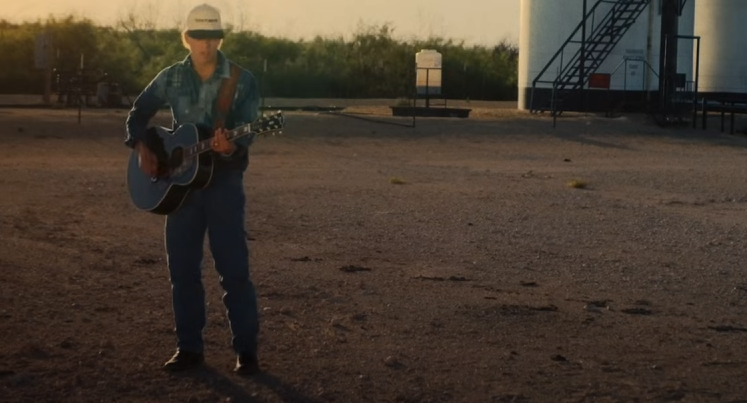
“Texas Forever” lands like a dust storm rolling across the Lone Star State — unapologetically big, heartfelt, and sticky with the pride of roots. It’s the kind of title track meant to define a moment, and for Hudson Westbrook, it arrives as both a love letter to home and a reflection on life’s road. He grew up writing with friends before dipping into the major-label machine; this song captures that tension exactly en.wikipedia.org+9musicrow.com+9youtube.com+9. Instrumentally, the track feels warm and organic — mandolin, guitars, chills of fiddle — the kind of arrangement that honors red-dirt tradition while letting the voice lead. Westbrook’s voice has that raw, slightly nasal drawl — Texas through and through, but delivered with surprising emotional nuance . When he sings, “Well, the highway’s in my veins, but you’ll always have my heart,” he stakes his claim: he may ramble, but his roots — and love — aren’t going anywhere holler.country. Lyrically, there’s a genuine simplicity that cuts. He isn’t shaping lavish metaphors — he’s painting his world plainly. Lyrics like “Where we grew up, fell in love, is forever in my bones” aren’t just poetic: they feel like truths held in sweat and sunburns. It’s this grounded sincerity that gives the song its punch. The song was penned with Neil Medley and Andrew DeRoberts and produced by Lukas Scott, giving it both collaborative depth and sonic polish holler.countryfullaccessdetroit.com+3musicrow.com+3holler.country+3. It’s the kind of refined songwriting that’s still held together by clothespin grit and hometown pride. But what really makes “Texas Forever” resonate isn’t its production — it’s the feeling it leaves behind. It works on two levels: a personal vow to someone special, and an anthem to all the places and people who shaped him. For a debut title track, that’s committal — and brave. In a time when country songs spin between pop sheen and retro kitsch, this stands firm. It’s not flaunting trends — it’s honoring what matters. Whether this becomes a crossover radio hit or a folksy festival favorite, it speaks with the voice of someone who’s lived both the amber sunrise and the long highway nights. “Texas Forever” might not stop you mid-scroll, but it’ll hit when you listen through the night — the kind of song that finds its way into the memory well and stays there.
Cody Jinks – “Found”
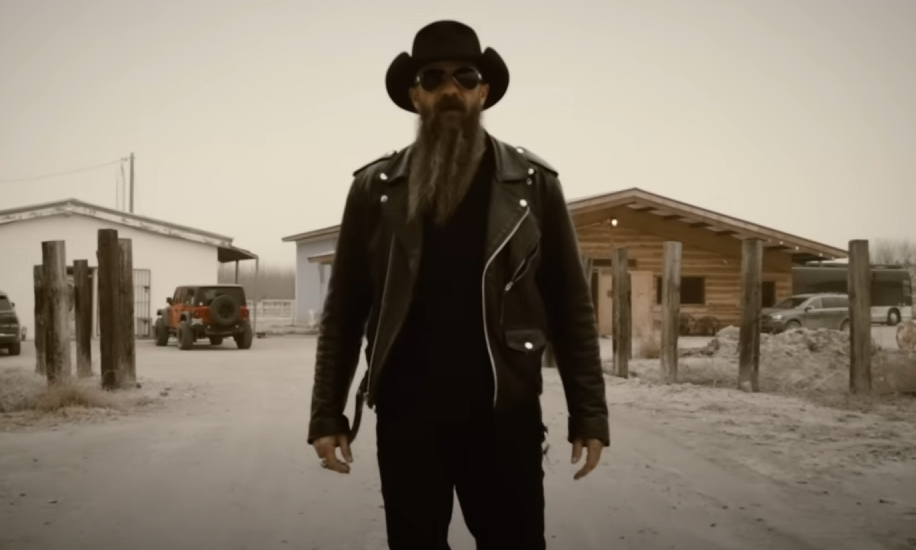
Some songs find you when you’re looking for trouble. Others find you when you’re finally ready to come home. “Found” by Cody Jinks is the latter — a slow-burn outlaw hymn for the battered soul who’s finally tired of fighting everything, including himself. It ain’t flashy. It ain’t loud. But it hits you like a damn revelation. Right out of the gate, Jinks lays it bare — that deep, oak-barrel voice of his cutting through like a sermon whispered through cigarette smoke. There’s no filter, no fake shine. Just gravel truth, poured out steady over a track that sways like an old rocking chair creaking on a front porch you didn’t think you’d ever sit on again. “Found” isn’t about redemption so much as recognition. It’s about realizing that maybe the hell you’ve been running from is the one you built yourself — and maybe the person who saves you is the one who’s been waiting patiently at the door the whole time. That’s the beauty of Cody’s writing. He doesn’t lecture. He remembers. He pulls the pain out slow, like a splinter that’s been festering under the skin for years. Musically, this track is all restraint — clean guitar lines, soft snare brushes, and a backing arrangement that knows when to speak and when to shut up. It leaves plenty of room for the vocals to stretch, and for the listener to sit in the silence between phrases. There’s a humility in the way it’s played — like the band knows this one ain’t about them. It’s about that moment when a man lays his weapons down. Lines like “I lost everything that ever meant anything / And that’s when I found you” don’t just rhyme — they gut you. Because who among us hasn’t had to lose it all before we saw what mattered? This ain’t a comeback song. It’s a come to terms song. And in the world of outlaw country, where grit sometimes outweighs grace, it’s a rare and powerful thing to hear a man say: “I was wrong. And I’m damn lucky you stayed.” “Found” belongs in the back half of a record — the quiet track you almost skip, until one day it hits you right in the gut when you least expect it. It’s a truth-teller. A lifeline. The kind of song you don’t blast — you hold onto.
Oliver Anthony – “Scorned Woman”

There’s a crack in Oliver Anthony’s voice that feels like it came from somewhere deeper than the throat. “Scorned Woman” isn’t just a breakup song — it’s an autopsy of heartache. And not the poetic kind. This is the version you whisper to your buddy on the tailgate with a half-drained bottle of something strong between you. This is the part of love they don’t put in Hallmark cards — the bitter, the burnt, and the broken. Anthony’s vocals are front and center here, as raw and unfiltered as moonshine in a mason jar. His delivery always leans into the ache, but in this track, you can hear the emotional debris dragging behind every syllable. It’s not performative pain — it’s lived-in, like he wrote it right after she slammed the door for the last time. Musically, it’s sparse, letting space do the talking. Fingerpicked acoustic guitar, maybe a touch of slide if you’re listening close. It’s got that Appalachian soul that Anthony’s been carving into his work — the kind of sound that feels like it came down off a mountain wrapped in smoke and regret. What makes “Scorned Woman” hit so damn hard is its simplicity. There’s no need for metaphor or clever turns of phrase. Just cold, direct honesty: “You said you loved me, but I reckon that changed / Just like the wind when the weather gets strange.” It’s not a lyric meant to impress — it’s meant to punch. And in that way, it embodies the outlaw spirit better than a thousand songs with rhinestones and leather jackets. Anthony isn’t out here playing a role. He’s telling the truth — even if it’s ugly. Especially because it’s ugly. You get the sense that writing this wasn’t a career move — it was survival. A way to bleed out what was poisoning him inside. That’s the best kind of outlaw song: the kind that’s not written for anyone, but just spills out because it has to. “Scorned Woman” might not be the track that fills stadiums, but it’s the one that’ll find folks in their darkest hour and say, “Yeah, I’ve been there too.” And sometimes, that’s more valuable than a platinum plaque. This song doesn’t just cut deep — it stays there.
Sierra Ferrell – “Dollar Bill Bar”

Sierra Ferell – “Dollar Bill Bar” In “Dollar Bill Bar,” Sierra Ferrell invites us into a neon-lit haunt where heartbreak’s been on tap for decades. It’s a jukebox joint soaked in character — and the kind of place where the regulars know every note before the first chord lands. Ferrell walks through it all like a ghost with a tambourine, barefoot on the broken floorboards of American roots music, carrying the weight of a past she sings through instead of about. The song opens with a loping groove and dusty fiddle, but Sierra’s voice does the heavy lifting. She doesn’t just sing — she glides, like someone who’s been watching the barflies from a corner booth for too long. There’s a theatrical sparkle in the way she bends vowels, a kind of jazzy Appalachian slur that feels both vintage and alien at once. In lesser hands, it might be kitsch. With Ferrell, it’s barroom gospel. Lyrically, “Dollar Bill Bar” lives somewhere between a smirk and a sob. She sings about desperation with a wink, wrapping working-class heartache in rhinestone humor. The title itself is a hell of a metaphor — the kind of place where the currency is thin, cheap, and crumpled, just like the dreams that pass through the door every night. “Trail of Flowers,” the album it rides in on, might carry the scent of hope, but this track is where those flowers get stomped under boot heels and spilled bourbon. Production stays smartly out of the way, letting old-world instrumentation do the talking — upright bass, brushed snare, maybe even a saw sneaking around the edges. It’s a throwback, sure, but not cosplay. Ferrell isn’t mimicking tradition — she’s haunting it. There’s a sweet sadness in this one, but also a shrug — like she knows there’s no use trying to change the scene, so she’ll just write a damn good verse about it instead. If country music is a church, “Dollar Bill Bar” is the dive bar confessional out back, where the sinners know more about grace than the preachers ever will.
David Allan Coe – “Willie, Waylon And Me”
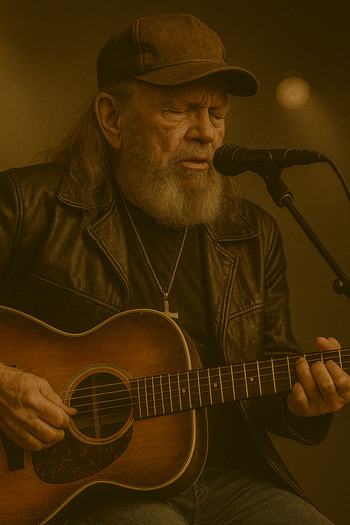
If there’s ever been a barroom Bible verse for the outlaw country gospel, it’s “Willie, Waylon and Me.” David Allan Coe didn’t just write a song — he etched his name into the damn outlaw constitution with this one. It’s a declaration of independence, a rebel’s roll call, and a backhanded love letter to the Nashville system that never quite knew what to do with a man like Coe. The song kicks in like a slow burn — spoken word over a steel guitar simmer — before Coe starts dropping names like a man tossing lighters into gasoline. “Willie and Waylon and me” isn’t just a trio. It’s a movement. It’s code for artists who didn’t just push boundaries — they kicked ‘em down and poured bourbon on the wreckage. Musically, the track is deceptively simple: a laid-back Southern groove, steel and electric guitars weaving between each other like two old friends at a late-night jam. But the real weight here is in the delivery. Coe’s voice is like a busted bottle — sharp on the edges, but damn if it doesn’t pour out smooth. He’s not just telling a story; he’s issuing a challenge. He recounts his own outsider’s journey — the Nashville politics, the backhanded compliments, the circuitous route through biker bars and prison stages. And he does it with a swagger that teeters right on the edge of self-parody, but somehow never falls. That’s part of Coe’s strange magic — he could tell you he invented country music, and you’d still want to buy him a drink afterward. There’s a lot of myth-making here, sure. But in outlaw country, myth is the music. What matters is that you believe it when it’s playing — and Coe makes damn sure you do. When he name-drops “The Mysterious Rhinestone Cowboy,” he’s not just referencing an old character — he’s reminding you that before the mainstream took a shine to weird, he was already out there, rhinestones and all, playing to rooms that didn’t know what hit ‘em. “Willie, Waylon and Me” is less about those two legends and more about carving space beside them — demanding to be heard, even if the world isn’t asking. It’s a boot to the chest of country conformity, and a reminder that sometimes the best music comes from the ones too wild to tame. It’s not humble. It’s not clean. But it’s damn sure outlaw.
Flatland Calvary – “New American Dream”
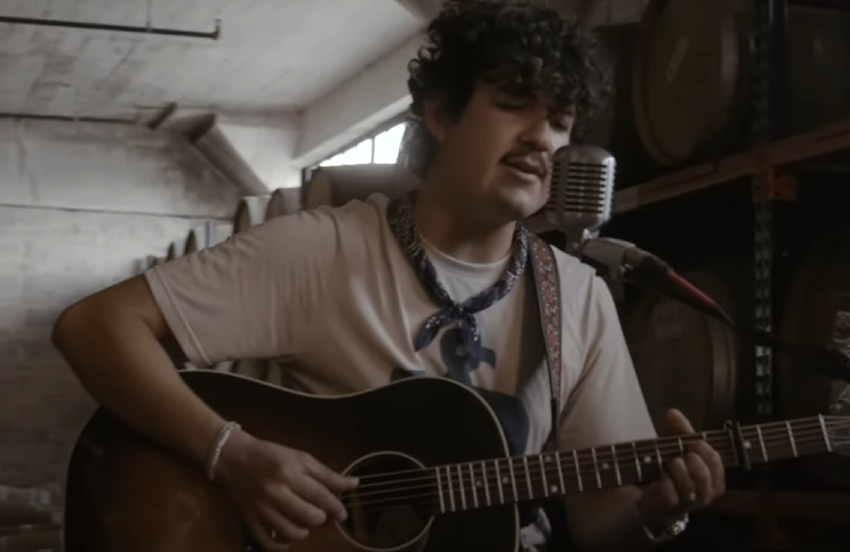
Flatland Cavalry’s “New American Dream” ain’t waving any flags, but it damn sure is saying something worth hearing. It’s not protest music in the conventional sense — there’s no chanting, no rallying cry — but it’s one of the most honest reckonings with modern-day disillusionment to come out of country in years. The song walks that dusty line between nostalgia and reality, laying down the truth like a well-aimed horseshoe across a busted pickup’s hood. Sonically, this one rolls in slow — not mournful, but measured. The guitars shimmer with restraint, like they’re trying not to wake up something ugly. There’s a melancholy woven into the rhythm section, a steadiness that feels more like survival than comfort. This isn’t about giving up; it’s about understanding what got lost. The lyrics bite without barking. “We’ve traded the old American dream for the new one” — it’s a line that hits like a backhand from your grandfather. No lecture, just observation, and somehow that makes it hit harder. They’re not raging against the machine — they’re sighing at the fact that the machine now delivers packages to your porch while you’re drowning in debt and discontent. Flatland Cavalry’s strength has always been subtlety, and they lean into that here. It’s not a song that grabs you by the collar — it slides onto the barstool next to you and starts talking about how things used to be. You find yourself nodding before you even realize you agree. That’s the genius of it. They paint a picture of working-class erosion without turning it into a pity party. The vocals come in warm but worn, full of sincerity and a touch of weariness. You believe the guy singing this works for a living. You believe he’s had the same conversations with his friends, trying to make sense of why everything feels off even when the lights are still on and the bills are paid. And the production? Clean but not slick. There’s room to breathe. You can feel the space between the notes — the places where the American dream used to live. “New American Dream” is the kind of song that’ll never top a chart, but it’ll stick with people longer than most of what does. It’s for anyone who’s looked around and thought, “This ain’t what they promised.” But instead of despair, it offers a kind of gritty grace — an acknowledgment that yeah, maybe the dream changed, but we’re still out here trying to make it mean something. That’s about as outlaw as it gets.