Dwight Yoakam Ft Post Malone – “I Don’t Know How To Say Goodbye”
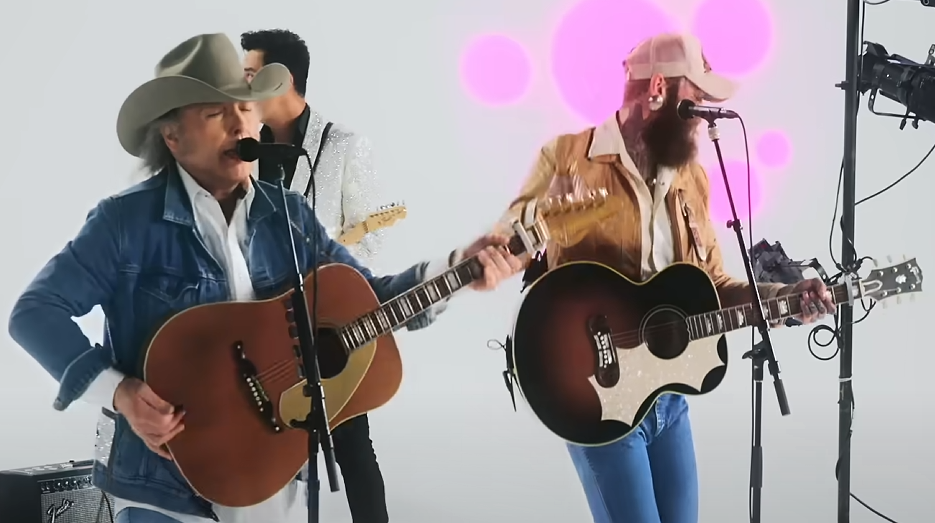
Some songs feel like a risk. This one? It feels like a damn revelation. “I Don’t Know How to Say Goodbye” pairs two voices you’d never expect to see sharing a mic — Dwight Yoakam, the honky-tonk time traveler, and Post Malone, the tattooed wildcard of genre collisions. And yet somehow, this track doesn’t feel forced. It feels fated. It starts soft — a lonesome acoustic strum, maybe a hint of steel in the background — and Yoakam’s voice eases in like a memory you thought you buried. That signature nasal twang still cuts through, cracked around the edges like sun-faded vinyl. He sounds older. Wiser. But no less sharp. Then Post comes in. And it works. Surprisingly well. His voice doesn’t try to match Dwight’s — it leans into its own lane. Smoky, melancholy, more croon than country, but full of soul. There’s no auto-tune, no pop tricks. Just honesty. Vulnerability. It’s like the two are sitting across from each other at a dive bar, trading verses and unfinished thoughts. Lyrically, the song’s a gut punch. It doesn’t dance around pain — it drags it right into the spotlight. “I’d rather fight than feel this empty / I’d rather lie than say goodbye” — that’s not romantic. That’s real. That’s the sound of someone trying to hold on to something that’s already slipping through their fingers. The chorus is restrained but heartbreaking, with both voices blending in raw, imperfect harmony. They’re not trying to outsing each other. They’re agreeing — in different tones — that this hurts like hell. What really sells it is the production. It’s stripped-back, intimate, and damn near analog in feel. Like someone recorded it late one night after too many drinks and too few words. No flash. No filler. Just a song that breathes. This collaboration could’ve been a gimmick. Could’ve been a label stunt. Instead, it’s something way rarer — two artists who mean it, coming from different corners of the world to meet at the crossroads of heartbreak. “I Don’t Know How to Say Goodbye” isn’t just a title. It’s a confession. One that a lot of us have lived and never said out loud.
Shooter Jennings feat. Waylon Jennings – “Songbird”
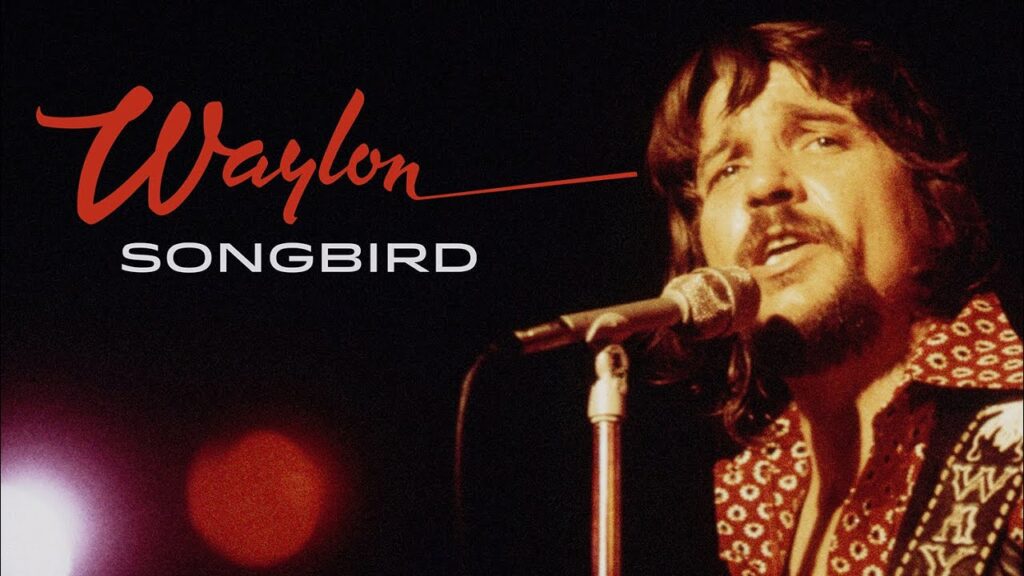
“Songbird” hits like a message from beyond the grave, and damn if it don’t make the hair stand up on your arms. Shooter Jennings teams up with his legendary father, Waylon, to breathe life into a track that’s less about music and more about legacy. It’s haunting, heartfelt, and built like a slow-burning fire in the corner of a dimly lit barroom. You hear that familiar grit in Waylon’s voice — the one that shaped generations of outlaws — and you can’t help but stop what you’re doing. He’s not just singing. He’s testifying. Shooter doesn’t try to outshine him. Instead, he weaves his own soul into the gaps, like a son finishing a story his father started long ago. Musically, “Songbird” moves slow, but not sleepy. It’s wrapped in pedal steel and piano, carried on a breeze of acoustic guitar that feels more Southern gospel than honky-tonk. There’s no rush. No flash. Just weight. You can almost smell the cigarette smoke and old wood in the studio. The real heart of the track lies in its tone. This isn’t a power duet or a flex. It’s Shooter sitting across from the ghost of his father, saying, “I remember.” And Waylon? He answers, not with thunder — but with calm, steady truth. “Songbird” sounds like it was always meant to exist. Like it was just waiting for the right moment, and the right bloodline, to bring it out of the ether. Lyrically, it’s tender — not the kind of thing either Jennings is most known for, but that’s what makes it special. “Fly away, songbird, into the night / Let your melody carry me through the fight” — that’s not outlaw bravado. That’s a man looking for peace. There’s no doubt about it: this is a song born of love, loss, and the kind of reverence you only carry for someone who shaped your soul. It’s raw in a way that doesn’t beg for attention. It just is. And that’s about as outlaw as it gets. “Songbird” doesn’t scream. It whispers. And in doing so, it echoes louder than most tracks ever could. This is blood, spirit, and southern grace all stitched into one damn fine song.
David Allan Coe – “Willie, Waylon And Me”
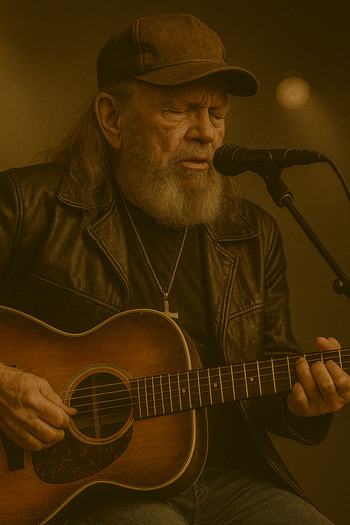
If there’s ever been a barroom Bible verse for the outlaw country gospel, it’s “Willie, Waylon and Me.” David Allan Coe didn’t just write a song — he etched his name into the damn outlaw constitution with this one. It’s a declaration of independence, a rebel’s roll call, and a backhanded love letter to the Nashville system that never quite knew what to do with a man like Coe. The song kicks in like a slow burn — spoken word over a steel guitar simmer — before Coe starts dropping names like a man tossing lighters into gasoline. “Willie and Waylon and me” isn’t just a trio. It’s a movement. It’s code for artists who didn’t just push boundaries — they kicked ‘em down and poured bourbon on the wreckage. Musically, the track is deceptively simple: a laid-back Southern groove, steel and electric guitars weaving between each other like two old friends at a late-night jam. But the real weight here is in the delivery. Coe’s voice is like a busted bottle — sharp on the edges, but damn if it doesn’t pour out smooth. He’s not just telling a story; he’s issuing a challenge. He recounts his own outsider’s journey — the Nashville politics, the backhanded compliments, the circuitous route through biker bars and prison stages. And he does it with a swagger that teeters right on the edge of self-parody, but somehow never falls. That’s part of Coe’s strange magic — he could tell you he invented country music, and you’d still want to buy him a drink afterward. There’s a lot of myth-making here, sure. But in outlaw country, myth is the music. What matters is that you believe it when it’s playing — and Coe makes damn sure you do. When he name-drops “The Mysterious Rhinestone Cowboy,” he’s not just referencing an old character — he’s reminding you that before the mainstream took a shine to weird, he was already out there, rhinestones and all, playing to rooms that didn’t know what hit ‘em. “Willie, Waylon and Me” is less about those two legends and more about carving space beside them — demanding to be heard, even if the world isn’t asking. It’s a boot to the chest of country conformity, and a reminder that sometimes the best music comes from the ones too wild to tame. It’s not humble. It’s not clean. But it’s damn sure outlaw.
Charlie Pride – Kiss an Angel Good Morning
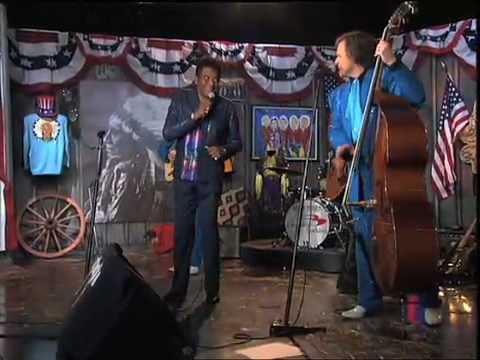
Charlie Pride – Kiss an Angel Good Morning Charlie Pride was more than just a country music star; he was a pioneering force with a voice smooth as Tennessee whiskey. His hit “Kiss an Angel Good Morning” is a testament to his ability to transcend barriers, both culturally and musically. Released in 1971, this song became a beacon of his career, earning its place as one of the most iconic tracks in country music history. It’s a song that every country music enthusiast should have in their playlist, a shining example of how Charlie Pride’s music continues to resonate today. “Kiss an Angel Good Morning” isn’t just a song; it’s a cultural moment. At a time when country music was predominantly white, Charlie Pride broke through, not just with his talent but with an undeniable charm and warmth that enveloped every note he sang. Listening to “Kiss an Angel Good Morning” is like wrapping yourself in a sonic embrace—it’s comforting and familiar yet powerful in its simplicity. Its upbeat tempo, combined with Pride’s rich vocal delivery, creates an infectious energy that’s hard to resist. The song’s theme is straightforward yet profound: the simple joys of life and love. Charlie Pride delivers these sentiments with an authenticity that’s rare in today’s music landscape. The lyrics remind us of the beauty in small gestures, like the sweetness of a morning kiss, which can set the tone for an entire day. It’s the kind of message that resonates across generations, making “Kiss an Angel Good Morning” timeless. Charlie Pride’s influence on country music cannot be overstated. As one of the very few African American artists to find success in the genre during his time, he paved the way for future generations of diverse artists. His ability to connect with audiences of all backgrounds is a testament to his universal appeal. “Kiss an Angel Good Morning” remains a staple on country radio and playlists, a song that encapsulates the spirit of its era while continuing to enchant new listeners. Final Verdict “Kiss an Angel Good Morning” by Charlie Pride is more than just an unforgettable tune; it’s a cultural legacy. With its catchy melody and sincere lyrics, it remains a quintessential part of country music’s rich tapestry. If you haven’t yet had the pleasure, do yourself a favor—listen to this classic and let Charlie Pride’s legendary voice brighten your day.