
Jamey Johnson – “Someday When I’m Old”
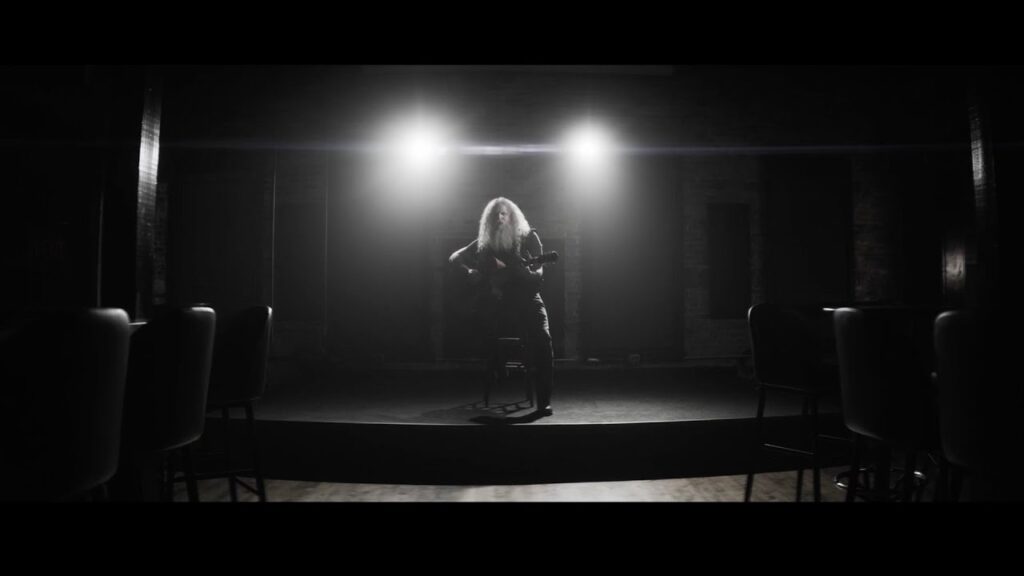
When Jamey Johnson sings about growing old, you stop what you’re doing and listen. “Someday When I’m Old” isn’t just a song about time — it’s a meditation on what’s left behind. It’s the kind of track that creeps up on you like age itself: slow, quiet, and full of truths you weren’t ready to hear until they already came true. It opens like the wind blowing through a screen door. Sparse acoustic guitar, soft steel behind it like a shadow, and then that voice — deep, cracked, half smoke and half sermon. Johnson doesn’t rush. He’s not trying to sell you anything. He’s just telling it the way only someone who’s lived through it can. The lyrics are simple, but they carry more weight than most ten-dollar words ever could. “I won’t care how fast my truck was / I’ll just hope it still starts” — that line alone says more about growing older than most whole albums. It’s not just about mortality. It’s about perspective. About watching the wildness of youth fade into something quieter, and maybe a little more meaningful. The production is classic Johnson — organic, unvarnished, real. No polished studio sheen, no digital tricks. Just wood, wire, and soul. It sounds like it was recorded in a single take, in a room where everyone knew to keep their damn mouths shut and let the man sing. There’s a warmth to it, though. This ain’t a sad song. It’s not bitter. It’s grateful, even when it aches. Johnson sings like a man who’s seen what matters get stripped away — and found peace in what remains. That’s the outlaw ethos at its most refined: not raising hell, but surviving it, and maybe even growing from it. The chorus doesn’t soar — it settles. And that’s perfect. It doesn’t need to blow you away. It just needs to stay with you. And it will. “Someday When I’m Old” doesn’t just hit the ears — it hits the gut. It’s for the late nights when you realize you’ve got more memories than dreams. For the mornings when the hangover lasts longer than the party did. For the fathers, the sons, the friends who’ve walked away — and the ones who stayed. Jamey Johnson’s never been interested in trends. He’s been interested in truth. And this song is full of it — raw, unfiltered, and aging just right.
Tesla – “From The Heart”
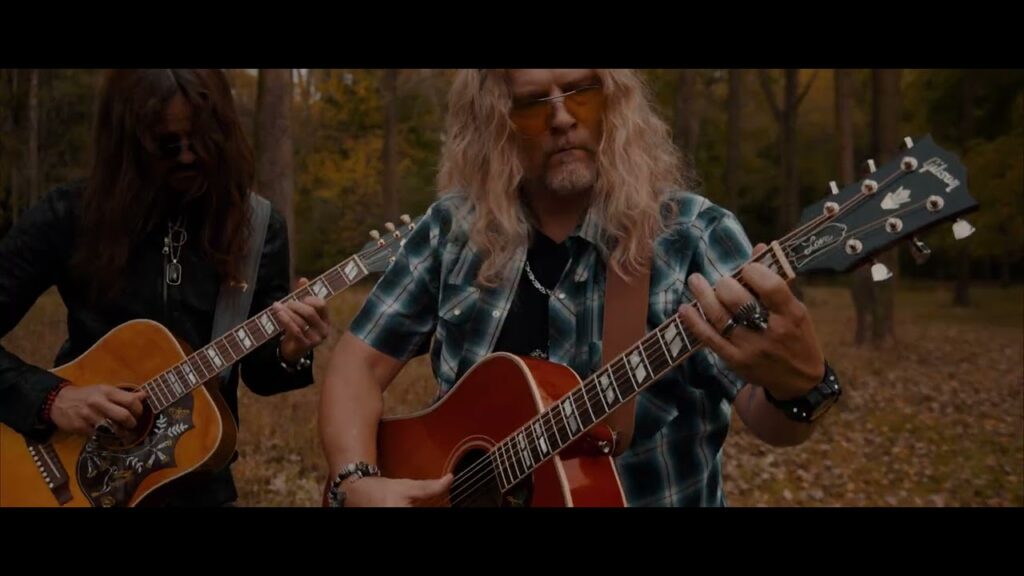
Some bands evolve. Others endure. Tesla? They persist — like engine oil on denim or cigarette smoke in the backseat of a ‘78 Camaro. “From the Heart,” off their All About Love EP, is exactly what the title says it is: a direct transmission of feeling, fired through tube amps and sung with gravel-laced conviction. The first thing you notice is how warm this track feels. Not just in the analog fuzz of the guitars — which are damn near perfect, by the way — but in the delivery. Jeff Keith’s voice ain’t what it used to be, maybe, but that’s the beauty of it. He doesn’t sound like a man trying to chase youth. He sounds like a man owning his age, his scars, and his sincerity. The riff work is classic Tesla — melodic, blues-rooted, just enough dirt to keep it real. Nothing feels overworked. No polished Nashville glitz, no modern radio tricks. Just good old-fashioned rock & roll played by a band that still believes in songs that mean something. Lyrically, “From the Heart” leans simple — but don’t mistake that for shallow. There’s a reason the classics hit hard. This one’s built on the kind of earnest, no-bullshit declarations that came straight out of the late ’80s playbook: “If I say I love you, I mean every part / You can take this truth straight from the heart.” That’s not trying to be clever — that’s just being true. And honestly? In a world full of ironic detachment and posturing, hearing a grown man sing that like he still believes in it… that’s outlaw in its own way. No pretense. No persona. Just love, loud and clear. The band’s chemistry is tight, as you’d expect. These guys aren’t mailing it in — they’re still playing like it matters. The solos soar but never showboat. The rhythm section swings with that seasoned confidence that only comes from years of playing dirty bars and huge arenas alike. “From the Heart” is the kind of track that might get overlooked by critics chasing trends, but it’ll stick with fans who never gave a damn about trends in the first place. It’s not here to reinvent the wheel — it’s here to remind you why wheels matter. For Tesla, this song ain’t a comeback. It’s a reminder. They never left. And they’re still singing from the place where it all began — the heart.
Dwight Yoakam Ft Post Malone – “I Don’t Know How To Say Goodbye”
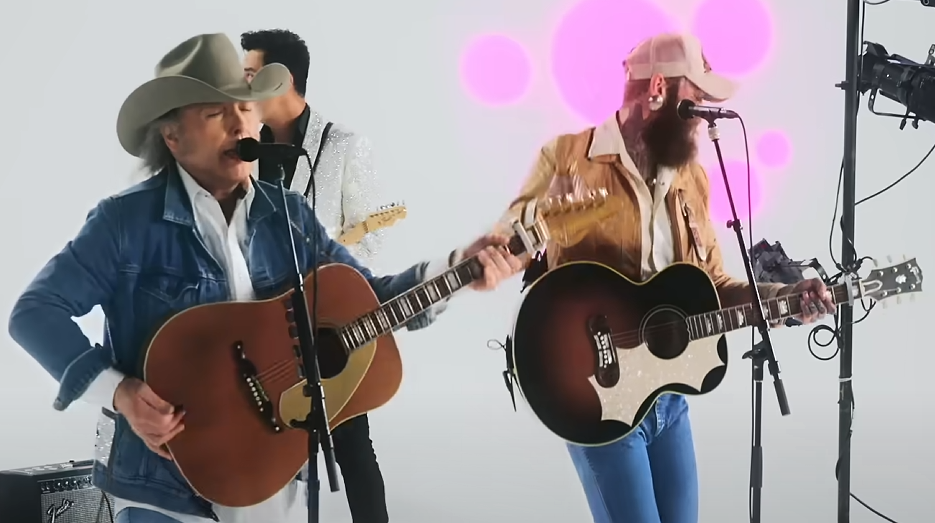
Some songs feel like a risk. This one? It feels like a damn revelation. “I Don’t Know How to Say Goodbye” pairs two voices you’d never expect to see sharing a mic — Dwight Yoakam, the honky-tonk time traveler, and Post Malone, the tattooed wildcard of genre collisions. And yet somehow, this track doesn’t feel forced. It feels fated. It starts soft — a lonesome acoustic strum, maybe a hint of steel in the background — and Yoakam’s voice eases in like a memory you thought you buried. That signature nasal twang still cuts through, cracked around the edges like sun-faded vinyl. He sounds older. Wiser. But no less sharp. Then Post comes in. And it works. Surprisingly well. His voice doesn’t try to match Dwight’s — it leans into its own lane. Smoky, melancholy, more croon than country, but full of soul. There’s no auto-tune, no pop tricks. Just honesty. Vulnerability. It’s like the two are sitting across from each other at a dive bar, trading verses and unfinished thoughts. Lyrically, the song’s a gut punch. It doesn’t dance around pain — it drags it right into the spotlight. “I’d rather fight than feel this empty / I’d rather lie than say goodbye” — that’s not romantic. That’s real. That’s the sound of someone trying to hold on to something that’s already slipping through their fingers. The chorus is restrained but heartbreaking, with both voices blending in raw, imperfect harmony. They’re not trying to outsing each other. They’re agreeing — in different tones — that this hurts like hell. What really sells it is the production. It’s stripped-back, intimate, and damn near analog in feel. Like someone recorded it late one night after too many drinks and too few words. No flash. No filler. Just a song that breathes. This collaboration could’ve been a gimmick. Could’ve been a label stunt. Instead, it’s something way rarer — two artists who mean it, coming from different corners of the world to meet at the crossroads of heartbreak. “I Don’t Know How to Say Goodbye” isn’t just a title. It’s a confession. One that a lot of us have lived and never said out loud.
Them dirty Roses – “Candle In The Dark”
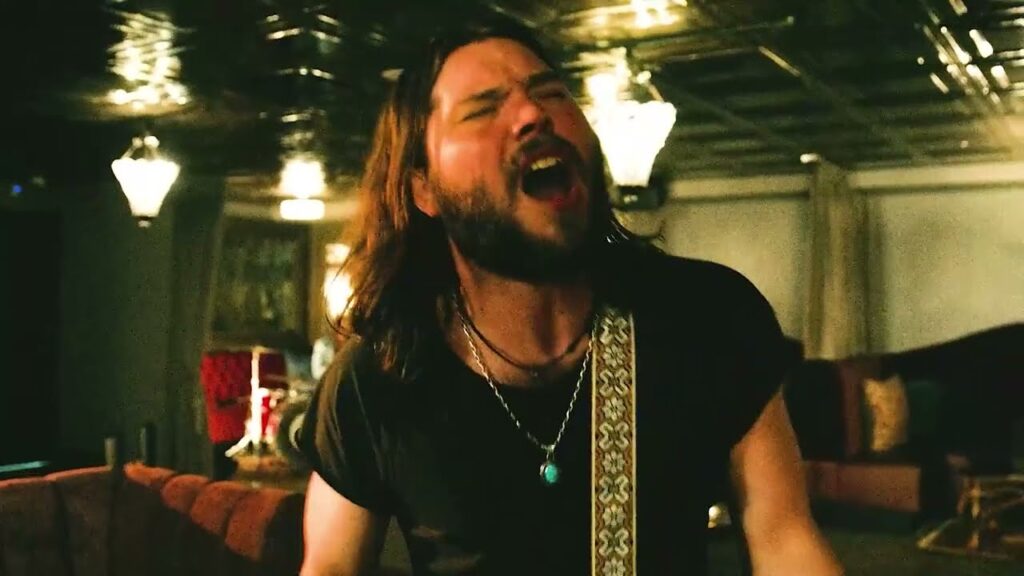
“Candle in the Dark” ain’t your average Southern rock track. Them Dirty Roses come out swinging with something slower, heavier — a late-night confessional dressed in denim and regret. It’s the sound of a man sitting alone with a drink in his hand and ghosts on his shoulder, lighting a candle not to find his way, but to remember who he lost. This one’s soaked in Southern soul — from the opening licks to the slow-burning drum groove that never hurries, never relents. The guitars cry like they’ve got a story of their own, bending notes the way a man bends his pride just to get through the night. There’s restraint here, but also fire. That’s a hard line to walk — and they walk it in worn-out boots. Vocally, the delivery is damn near perfect. It’s not polished — it’s present. Every word feels like it’s coming from the chest. The singer doesn’t belt for the sake of drama. He aches, and you feel every ounce of it in lines like, “I still leave a light on, though I know you won’t come back.” That’s not theater — that’s truth. The production gives the song plenty of breathing room. Nothing feels cluttered. Every instrument is where it needs to be. The slide guitar glides in like a memory you didn’t ask for. The keys hum in the background like a prayer you’re not sure you believe in anymore. And lyrically, this is outlaw poetry. It’s not about raising hell. It’s about surviving it. There’s pain in every verse, but also grace — the kind you only earn after you’ve ruined something good and sat with the pieces long enough to know what they meant. “Candle in the Dark” is a love song, sure, but it’s also an apology. And maybe even a eulogy. There’s no neat resolution here. No Hollywood ending. Just the glow of that candle and the weight of knowing it’s your own damn fault it had to be lit in the first place. Them Dirty Roses don’t overplay their hand here. They don’t need to. The song does the heavy lifting — and the silence between notes says more than most bands manage with a full page of lyrics. “Candle in the Dark” is for the late nights, the long drives, and the moments when you realize you’re not as over her as you told your friends you were. And that makes it one hell of a song.
Cody Jinks – “Found”
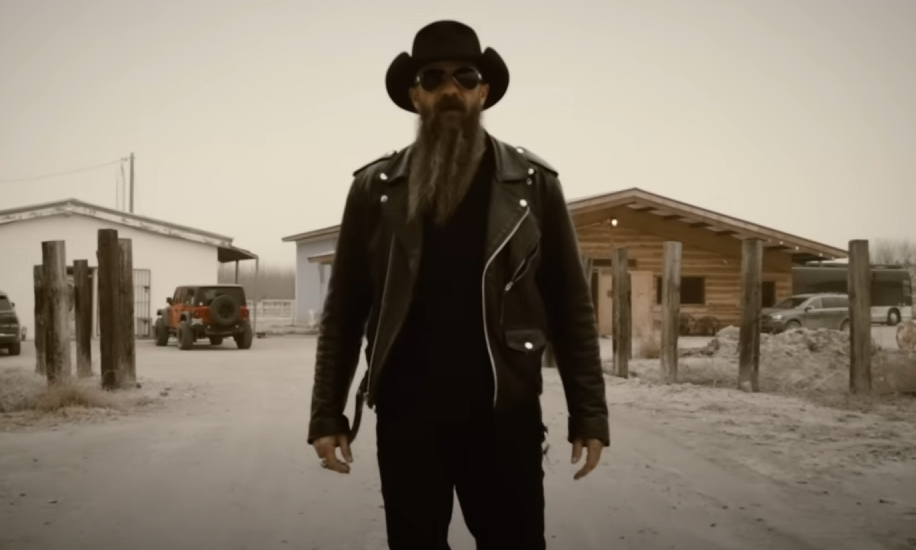
Some songs find you when you’re looking for trouble. Others find you when you’re finally ready to come home. “Found” by Cody Jinks is the latter — a slow-burn outlaw hymn for the battered soul who’s finally tired of fighting everything, including himself. It ain’t flashy. It ain’t loud. But it hits you like a damn revelation. Right out of the gate, Jinks lays it bare — that deep, oak-barrel voice of his cutting through like a sermon whispered through cigarette smoke. There’s no filter, no fake shine. Just gravel truth, poured out steady over a track that sways like an old rocking chair creaking on a front porch you didn’t think you’d ever sit on again. “Found” isn’t about redemption so much as recognition. It’s about realizing that maybe the hell you’ve been running from is the one you built yourself — and maybe the person who saves you is the one who’s been waiting patiently at the door the whole time. That’s the beauty of Cody’s writing. He doesn’t lecture. He remembers. He pulls the pain out slow, like a splinter that’s been festering under the skin for years. Musically, this track is all restraint — clean guitar lines, soft snare brushes, and a backing arrangement that knows when to speak and when to shut up. It leaves plenty of room for the vocals to stretch, and for the listener to sit in the silence between phrases. There’s a humility in the way it’s played — like the band knows this one ain’t about them. It’s about that moment when a man lays his weapons down. Lines like “I lost everything that ever meant anything / And that’s when I found you” don’t just rhyme — they gut you. Because who among us hasn’t had to lose it all before we saw what mattered? This ain’t a comeback song. It’s a come to terms song. And in the world of outlaw country, where grit sometimes outweighs grace, it’s a rare and powerful thing to hear a man say: “I was wrong. And I’m damn lucky you stayed.” “Found” belongs in the back half of a record — the quiet track you almost skip, until one day it hits you right in the gut when you least expect it. It’s a truth-teller. A lifeline. The kind of song you don’t blast — you hold onto.
Oliver Anthony – “Scorned Woman”

There’s a crack in Oliver Anthony’s voice that feels like it came from somewhere deeper than the throat. “Scorned Woman” isn’t just a breakup song — it’s an autopsy of heartache. And not the poetic kind. This is the version you whisper to your buddy on the tailgate with a half-drained bottle of something strong between you. This is the part of love they don’t put in Hallmark cards — the bitter, the burnt, and the broken. Anthony’s vocals are front and center here, as raw and unfiltered as moonshine in a mason jar. His delivery always leans into the ache, but in this track, you can hear the emotional debris dragging behind every syllable. It’s not performative pain — it’s lived-in, like he wrote it right after she slammed the door for the last time. Musically, it’s sparse, letting space do the talking. Fingerpicked acoustic guitar, maybe a touch of slide if you’re listening close. It’s got that Appalachian soul that Anthony’s been carving into his work — the kind of sound that feels like it came down off a mountain wrapped in smoke and regret. What makes “Scorned Woman” hit so damn hard is its simplicity. There’s no need for metaphor or clever turns of phrase. Just cold, direct honesty: “You said you loved me, but I reckon that changed / Just like the wind when the weather gets strange.” It’s not a lyric meant to impress — it’s meant to punch. And in that way, it embodies the outlaw spirit better than a thousand songs with rhinestones and leather jackets. Anthony isn’t out here playing a role. He’s telling the truth — even if it’s ugly. Especially because it’s ugly. You get the sense that writing this wasn’t a career move — it was survival. A way to bleed out what was poisoning him inside. That’s the best kind of outlaw song: the kind that’s not written for anyone, but just spills out because it has to. “Scorned Woman” might not be the track that fills stadiums, but it’s the one that’ll find folks in their darkest hour and say, “Yeah, I’ve been there too.” And sometimes, that’s more valuable than a platinum plaque. This song doesn’t just cut deep — it stays there.
Sierra Ferrell – “Dollar Bill Bar”

Sierra Ferell – “Dollar Bill Bar” In “Dollar Bill Bar,” Sierra Ferrell invites us into a neon-lit haunt where heartbreak’s been on tap for decades. It’s a jukebox joint soaked in character — and the kind of place where the regulars know every note before the first chord lands. Ferrell walks through it all like a ghost with a tambourine, barefoot on the broken floorboards of American roots music, carrying the weight of a past she sings through instead of about. The song opens with a loping groove and dusty fiddle, but Sierra’s voice does the heavy lifting. She doesn’t just sing — she glides, like someone who’s been watching the barflies from a corner booth for too long. There’s a theatrical sparkle in the way she bends vowels, a kind of jazzy Appalachian slur that feels both vintage and alien at once. In lesser hands, it might be kitsch. With Ferrell, it’s barroom gospel. Lyrically, “Dollar Bill Bar” lives somewhere between a smirk and a sob. She sings about desperation with a wink, wrapping working-class heartache in rhinestone humor. The title itself is a hell of a metaphor — the kind of place where the currency is thin, cheap, and crumpled, just like the dreams that pass through the door every night. “Trail of Flowers,” the album it rides in on, might carry the scent of hope, but this track is where those flowers get stomped under boot heels and spilled bourbon. Production stays smartly out of the way, letting old-world instrumentation do the talking — upright bass, brushed snare, maybe even a saw sneaking around the edges. It’s a throwback, sure, but not cosplay. Ferrell isn’t mimicking tradition — she’s haunting it. There’s a sweet sadness in this one, but also a shrug — like she knows there’s no use trying to change the scene, so she’ll just write a damn good verse about it instead. If country music is a church, “Dollar Bill Bar” is the dive bar confessional out back, where the sinners know more about grace than the preachers ever will.
Charley Crocket – “Game I Can’t Win”
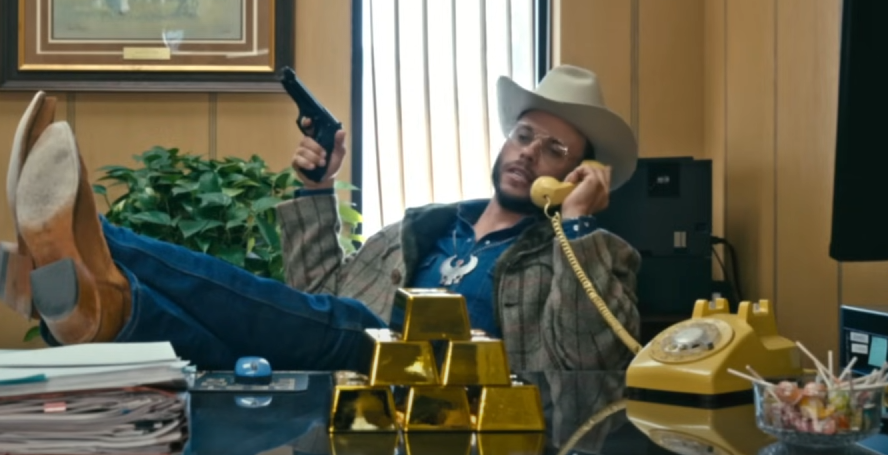
“Game I Can’t Win” might just be Charley Crockett’s quietest declaration of war — not against a person, but against fate itself. The track rides in slow, like a dust-covered cowboy too tired to make a scene, but too stubborn to stay down. It’s the sound of acceptance dressed in rhinestones, sorrow carried in the back pocket of a pearl snap shirt. Crockett, as always, isn’t singing for the radio. He’s singing for the forgotten folks, the in-betweeners — too country for the city, too strange for the mainstream, too honest to lie to themselves. “Game I Can’t Win” feels like a letter found in a glovebox — written in blue ink, full of regret, with the words smeared just enough to know it was real. The production is stripped down to the essentials: a lonesome steel guitar weeping behind a minimalist rhythm section, while Charley’s voice — part Texas drawl, part Memphis soul — glides over it all with a calm, haunted grace. You get the sense he’s not trying to impress you. He’s just trying to tell the truth without falling apart. Lyrically, Crockett taps into something universal: that feeling of giving everything you’ve got to a game that was rigged from the start. Whether it’s love, life, or trying to make art in a world that doesn’t always reward the real stuff, he captures the ache without ever whining. Lines like “I can’t bluff, and I can’t fold / Still I play it just the same” hit harder than a breakup — because they’re not just about romance. They’re about endurance. And that’s the outlaw spirit at the heart of this track. Not the flashy rebellion, not the bar fights or the outlaw hats — but the internal resistance. The quiet refusal to let disappointment turn you bitter. There’s no resolution here, no rise to triumph. Just a man, his guitar, and the knowledge that he’ll be back at the table tomorrow even if he’s losing his shirt. Charley’s voice does the heavy lifting — worn and weary, but smooth like whiskey left out in the sun. It’s a voice that’s been places, that knows better, but still gets up to sing. “Game I Can’t Win” is less a song and more a moment — the part in the movie where the hero doesn’t save the day, but instead sits on the porch and watches it burn. And somehow, that feels more honest than any victory.