
Miranda Lambert & Chris Stapleton – “A Song To Sing”
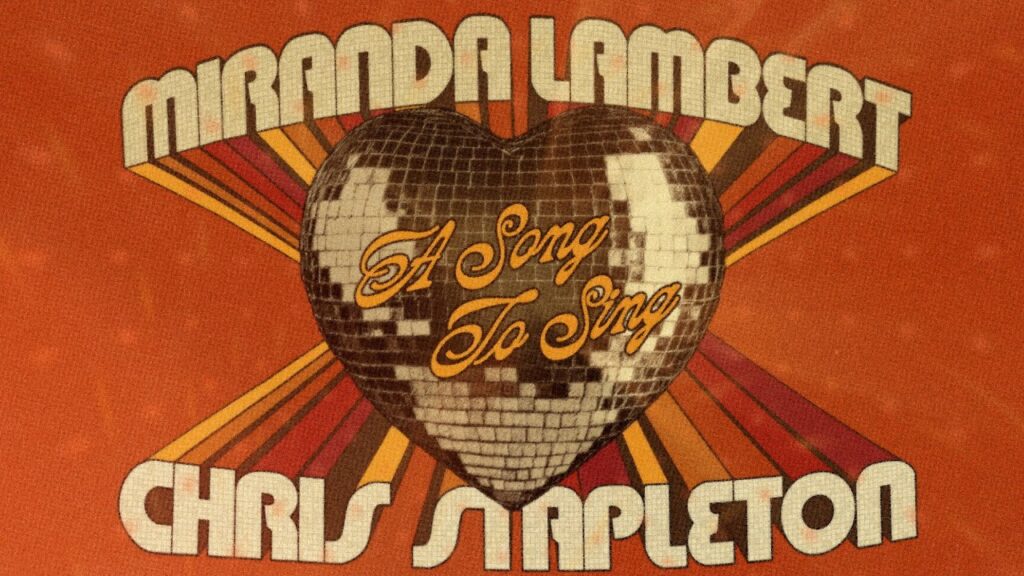
There’s a certain kind of magic that happens when two weathered voices meet in the middle of a song that *actually* says something. That’s what you get with Miranda Lambert and Chris Stapleton on “A Song to Sing” — a slow-burning ballad that doesn’t try to sell you anything but heart, soul, and the ache that comes with living too long in the margins. From the first few strums, the track wraps itself in restraint. No flash, no overproduction — just two of country’s rawest voices leaning on each other like barroom companions with too much history to explain. Lambert delivers with smoky softness, all bruised edges and backbone. Stapleton rumbles underneath her with that molasses-and-thunder tone that’s equal parts gravel and gospel. Lyrically, “A Song to Sing” is about music as survival — as salvation. It’s a nod to every broken soul who ever picked up a guitar or found themselves at the bottom of a bottle, just trying to keep the demons quiet. “I’ve always had a song to sing,” they confess, like it’s both a curse and a gift. And it is. The harmony between Miranda and Chris doesn’t feel rehearsed — it feels *lived in*. Like they’ve each carried the same melody through different storms and finally found each other on the same back porch. The space between the notes is where this one breathes. That’s where the real story lives. The music video strips everything down to its emotional bones — simple lighting, subtle tension, no distractions. Just two powerhouse artists letting the lyrics do the heavy lifting. There’s nothing theatrical about it — and that’s the point. This is outlaw country that doesn’t need costumes or cowboy clichés. It’s pure soul. Final Verdict: “A Song to Sing” is Miranda Lambert and Chris Stapleton at their most vulnerable, most powerful, and most honest. It doesn’t chase radio play or algorithm trends — it just *is*. A slow, aching testament to the power of melody in a world that doesn’t always make sense. Real music. Real voices. No bullshit.
Charley Crockett – Night Rider
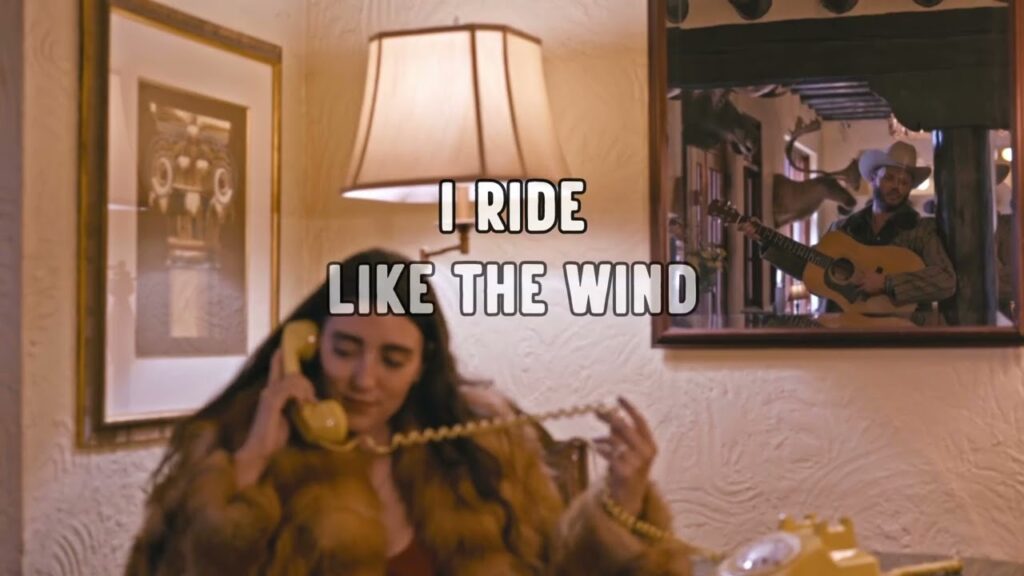
Charley Crockett slides into the shadows with “Night Rider,” a dusty outlaw noir track that rides low and mean beneath a blanket of desert stars. It’s the kind of song you’d hear pouring out of a dive bar jukebox just before closing time — bluesy, dangerous, and slick with sweat and secrets. [outlaw_events artist=”Charley Crockett”] From the first few notes, “Night Rider” oozes style. It’s part Spaghetti Western, part Texas blues, and 100% Charley Crockett. The horns moan like a ghost train, the rhythm section lopes like a tired outlaw horse, and Crockett’s voice — gritty, sly, and smooth — carries it all like a man who’s been running from something longer than he can remember. Lyrically, it’s as much about mystique as it is about motion. “I’ve been runnin’ down that old highway / chasin’ what I’ll never find,” he sings, and you believe every word. This isn’t about getting somewhere — it’s about staying one step ahead of the past, the law, or maybe your own demons. It’s outlaws with dust in their boots and ghosts in their rearview. The song doesn’t need a big hook or a flashy chorus — its groove is the hook. It hypnotizes you, pulls you into its slow-motion chase, and leaves you wanting another mile or two of road just to see what’s around the next bend. The music video enhances that mystique with vintage grit — shots of Crockett under neon signs, long highways, smoky shadows, and looks that say more than the lyrics ever could. It’s a vibe more than a narrative, but it works perfectly. It feels like you’re watching the end credits of a Western that never needed a beginning. Final Verdict: “Night Rider” is a lesson in atmosphere, swagger, and the kind of cool you can’t fake. Charley Crockett doesn’t just wear the outlaw label — he *embodies* it. This track doesn’t blaze down the highway — it cruises slow, lights low, pistol loaded, and no intention of stopping for anyone.
Chase Rice – “Two Tone Trippin’ – Ft Wayatt McCubbin
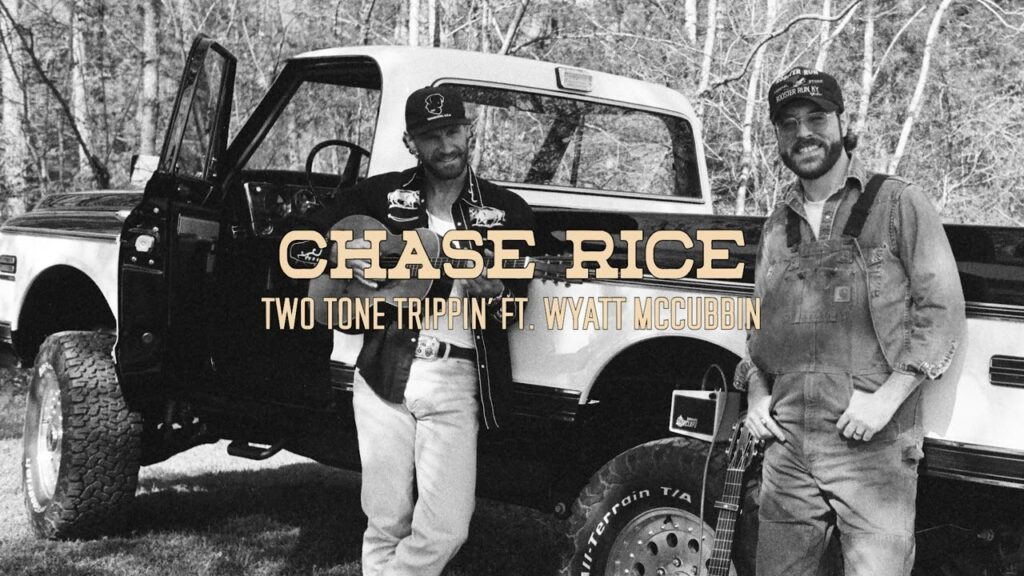
Chase Rice teams up with Wyatt McCubbin for “Two Tone Trippin’,” a smoky, nostalgic cruise through memory, heartbreak, and the kind of ride that stays with you long after the keys are out of the ignition. It’s a slow burn, soaked in southern soul and that undeniable outlaw grit. From the first strum, it’s clear this track isn’t chasing pop charts — it’s leaning into mood and texture. The guitar hums like a well-tuned engine, and the vocals ride over it like worn leather — familiar, rough, and built to last. Rice and McCubbin swap verses with ease, their voices complementing each other like road dust and denim. Lyrically, “Two Tone Trippin’” works as both a literal and metaphorical journey. On the surface, it’s about a car — the kind you keep long after the payments are done because it holds the ghosts of youth and freedom. But underneath, it’s about the baggage we carry: old love, missed chances, and the memories that still rev the engine even when we’re parked. There’s restraint in the production — no bombast, just tasteful licks, warm tones, and that back porch groove that never tries too hard. It’s outlaw country in its more introspective form, reminiscent of late-night drives with the windows down and the weight of the past riding shotgun. The video reflects that exact energy. Moody lighting, vintage Americana aesthetics, and a pace that invites you to settle in rather than race ahead. There’s a cinematic quality to it — not flashy, just rich with feeling. It feels lived-in, like the best outlaw stories always do. Final Verdict: “Two Tone Trippin’” isn’t trying to raise hell — it’s content to haunt you in the quiet. Chase Rice and Wyatt McCubbin deliver a slow-rolling anthem for the ones still carrying echoes of old roads, old loves, and a life that never quite idles. Turn it up, roll the windows down, and let it ride.
Zach McPhee – “Tears That You’ll Never Find”
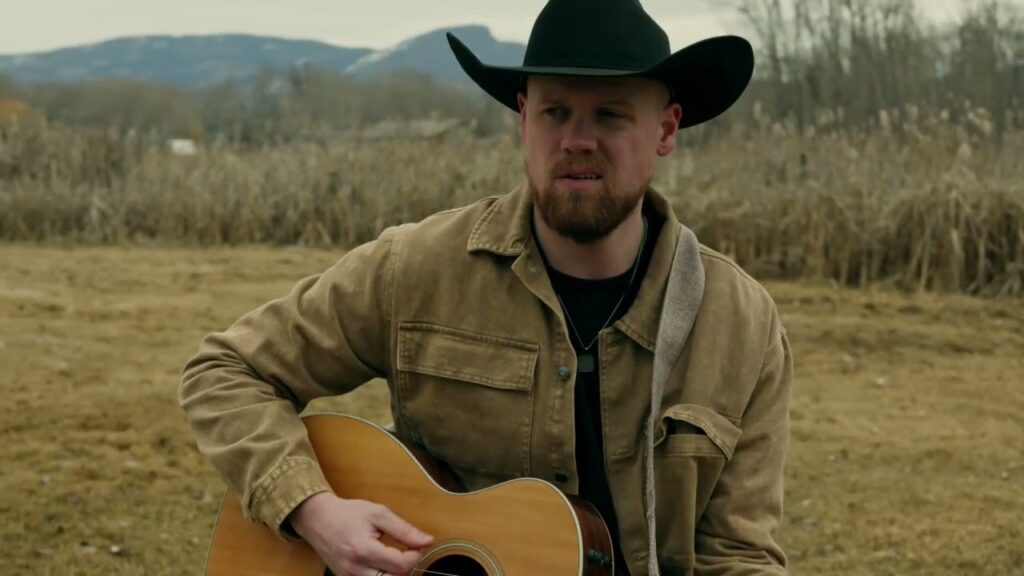
Zach McPhee delivers a masterclass in haunted restraint with “Tears That You’ll Never Find.” This one doesn’t knock on the door — it slips in through the cracks, quiet as regret, heavy as the kind of sorrow you don’t dare speak out loud. The track unfolds like a handwritten letter never sent — raw, reflective, and deeply personal. From the first acoustic pluck, it’s clear we’re not in radio-country territory. This is old-school heartbreak, dipped in minimalist production and drenched in honest-to-God pain. Lyrically, McPhee paints a picture of invisible grief — tears shed in silence, heartbreak never witnessed. It’s the kind of emotional honesty that feels like a risk in today’s polished country scene. There’s no blame, no vengeance — just a weary acceptance that the damage has already been done. It’s not just sad; it’s resolved sadness, which hits even harder. His voice — soft but worn — carries the weight of someone who’s held it together a little too long. There’s tremble in his phrasing, a deliberate fragility. He’s not performing for sympathy; he’s just telling the truth. Production-wise, it’s sparse, but with purpose. A gentle piano shadows the acoustic guitar, and subtle swells of strings echo like distant memories. It’s all carefully measured to give McPhee’s vocals center stage — and rightly so. This is a song where silence is just as important as sound. The video matches the tone — grainy, intimate, dimly lit. We see Zach mostly alone, surrounded by shadows and unspoken weight. There’s no need for narrative gimmicks. Just a man, a room, and the ache between the chords. Final Verdict: “Tears That You’ll Never Find” isn’t for everyone — and that’s the point. It’s for the bruised, the quiet, the ones who’ve learned how to cry without making a sound. Zach McPhee doesn’t chase the spotlight — he builds a space in the dark and sings for those still sitting there. Respect.
Zach Top – “Good Times & Tan Lines”
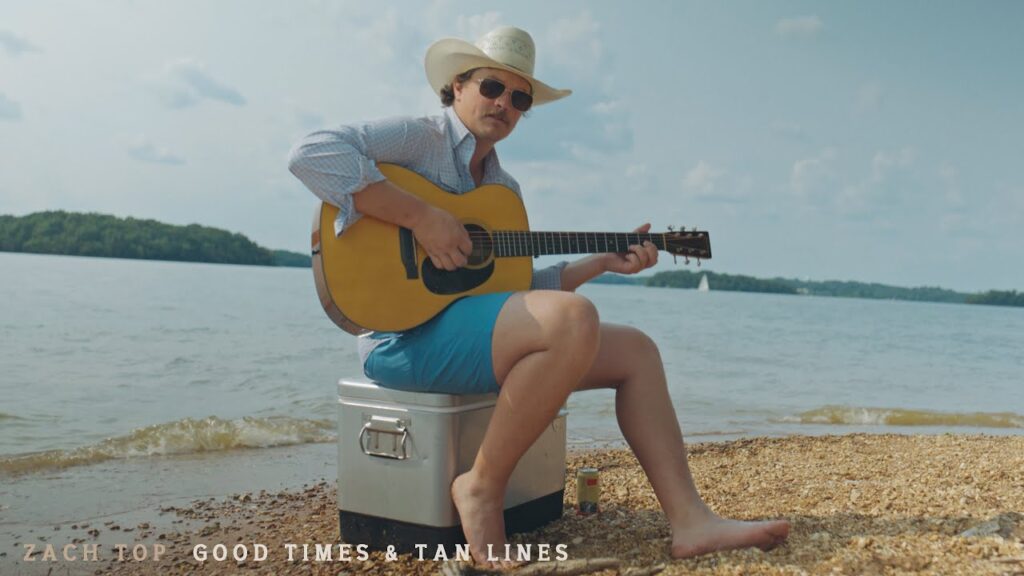
Zach Top doesn’t just flirt with throwback country — he dives headfirst into it, boots-first and sunburnt. “Good Times & Tan Lines” is a purebred slice of 1990s honky-tonk, soaked in neon nostalgia and beach beer buzz. Right out the gate, this track glides with a Gulf breeze — pedal steel slicing through a two-step rhythm like a dive bar jukebox set to Alan Jackson and George Strait back-to-back. It’s not trying to reinvent the wheel; it’s slapping a koozie on it and letting it roll straight to the shoreline. The lyrics are breezy but deliberate: tan lines, cold drinks, love on the rocks — it’s a well-worn theme, but Zach leans into it with a wink and zero irony. There’s an honesty in the delivery that sells it. He’s not mocking country tradition, he’s honoring it. With a voice that could’ve been cut from 1994 radio, Zach Top proves that smooth baritone swagger still goes a long damn way. Production-wise, it’s tighter than a fresh rope cinched to a hitching post. Every instrument sits just where it should — a crisp snare, that sunny steel guitar, and a walking bassline that keeps it all light on its boots. It’s the kind of mix you want blasting through a boat speaker, cold beer in hand, hat tipped low. The video doesn’t try to be artsy or overthought — it leans fully into the vibes. You’ve got beach hangs, dancing, sunsets, and just enough girl-next-door charm to keep it feeling real instead of commercial. It’s a postcard from a weekend you never wanted to end. Final Verdict: “Good Times & Tan Lines” ain’t gritty or raw, but not everything needs to come from a dirt road and a broken heart. Sometimes country just needs a damn good vibe — and Zach Top brings that with a smirk and a six-pack. This one’s made for your “FM After Midnight” playlist when the buzz is mellow and the sky’s just turning pink.
Aslhey McBryde – “Rattlesnake Preacher”
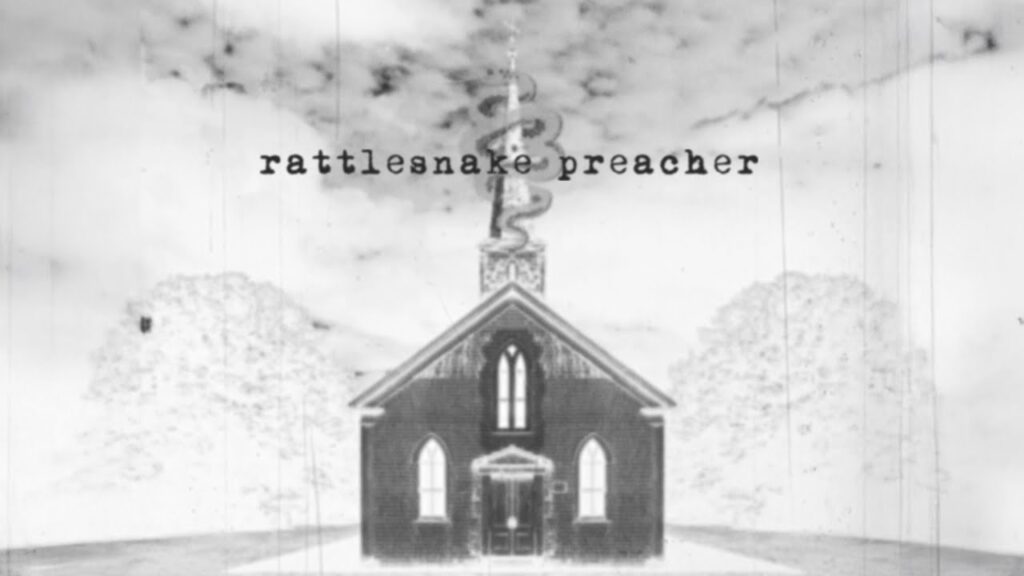
Ashley McBryde isn’t interested in being delicate — she’s interested in being honest. And “Rattlesnake Preacher” doesn’t just pull from the Southern gothic playbook — it rewrites it with a matchstick and gasoline. From the first guitar twang, you know this ain’t Sunday morning hymnal material. It’s something darker, something raw. The song slithers forward with a swampy stomp — a kind of Southern sermon soaked in sweat and spit. And McBryde? She’s not whispering the gospel. She’s growling it. Lyrically, “Rattlesnake Preacher” feels like a cautionary tale passed down over cheap whiskey and folding chairs behind the church. There’s a fire-and-brimstone intensity to every line — a preacher with “a Bible in one hand and a snake in the other,” and the kind of warning you only get once. This isn’t just storytelling — it’s a damn exorcism. McBryde delivers it with a gritty, possessed energy. Her voice is equal parts steel wool and soul. It’s the sound of someone who’s survived a few spiritual beatdowns and lived to tell the tale. And in this song, she’s not asking for salvation — she’s warning you about where not to look for it. The band leans into that mood hard — with slide guitar that hisses like a rattler and a beat that struts like it knows it’s wearing snakeskin boots. The whole production is tight but unhinged — polished just enough to get played loud, but with enough bite to make the Sunday school crowd uneasy. The video pushes the vibe even further. Filmed with a gritty cinematic sheen, it walks the line between revival tent and fever dream. We see McBryde in preacher mode, but it’s clear this isn’t about faith — it’s about power, control, and the cost of blind belief. Flash cuts of worshippers, snakes, and fire feel more like a Southern horror movie than a music video. And it works. It burns with intention. Final Verdict: “Rattlesnake Preacher” isn’t just a song — it’s a sermon for the disillusioned. Ashley McBryde steps fully into the outlaw storyteller role here, proving she doesn’t just sing country — she preaches it, with a raised eyebrow and a pocket full of venom. This one ain’t for the faint of heart — and that’s exactly the point. Let me know if you’d like this in HTML format for WordPress, or if you want to queue up the next review.
Zandi Holup – “Gas Station Flowers”
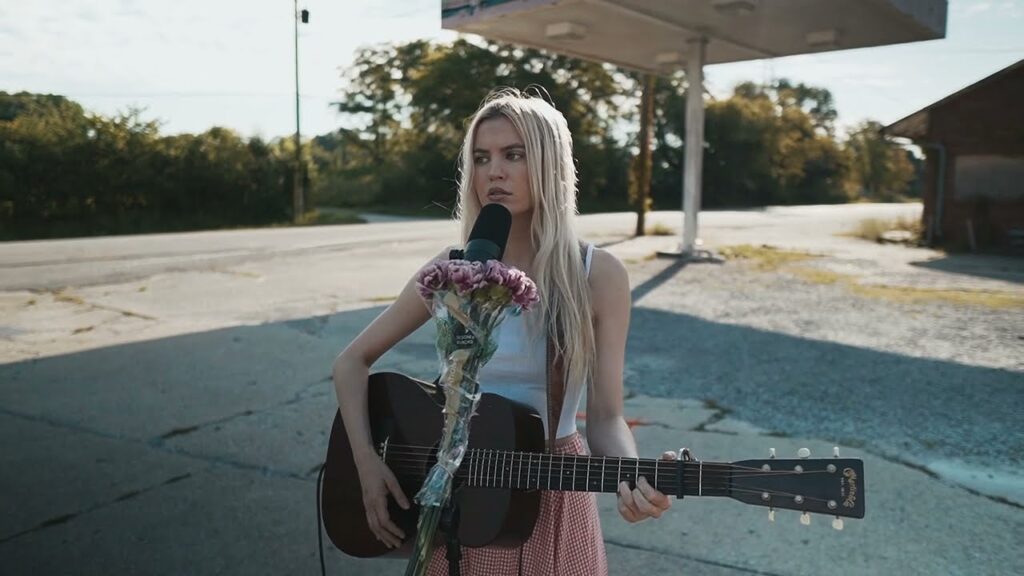
Zandi Holup’s “Gas Station Flowers” is a soft, aching prayer wrapped in twang and desperation. It’s about love so threadbare you’d take it however it shows up — even wilted, even cheap. That kind of honesty? That’s outlaw. The melody is gentle but deliberate, like she’s walking barefoot across gravel just to get the words out. Her voice cracks and bends in all the right places, and it’s not weakness — it’s weariness, the kind that comes from giving too much and getting too little. Lyrically, this one stings. She ain’t asking for roses or poetry — she just wants something. The song makes you feel how low the bar’s been set, and how high the stakes still are when love’s involved. The video pairs perfectly. Zandi floats through lonely Americana backdrops — gas stations, empty lots, faded neon. It’s as if she’s surrounded by the ghosts of her own expectations. And she still sings. That’s the outlaw spirit — finding beauty in the leftovers. Singing even when nobody’s listening.
Colter Wall – “I Never Go Around Mirrors” (Lefty Frizzell Cover)
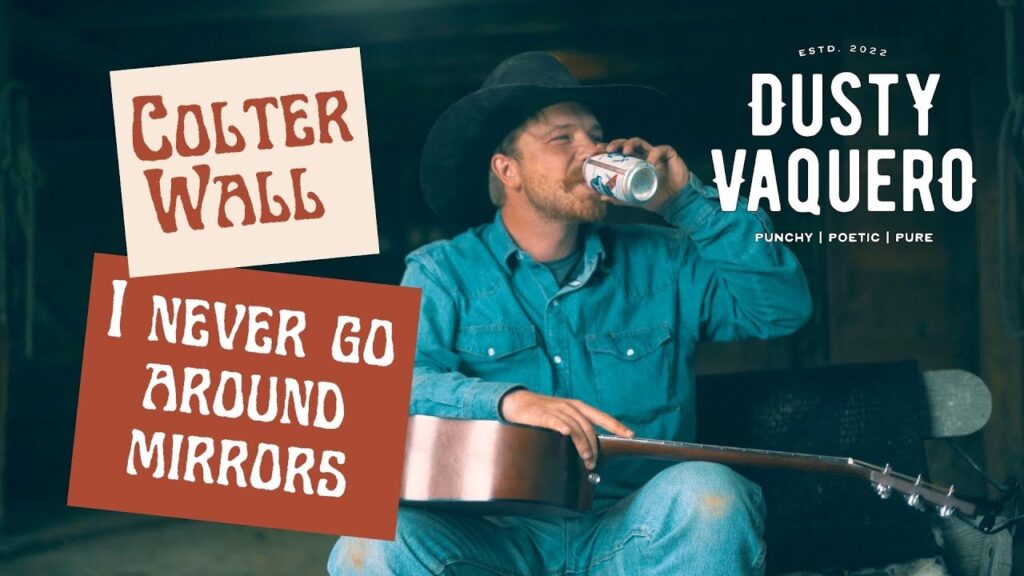
Colter Wall’s cover of “I Never Go Around Mirrors” is pure outlaw elegy. A man hiding from himself, from the truth, and from the reflection he no longer recognizes — that’s the kind of hurt Lefty Frizzell wrote for, and Colter delivers it like he’s got nothing left to lose. This live cut from Luckenbach feels sacred. No crowd noise. No theatrics. Just a voice so deep it sounds carved from timber, trembling slightly as it pours heartache into every verse. The video captures it all in a single shot — still, raw, and reverent. You don’t need edits when you’re telling the truth. Just a man, a guitar, and a moment of complete vulnerability. It’s slow. It’s sad. And it’s devastating. But that’s the magic. Colter lets it hurt. He lets the song breathe, stretch, and mourn the way country music was meant to. If you’ve ever poured a drink because looking in the mirror felt too much like judgment — this song is for you.
Charley Crockett – “Dead Or Alive” (Woody Guthrie Cover)
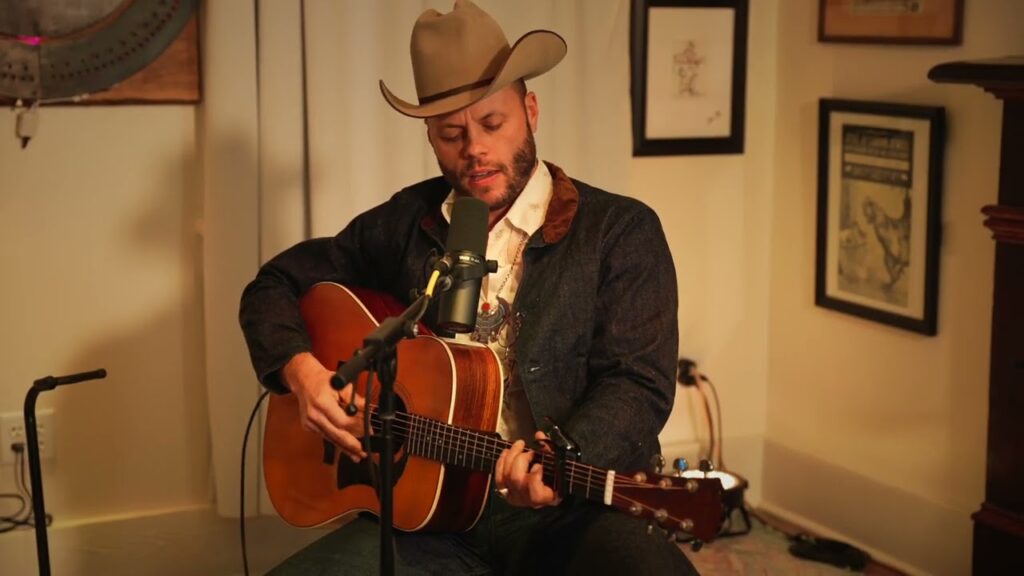
Charley Crockett has a knack for pulling the past into the present without losing a speck of its soul. His take on Woody Guthrie’s “Dead or Alive” proves that outlaw music ain’t just about attitude — it’s about preservation. The song is pure Western folklore — a man condemned to roam, hunted by fate and forces beyond his control. Charley doesn’t just sing it; he embodies it. His voice is dusty and smooth like a Texas highway after sundown, and his band brings the perfect backdrop of frontier twang and rolling rhythm. The video leans hard into sepia-toned nostalgia. It’s part cowboy poem, part ghost story. Wide desert shots, outlaw posturing, and Charley staring down the lens like he’s already read your obituary. This one’s for the real roots-heads. A song passed down, not reimagined — just respected. And Outlaw Circus salutes that kind of honesty.
Morgan Wade – “The Party Is Over”

Morgan Wade’s “The Party Is Over” is the kind of rock confession that scrapes your insides clean. It’s sober, sharp, and louder than a bottle smashing on a bathroom floor at 3AM. She’s not whispering apologies — she’s declaring victory over delusion. The song rides on crunchy guitars and a driving backbeat that feels more Seattle than Nashville, but Morgan’s voice — strained, emotional, real — brings it home. She sounds like someone who’s stared in the mirror too long and finally said, “I’m done.” The video walks a tightrope between grunge melancholy and cinematic clarity — foggy shots of her pacing, performing, and reliving it all. It’s beautifully disjointed, like the world hasn’t quite caught up with her sobriety. This ain’t a pity anthem. It’s a middle finger to the lies she used to live by. And if that’s not outlaw, I don’t know what is.