
Willie Nelson – Blue Eyes Crying In the Rain (Live From Austin City Limits, 1976)
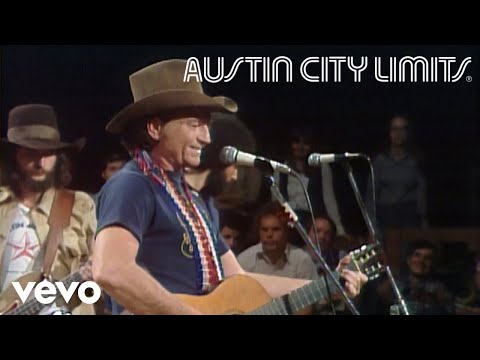
Willie Nelson – Blue Eyes Crying In the Rain (Live From Austin City Limits, 1976) In the pantheon of outlaw country, few names carry the legendary weight of Willie Nelson. Known for his iconic voice, distinctive guitar playing, and a songwriting prowess that cuts straight to the heart, Nelson has been a stalwart figure in the music world for decades. His rendition of “Blue Eyes Crying In the Rain” during the 1976 Austin City Limits performance is a prime example of his unparalleled ability to connect with listeners on a deeply emotional level. This performance is not merely a song; it’s a masterclass in musical storytelling that resonates with raw, unfiltered emotion. “Blue Eyes Crying In the Rain,” originally penned by Fred Rose, found its ultimate interpreter in Willie Nelson. By the time he took to the stage on Austin City Limits, Nelson had already cemented his status as a pioneer of the outlaw country movement, challenging the Nashville establishment with his free-spirited sound and rebellious ethos. The 1976 performance encapsulates this spirit perfectly. The song’s rich, melancholic melody paired with Nelson’s tender delivery makes for a hauntingly beautiful experience that keeps listeners coming back for more. What makes this performance truly stand out is the way Willie Nelson seems to inhabit every word. His voice, soft yet commanding, carries the weight of a thousand stories, each etched with a lifetime of love, heartache, and resilience. The sparse instrumentation, led by Nelson’s signature guitar, Trigger, allows his voice to soar and sink deep into the psyche of every listener. It’s a performance that strips away any pretense, leaving only the raw, unadulterated soul of the song. Beyond the technical brilliance, what truly cements this performance in the annals of music history is its authenticity. Willie Nelson doesn’t just perform “Blue Eyes Crying In the Rain”; he lives it. Every note is delivered with a sincerity that is as genuine as it is moving. It’s a reminder of why outlaw country exists—to break free of constraints and to express genuine emotion and truth. Final Verdict If you’re looking to understand the essence of Willie Nelson and the outlaw country genre he helped define, look no further than this live performance of “Blue Eyes Crying In the Rain” from Austin City Limits in 1976. It’s more than just a song—it’s an experience, a journey into the soul of one of music’s greatest legends. Whether you’re a longtime fan or a newcomer to Nelson’s work, this performance is a must-watch, capturing the spirit of outlaw country in its purest, most profound form. Don’t just take my word for it; watch the performance and let Willie Nelson’s magic speak for itself.
Willie Nelson – “Always On My Mind” (Live at Farm Aid 2022)
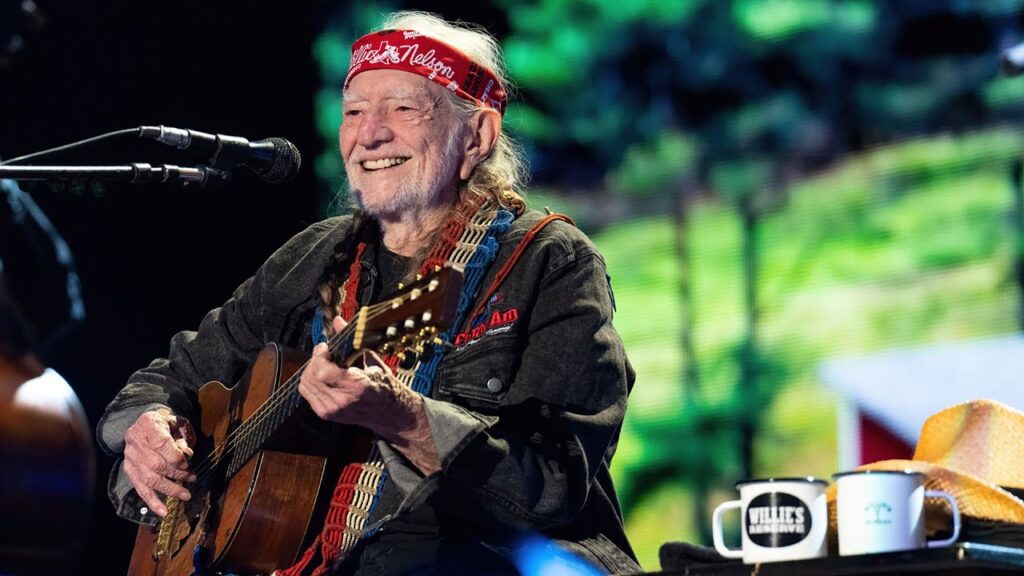
Willie Nelson lays bare the soul with “Always On My Mind,” performed live at Farm Aid 2022 in Raleigh, NC. It’s the kind of performance that stops the clock—voice weathered, guitar “Trigger” shimmering, emotion permanent[3][4]. Nelson’s baritone wraps around every phrase like a wool blanket—vulnerable yet unyielding. He’s not singing, he’s confessing. That chorus—each note a confession of regret and longing. Video quality’s crisp, the crowd hushes between lines, and the camera catches every wrinkle, every flicker in Willie’s eye. This is classic outlaw country in its purest form—intimate and iconic. Final Verdict: Willie doesn’t just remind you he’s “Always On My Mind”—he proves it, lived through a lifetime of notes. This Farm Aid moment is a masterclass in emotion over spectacle. Sources: YouTube – Willie Nelson “Always On My Mind” Live at Farm Aid 2022 — clean audio/video from a major event. Farm Aid 2022 playlist confirmation — full performance context. Wikipedia – “Always On My Mind” song history and chart impact.
David Allan Coe – “Willie, Waylon And Me”
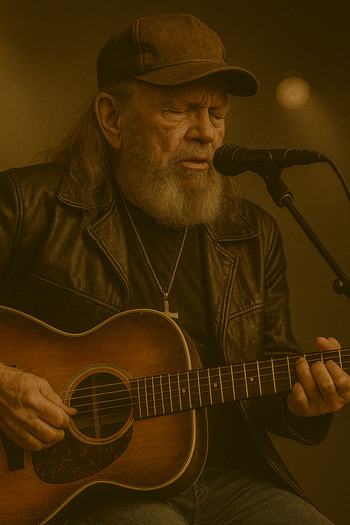
If there’s ever been a barroom Bible verse for the outlaw country gospel, it’s “Willie, Waylon and Me.” David Allan Coe didn’t just write a song — he etched his name into the damn outlaw constitution with this one. It’s a declaration of independence, a rebel’s roll call, and a backhanded love letter to the Nashville system that never quite knew what to do with a man like Coe. The song kicks in like a slow burn — spoken word over a steel guitar simmer — before Coe starts dropping names like a man tossing lighters into gasoline. “Willie and Waylon and me” isn’t just a trio. It’s a movement. It’s code for artists who didn’t just push boundaries — they kicked ‘em down and poured bourbon on the wreckage. Musically, the track is deceptively simple: a laid-back Southern groove, steel and electric guitars weaving between each other like two old friends at a late-night jam. But the real weight here is in the delivery. Coe’s voice is like a busted bottle — sharp on the edges, but damn if it doesn’t pour out smooth. He’s not just telling a story; he’s issuing a challenge. He recounts his own outsider’s journey — the Nashville politics, the backhanded compliments, the circuitous route through biker bars and prison stages. And he does it with a swagger that teeters right on the edge of self-parody, but somehow never falls. That’s part of Coe’s strange magic — he could tell you he invented country music, and you’d still want to buy him a drink afterward. There’s a lot of myth-making here, sure. But in outlaw country, myth is the music. What matters is that you believe it when it’s playing — and Coe makes damn sure you do. When he name-drops “The Mysterious Rhinestone Cowboy,” he’s not just referencing an old character — he’s reminding you that before the mainstream took a shine to weird, he was already out there, rhinestones and all, playing to rooms that didn’t know what hit ‘em. “Willie, Waylon and Me” is less about those two legends and more about carving space beside them — demanding to be heard, even if the world isn’t asking. It’s a boot to the chest of country conformity, and a reminder that sometimes the best music comes from the ones too wild to tame. It’s not humble. It’s not clean. But it’s damn sure outlaw.