Johnny Rodriguez and the Goat: The True Tale Behind David Allan Coe’s Wild Lyric
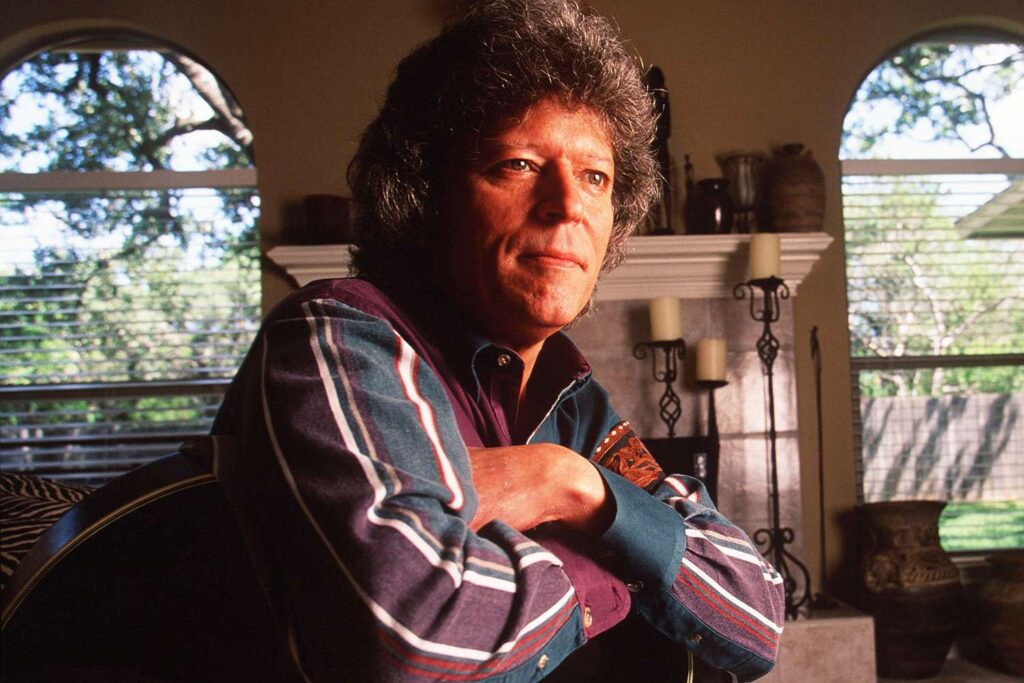
David Allan Coe was never one to shy away from colorful lyrics, but the line from his 1976 classic “Long Haired Redneck” — “Johnny Cash helped me get out of prison, long before Rodriguez stole that goat” — has lived on as one of the strangest and most legendary name-drops in country music. It’s more than a punchline — it’s a half-true, half-mythical nod to the early outlaw spirit of Johnny Rodriguez, a rising star who made as much noise with his voice as he did with his backstory. Who Was Rodriguez? Johnny Rodriguez wasn’t just some name dropped for shock value. By the mid-1970s, he was one of the hottest acts in country music. Born in Sabinal, Texas, Rodriguez had a soulful baritone and a knack for writing honest, aching songs. He was also one of the first Mexican-American artists to break into Nashville’s mainstream, with a string of hits including “You Always Come Back (To Hurting Me)” and the timeless “Ridin’ My Thumb to Mexico.” But what really set him apart — and earned him that immortal mention in Coe’s song — was the infamous goat incident. The Goat Story: Fact and Fiction Here’s how the story goes: at just 18 years old, Johnny Rodriguez was arrested in his hometown of Sabinal for allegedly stealing and barbecuing a goat. Whether he actually did it or not is still debated — some say it was a misunderstanding, others swear it was more prank than crime. What’s clear is that his time behind bars turned into an unexpected stroke of luck. The Texas Ranger who arrested him reportedly heard Rodriguez singing in his cell and was impressed enough to introduce him to a promoter running a local wild west show. That connection led to a gig where Rodriguez caught the attention of none other than Tom T. Hall — a legendary singer-songwriter and storyteller in his own right. Hall was blown away and brought Rodriguez to Nashville. There, he wrote songs for Hall and soon found himself fronting Hall’s band. It didn’t take long for Mercury Records to take notice, and by 1972, Rodriguez had cut his first single. Just a year later, he scored his first number one hit. Coe, Cash, and Country Irony So where does David Allan Coe come in? Coe — a former inmate himself — was carving out his own place in outlaw country when he dropped “Long Haired Redneck” in ‘76. The song is part autobiography, part anthem, and part inside joke. When Coe sings about “Johnny Cash helpin’ me get out of prison,” he’s nodding to the Man in Black’s real-life advocacy for prison reform and his work at places like Folsom and San Quentin. But then comes the curveball: “Long before Rodriguez stole that goat.” It’s Coe at his storytelling best — folding a now-legendary industry tale into a gritty outlaw narrative, blurring the line between myth and memory. It’s funny. It’s odd. And it’s real — the kind of wink only true fans would understand. Final Thoughts Johnny Rodriguez went on to become a respected figure in country, but he never quite shook the goat story — probably because he never tried to. Like Coe, he embraced the messiness of life and let his music speak louder than the headlines. That’s what outlaw country was always about. So next time that line hits your ears, know it’s more than a joke — it’s a strange, true-to-life tale of two country rebels, each chasing freedom in their own wild way.
Zandi Holup – “Gas Station Flowers”
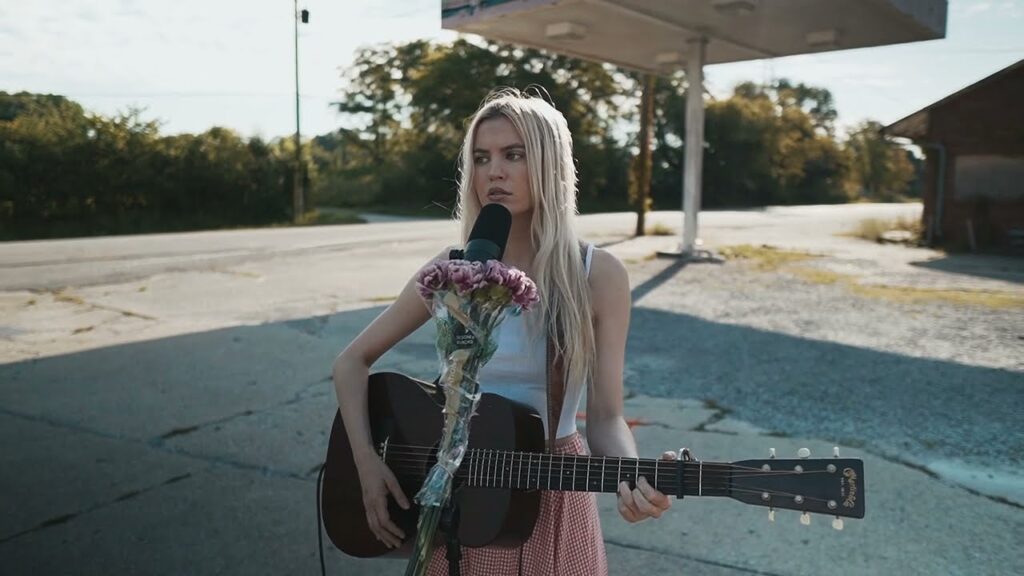
Zandi Holup’s “Gas Station Flowers” is a soft, aching prayer wrapped in twang and desperation. It’s about love so threadbare you’d take it however it shows up — even wilted, even cheap. That kind of honesty? That’s outlaw. The melody is gentle but deliberate, like she’s walking barefoot across gravel just to get the words out. Her voice cracks and bends in all the right places, and it’s not weakness — it’s weariness, the kind that comes from giving too much and getting too little. Lyrically, this one stings. She ain’t asking for roses or poetry — she just wants something. The song makes you feel how low the bar’s been set, and how high the stakes still are when love’s involved. The video pairs perfectly. Zandi floats through lonely Americana backdrops — gas stations, empty lots, faded neon. It’s as if she’s surrounded by the ghosts of her own expectations. And she still sings. That’s the outlaw spirit — finding beauty in the leftovers. Singing even when nobody’s listening.
Lukas Nelson – “Born Runnin’ Outta Time”

Lukas Nelson doesn’t just carry the family name — he carves his own path with a boot knife and a poet’s heart. And in “Born Runnin’ Outta Time,” he offers a road-weary anthem that feels like it was pulled straight from a motel notepad off Route 66. The song opens with a lazy, rolling groove — half desert rock, half country croon — and from the first line, you can feel the clock ticking. Lukas isn’t just singing about time slipping away; he’s living it. Every note carries a sense of urgency wrapped in a shrug, like a man who knows he can’t outrun fate but ain’t about to stop running either. Lyrically, it’s heavy with duality — hope and resignation, motion and meaninglessness. He sings about movement like it’s survival, and maybe it is. “Born runnin’ outta time” isn’t just a hook, it’s a mantra for anyone who’s ever felt like the world gave them a head start and a curse all at once. What really sells it, though, is Lukas’s delivery. There’s just enough scratch in his voice to remind you this life has mileage. He’s not mimicking his dad, but there’s that same sense of lived-in wisdom, like the truth comes easier with a little dust on it. The video takes that feeling and amplifies it with stark imagery — Lukas riding solo across the open plains, train tracks stretching endlessly behind him, neon signs glowing in the rearview. It’s all classic outlaw symbolism, but it never feels staged. It feels earned. The video complements the song perfectly: wide, lonely, and rolling toward something you’ll never quite reach. There’s no bravado here. No cowboy posturing. Just a man, a guitar, and the burden of knowing the clock doesn’t care if your song is finished. Final Verdict:“Born Runnin’ Outta Time” is modern outlaw philosophy — low on flash, high on truth. It’s for the wanderers, the road dogs, the ones who know you can’t beat the clock but you can damn sure leave a trail behind. Lukas Nelson proves once again he’s not just Willie’s kid. He’s a prophet in his own right — one with a full tank, a busted compass, and a hell of a story to tell. Let me know if you’d like to pair this with an image or need it formatted for WordPress.
The Marshall Tucker Band – “Can’t You See” – Live From The Garden State 1981
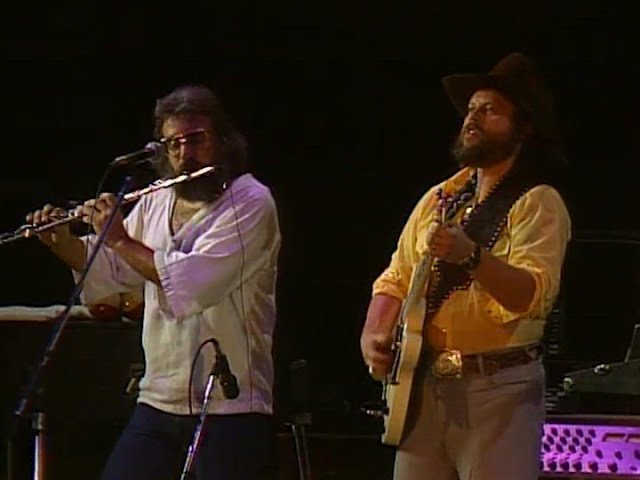
If you’ve ever cruised down a two-lane highway with heartbreak in the back seat and whiskey on your breath, you’ve lived this song. Marshall Tucker’s “Can’t You See” live from 1981 is pure Southern rock scripture. It’s laid-back but searing, full of heartache, and sharper than a barbed-wire goodbye. The way the flute opens the song? Iconic. It’s not delicate — it’s defiant. The video is grainy and glorious. You see the band in full flow: headbands, long hair, soulful solos. This isn’t a band performing for you — they’re living it with you. When Toy Caldwell sings that hook, it hits like a gut-punch from a friend who knows you’re hurting. You watch this and remember what live music used to feel like: raw, loud, and unapologetically Southern. This version doesn’t just keep the song alive — it gives it another damn heartbeat.
Red Clay Strays – “No One Else Like Me” – Live at The Ryman
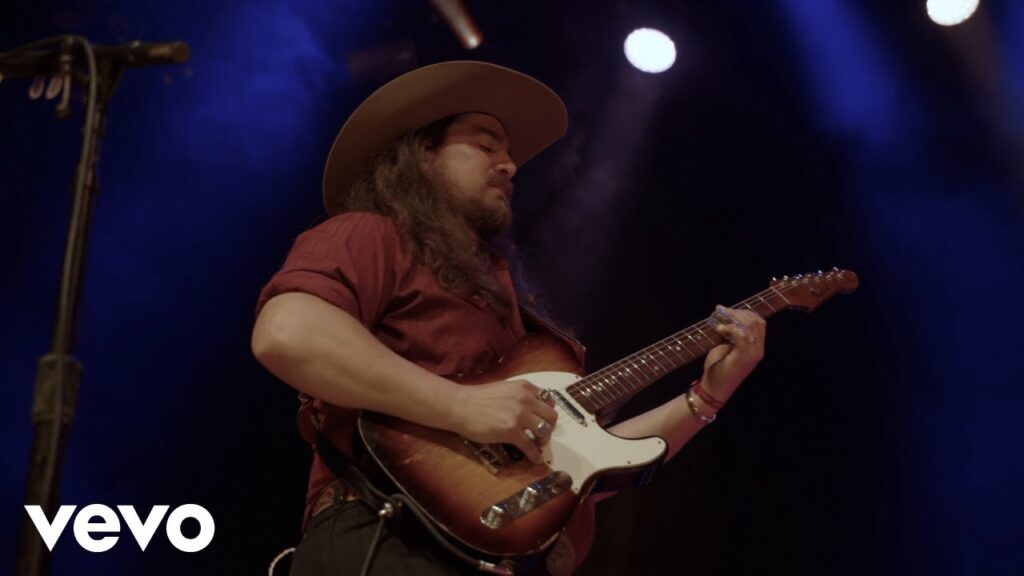
Live from the Ryman, Red Clay Strays tear through “No One Else Like Me” with a holy-roller intensity that turns the Mother Church of Country into a backwoods revival. This isn’t just a performance — it’s a possession. The song itself blends doo-wop soul with rockabilly twang, all dressed up in gospel grit. It’s a defiant anthem of individuality, crooned from the edge of a nervous breakdown. Lead singer Brandon Coleman’s voice isn’t just unique — it’s a damn event. A haunted yowl wrapped in velvet. The video captures it all: red stage lights, twitchy hands, sweat-soaked sincerity. You can see the weight of the lyrics in his eyes. His body’s still, but the voice is wailing, and the band drives it home like they’ve been possessed by Elvis, Hank, and the ghost of every barroom dreamer. The audience at the Ryman? Silent at first. Then floored. You can feel them coming alive with every beat.
Colter Wall – “I Never Go Around Mirrors” (Lefty Frizzell Cover)
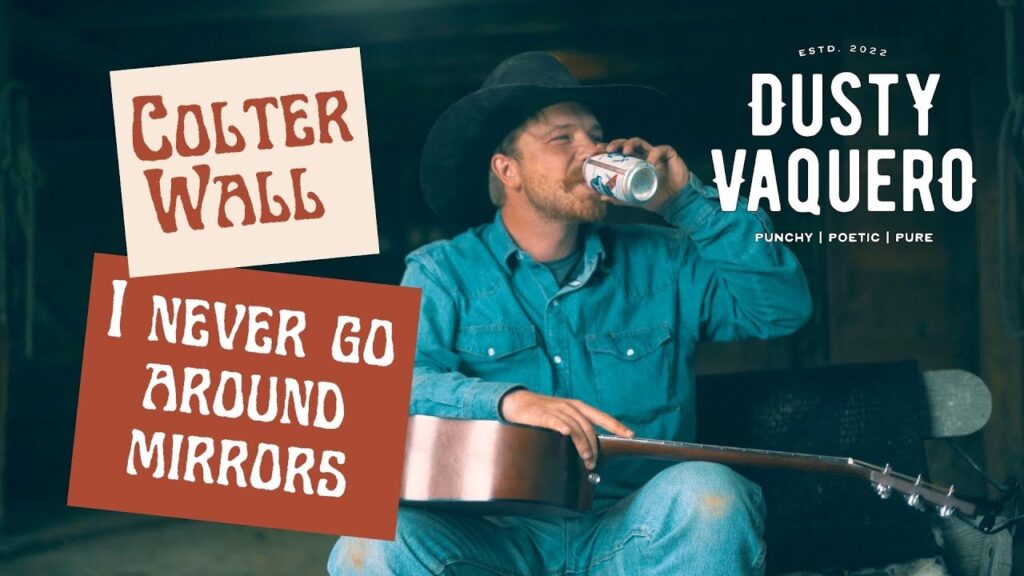
Colter Wall’s cover of “I Never Go Around Mirrors” is pure outlaw elegy. A man hiding from himself, from the truth, and from the reflection he no longer recognizes — that’s the kind of hurt Lefty Frizzell wrote for, and Colter delivers it like he’s got nothing left to lose. This live cut from Luckenbach feels sacred. No crowd noise. No theatrics. Just a voice so deep it sounds carved from timber, trembling slightly as it pours heartache into every verse. The video captures it all in a single shot — still, raw, and reverent. You don’t need edits when you’re telling the truth. Just a man, a guitar, and a moment of complete vulnerability. It’s slow. It’s sad. And it’s devastating. But that’s the magic. Colter lets it hurt. He lets the song breathe, stretch, and mourn the way country music was meant to. If you’ve ever poured a drink because looking in the mirror felt too much like judgment — this song is for you.
Tanner Usrey – “With You”
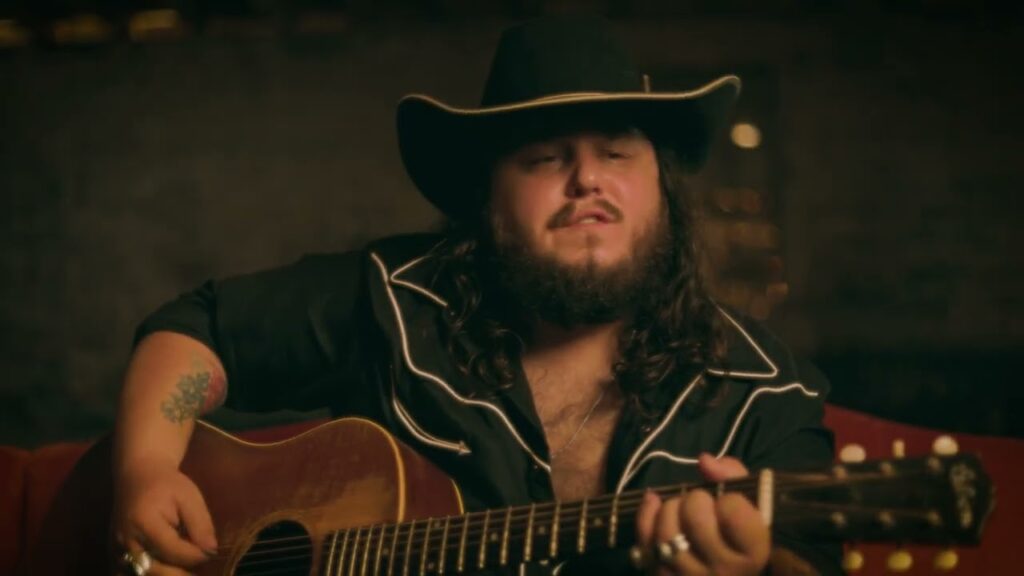
“With You” is a slow-burning love song that smolders like a cigarette in the dark. Tanner Usrey doesn’t rush a damn thing — and thank God for that. This bluesy confession feels like something scrawled on a motel notepad after a night spent tangled in memory. The studio session video is stripped-down, intimate — just Tanner, a mic, and enough soul to wreck a quiet evening. There’s no flash, no tricks. Just voice and heart. What makes this track outlaw isn’t grit — it’s grace. There’s vulnerability in the lyrics, and it doesn’t come off soft. It comes off true. Love in this world isn’t perfect. It’s heavy, it’s flawed, but when it hits? It stays. Usrey’s voice is pure gravel-road gospel. He doesn’t need to shout. He means it, and that’s all that matters.
Charley Crockett – “Dead Or Alive” (Woody Guthrie Cover)
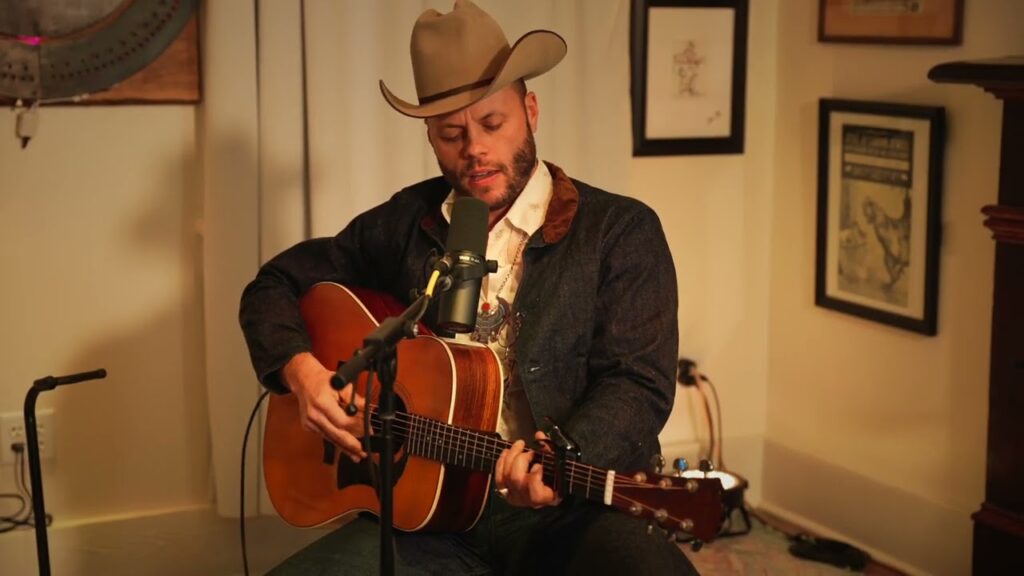
Charley Crockett has a knack for pulling the past into the present without losing a speck of its soul. His take on Woody Guthrie’s “Dead or Alive” proves that outlaw music ain’t just about attitude — it’s about preservation. The song is pure Western folklore — a man condemned to roam, hunted by fate and forces beyond his control. Charley doesn’t just sing it; he embodies it. His voice is dusty and smooth like a Texas highway after sundown, and his band brings the perfect backdrop of frontier twang and rolling rhythm. The video leans hard into sepia-toned nostalgia. It’s part cowboy poem, part ghost story. Wide desert shots, outlaw posturing, and Charley staring down the lens like he’s already read your obituary. This one’s for the real roots-heads. A song passed down, not reimagined — just respected. And Outlaw Circus salutes that kind of honesty.
Morgan Wade – “The Party Is Over”

Morgan Wade’s “The Party Is Over” is the kind of rock confession that scrapes your insides clean. It’s sober, sharp, and louder than a bottle smashing on a bathroom floor at 3AM. She’s not whispering apologies — she’s declaring victory over delusion. The song rides on crunchy guitars and a driving backbeat that feels more Seattle than Nashville, but Morgan’s voice — strained, emotional, real — brings it home. She sounds like someone who’s stared in the mirror too long and finally said, “I’m done.” The video walks a tightrope between grunge melancholy and cinematic clarity — foggy shots of her pacing, performing, and reliving it all. It’s beautifully disjointed, like the world hasn’t quite caught up with her sobriety. This ain’t a pity anthem. It’s a middle finger to the lies she used to live by. And if that’s not outlaw, I don’t know what is.
Grace Potter – “Medicine”
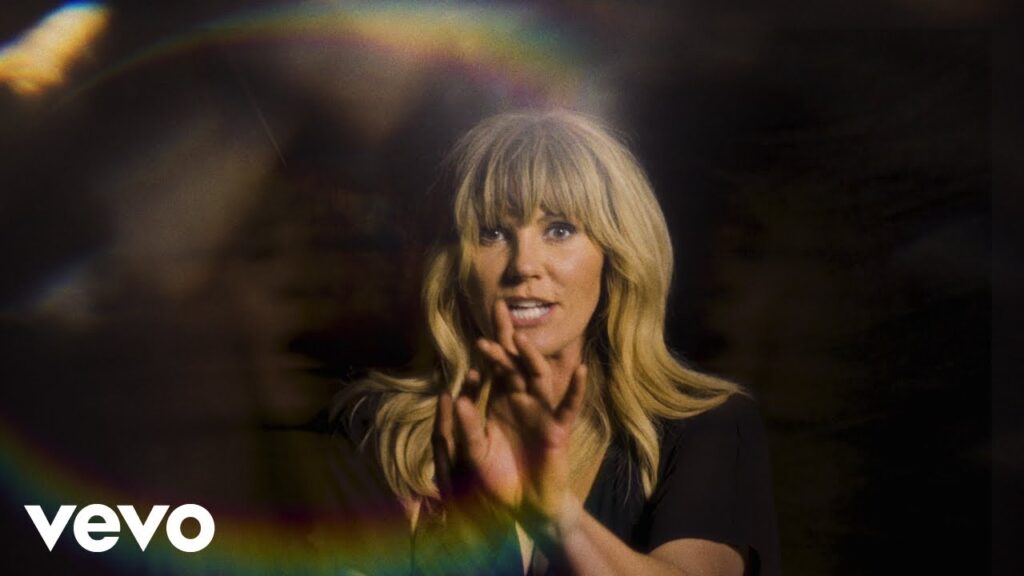
Grace Potter doesn’t just perform “Medicine” — she summons it like a storm. This ain’t country in the traditional sense, but it carries enough outlaw heat to melt every rhinestone in Nashville. With T Bone Burnett behind the wheel and Grace howling like a woman possessed, this is roots rock dipped in gasoline and struck with a match. The song itself is all lust, vengeance, and raw feminine fire. It drips with desire, but it’s not soft. It’s dangerous. The kind of song you’d hear blaring out of a bar jukebox right before someone gets slapped or kissed — maybe both. Live, it’s even more electric. That Kimmel performance? Grace rips across the stage like a preacher caught in a feedback loop. Hair flying, eyes wild, the whole band locked in behind her like a freight train trying to outrun damnation. Her voice doesn’t just hit notes — it tears through them. This song feels outlaw because it refuses to behave. There’s a pulse to it — gritty, seductive, and completely untamed. Grace isn’t asking for power — she’s taking it, one scream at a time.