
Bayker Blankinship – “My Truck, Weed, And A Guitar”
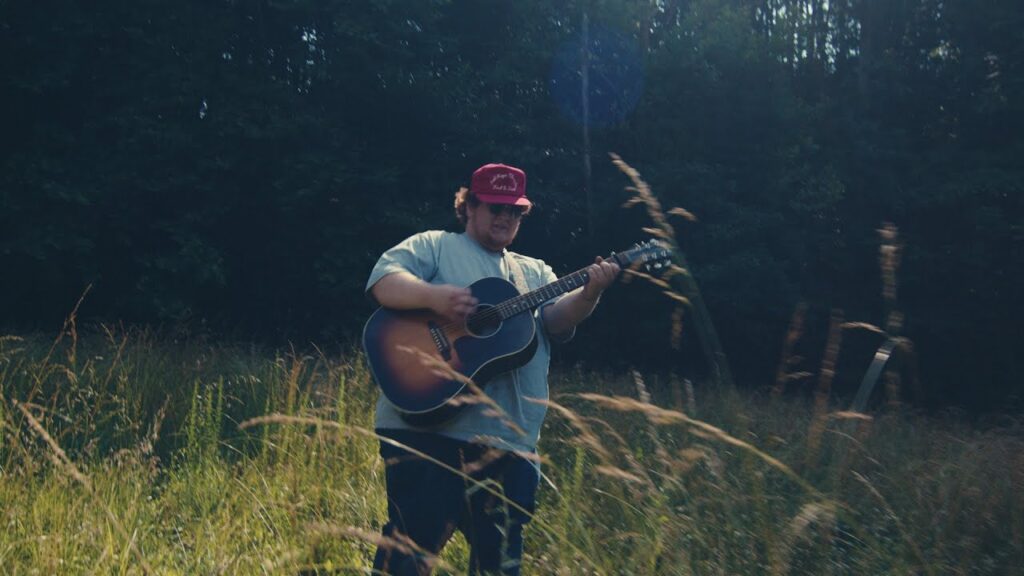
Bayker Blankenship’s “My Truck, Weed, and a Guitar” is a raw slice of outlaw country that doesn’t give a damn what your mama thinks — and that’s exactly the point. This is dirt-road doctrine, a front-seat confessional from a guy who clearly never asked for permission and sure as hell isn’t asking now. There’s no fluff here — just a stripped-down guitar and Blankenship’s voice, rough as gravel and twice as grounded. He isn’t chasing radio play or pandering to the mainstream. This is music for folks who’ve smoked through their heartbreak, found clarity behind the wheel, and figured out that sometimes a little weed and a cheap six-string is all the therapy you’re gonna get. Lyrically, it’s blunt (pun intended). He lays it out in plain English — he’s not rich, he’s not polished, but he’s real. The repetition of that title becomes a mantra, like he’s reminding himself that these simple pleasures are all he really needs. It’s the kind of outlaw track that feels personal but universal, especially for anyone who’s ever had to hit the backroads just to find some peace. The production is unpolished in the best possible way. You can almost hear the amp buzz and smell the garage it was recorded in. No auto-tune, no Nashville sheen — just a man, a mic, and the truth. There’s a beauty in that kind of honesty, especially when the rest of the world’s trying to fake perfection on every platform. The video stays true to the vibe — lo-fi visuals of backwoods living, smoke curling through the frame, and Bayker doing his thing. It feels more like a home movie than a music video, and that only adds to the authenticity. You’re not watching a performance; you’re eavesdropping on a lifestyle. Final Verdict: “My Truck, Weed, and a Guitar” might not be for the country club crowd, but for the outlaws, the misfits, and the ones still driving beat-up Chevys with a blunt in the ashtray — it’s a hymn. Bayker Blankenship isn’t reinventing country music. He’s just dragging it back through the dirt, where it belongs.
Bailey Zimmerman – “Comin’ In Cold”
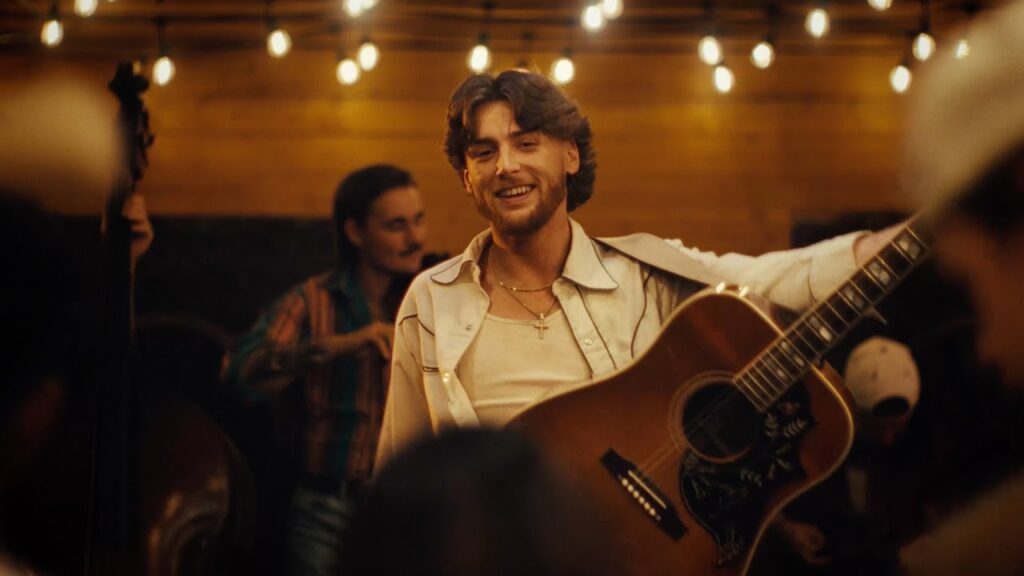
Bailey Zimmerman’s “Comin’ In Cold” doesn’t just knock on your emotional door — it kicks it wide open, covered in dust and regret. From the first few seconds, it’s clear this isn’t just another heartbreak anthem; it’s a barroom confessional laced with pain, grit, and a voice that’s been dragged through every dirt road memory you tried to forget. The track opens on a slow burn — reverb-heavy guitar and a beat that drips tension like a leaking whiskey tap. Zimmerman’s voice doesn’t just carry the song, it hauls it on its back. Raspy, raw, and painfully sincere, he sings like someone who’s still sitting in the ashes of a fire he swore he could control. “Comin’ In Cold” is a breakup song, but not the kind where you burn bridges — it’s the one where you realize you lit the match and then watched it burn because you didn’t know how to do anything else. He sings, “I was the one that left her cryin’ / Left her in the rearview / Wishin’ I could take it back” — and man, it hits. Hard. This is heartbreak without the hero complex. It’s someone finally owning the damage. The production doesn’t try to outshine the emotion. It’s clean and modern but still grounded in country roots — subtle steel guitar tucked under moody textures. The restraint is what sells it. It lets Zimmerman’s lyrics and delivery shine without all the usual Nashville polish. The music video pairs perfectly with the track: dim lighting, slow-motion heartache, a sense of emotional claustrophobia. It visually translates the song’s tension — that feeling of being trapped in your own mistakes, unable to breathe, let alone move on. Every frame feels like it’s haunted by something left unsaid. Final Verdict: “Comin’ In Cold” is Bailey Zimmerman at his most vulnerable and most potent. It’s modern outlaw country with emotional teeth — honest, aching, and unwilling to sugarcoat the cost of screwing it all up. If you’ve ever looked back and wished you’d been better, stronger, or just *there*, this one’s going to hit like a train. And you’ll probably let it.
Colt Ford and Caden McGuire – “Farmboy”
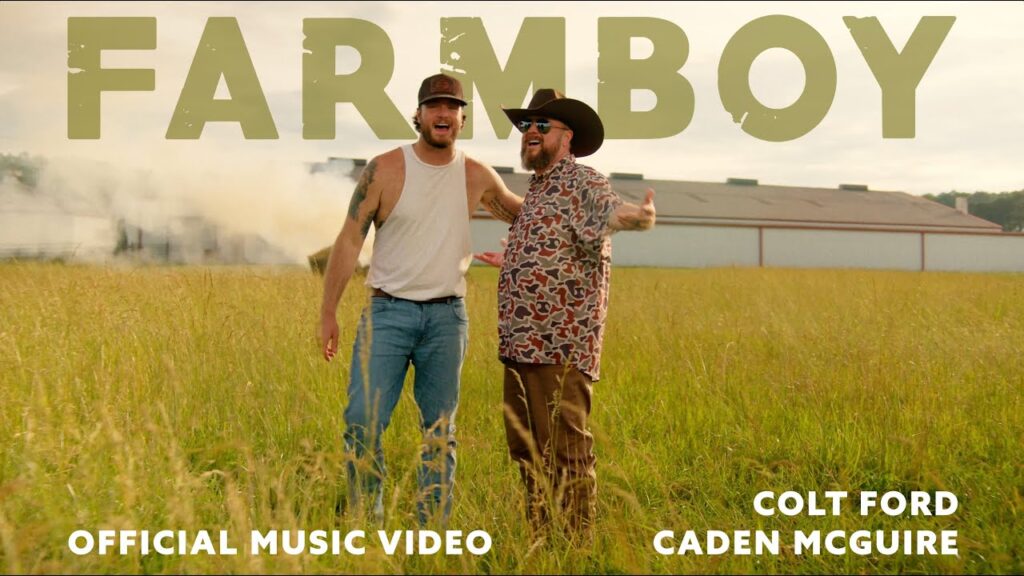
Colt Ford’s “Farmboy” is a mud-slingin’, bass-thumpin’ declaration of rural pride — loud, unapologetic, and packed with more country flavor than a tailgate full of barbecue. This ain’t about subtlety or radio polish — it’s Colt at his most rugged, shouting out to the dirt-road diehards who wear boots to weddings and crank up the subwoofers on their tractors. The beat is hard and heavy — hip-hop bones with country skin. Colt’s flow is loose and familiar, more spoken word than rap, and that’s always been his magic. He ain’t trying to be Eminem in camo; he’s just telling it like it is, country-boy style. Guitars chug under the surface like they’re pulling plows, and the bass hits like it’s got a Confederate tattoo and a chip on its shoulder. What really makes “Farmboy” land is the attitude. Colt’s not pretending this life is glamorous. He’s proud of the sweat, the callouses, the grit. “I was born in the sticks / Where the sun beats down and the work never quits.” That’s not a punchline — it’s gospel for folks who live that grind every damn day. The video is exactly what you’d expect — lifted trucks, field parties, bonfires, American flags, and folks gettin’ rowdy. It’s more a lifestyle statement than a narrative, and that’s fine. It feels authentic to Ford’s base, and they’ll eat it up with a side of pork rinds. This isn’t performative country — it’s a loud, proud slice of rural reality, dipped in grease and served with a smirk. Now, to be fair, “Farmboy” won’t convert any skeptics. If Colt’s outlaw-country-meets-country-rap formula doesn’t sit right with you, this track won’t change your mind. But for the boots-on-the-ground crowd — the ones who wear camo to church and keep Copenhagen in the console — this is the kind of anthem that reminds them they still have a voice in a genre that keeps forgetting its roots. Final Verdict: “Farmboy” is pure Colt Ford: raw, rowdy, and rooted deep in the backwoods. It’s not polished, it’s not subtle, and that’s exactly the point. For the outlaws who live with their hands dirty and their music loud, it’s a fist-pumpin’ reminder that the real ones never left — they’ve just been out in the fields, getting the job done.
Charlie Farley Ft Ryan Aubrey – Still The Same
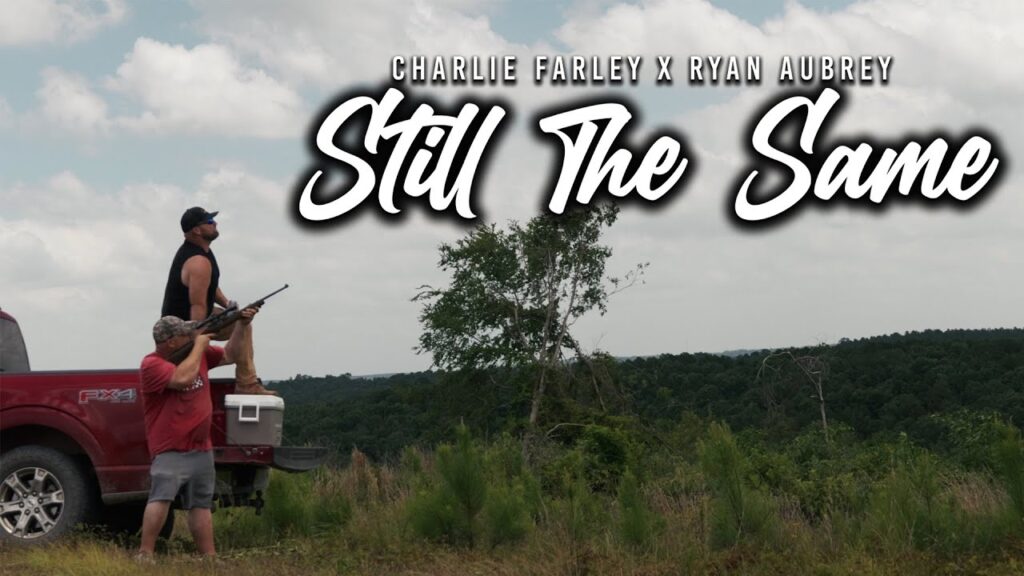
Charlie Farley’s “Still the Same” is a defiant nod to the ones who never changed to fit in — the folks who stayed true, kept their boots muddy, and didn’t trade their backbone for a bigger audience. It’s equal parts Southern pride and outlaw reflection, delivered with Farley’s signature blend of rap-influenced phrasing and rural grit. The track opens with acoustic guitar licks that feel like front porch storytelling — casual, warm, and familiar. But it’s not long before the bass drops and Farley leans into his flow. This isn’t country rap for TikTok trends — this is Southern-fried authenticity with a lyrical edge. He’s not flexing chains or fake pain. He’s laying out his life like a hand of worn cards, and he ain’t bluffing. Lyrically, “Still the Same” is about identity. Farley walks us through his small-town roots, hard-earned values, and the kind of loyalty that doesn’t make headlines but builds legacies. “Ain’t no sellin’ out / I ain’t signin’ up to play their game,” he spits, and you believe every syllable. This is a man who knows what he’s about — and that self-awareness carries more weight than any label contract. The production is tight but earthy. Beats thump, but the acoustic guitar remains front and center — grounding the track in its country core. It walks the line between outlaw country and Southern hip-hop, and it does it without tripping over clichés. That balance is rare, and Farley pulls it off because he’s not trying to impress anyone. He’s just telling his truth. Vocally, his delivery is rhythmic but unforced. There’s a calm authority in his voice — like a man who’s fought his fights and made peace with the scars. It’s not about volume; it’s about conviction. You hear it in the way he leans into certain lines, lets others fall quiet. There’s music in the restraint. The video adds muscle to the message — scenes of bonfires, dirt roads, family, and freedom. Farley’s surrounded by his people, not some rented crowd. It’s unfiltered and unfussy — just like the song. You’re watching a life being lived, not a lifestyle being marketed. Final Verdict: “Still the Same” is a rally cry for the rooted — a reminder that staying grounded doesn’t mean staying stagnant. Charlie Farley blends backwoods bars with country heart and walks away with something rare: a song that sounds like home for the ones who’ve never left. In a world of reinvention and reinvention fatigue, this is a battle hymn for sticking to your damn guns.
Muscadine Bloodline – “Meant To Be Friends”
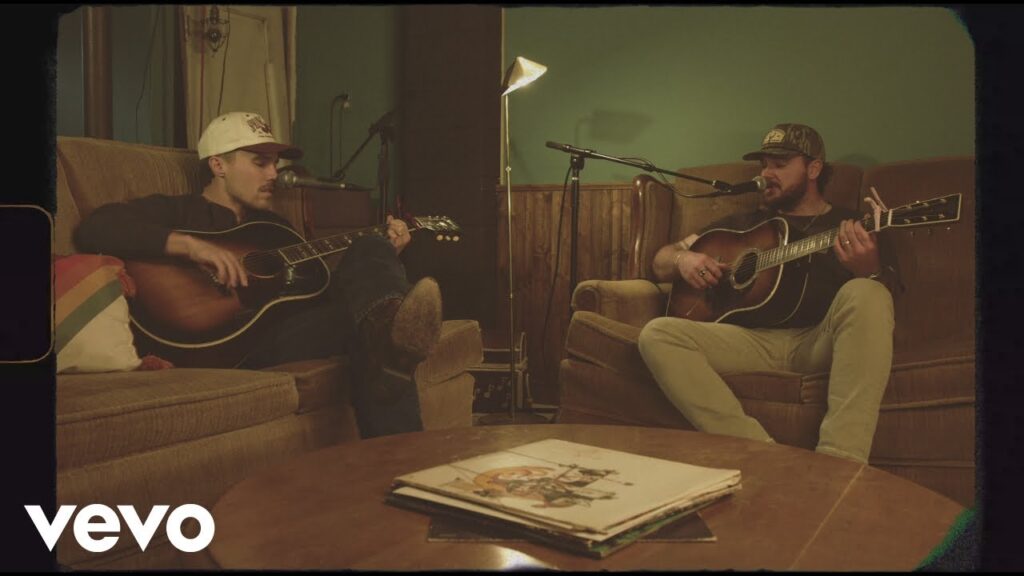
“Meant to Be Friends” might be the most grown-up thing Muscadine Bloodline has ever written — and I mean that in the best damn way. It’s not about wild nights or burning bridges. It’s about something quieter, sadder, and more familiar: letting go of someone with love still in your chest. Right from the jump, the tone’s set with soft guitar picking and a pedal steel that floats like a ghost through an empty room. There’s no swagger here. Just honesty. And that’s what makes it hit so hard. It’s a break-up song, sure — but not the kind that gets drunk and calls your ex. It’s the kind that folds the shirt they left behind and sets it gently on the porch. The lyrics are sharp as ever. “We were never lovers / but we weren’t just friends / Some blurry little something / that came and went again.” That’s pure outlaw poetry. The kind of line you jot down at 2 a.m. and stare at for an hour. It’s not bitter — it’s reflective. Like they’re not mad it ended, just sad it never really started right. Vocally, Charlie and Gary do what they do best: blend like brothers, but each carrying their own weight. One voice sounds like it’s trying to be strong, the other like it already knows it’s lost. That push and pull is what gives the song its soul. It’s not just about what they’re saying — it’s how they’re feeling it in real time. The arrangement never overwhelms. It’s lean, letting every word breathe. Acoustic-driven, with soft drums and just enough steel to keep it country. There’s a maturity in how they let the song exist without dressing it up too much. They trust the feeling to carry it. The video is equally stripped-down — shots of old memories, empty chairs, and little moments that once meant everything. No big narrative, no overblown drama. Just two guys telling the truth in the simplest way possible. That simplicity? It’s exactly what makes it resonate. Final Verdict: “Meant to Be Friends” is a quiet storm. No fireworks, no fire and brimstone — just two voices sorting through the wreckage of a “what could’ve been.” It’s the kind of song you play when you’re not angry anymore — just tired and trying to move on. Muscadine Bloodline proves once again they’ve got range, soul, and more than enough heart to carry this genre forward.
Waylon Wyatt – “Old Habits”
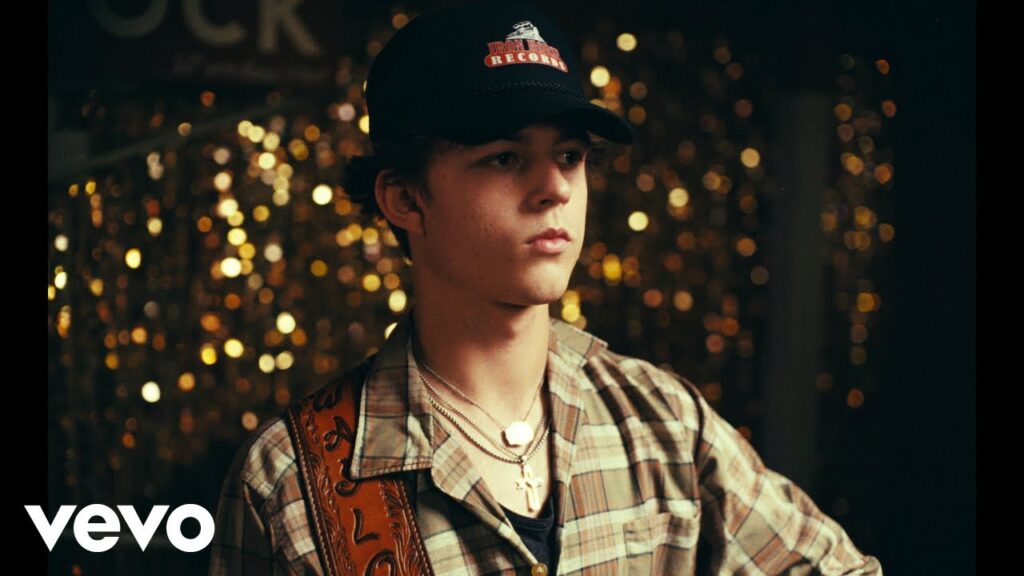
Waylon Wyatt kicks up a cloud of dust and damnation on “Old Habits,” a barroom confession that doubles as a back-alley blues burner. It’s country with a mean streak — part outlaw, part gospel, and all grit. From the moment the drums drop and that guitar snarls to life, you know this ain’t a redemption song. This is a man who’s been through hell and found a few reasons to hang around. The riff has a bluesy swagger, but the delivery? Pure honky-tonk self-awareness. The lyrics roll like spilled whiskey — messy, real, and a little dangerous. Wyatt’s not begging for forgiveness, he’s just laying it all out. Drinking, smoking, fighting the same old demons — he knows the drill, and he doesn’t pretend to be anything he’s not. There’s a brutal honesty in that. No pity. No excuses. His voice is pure Southern-fried gravel, smoked and seasoned with late nights and long drives. He rides the groove like he’s done this dance before — because he has. There’s pain in his tone, but also a kind of pride. You can’t fake this kind of wear and tear. Musically, “Old Habits” struts more than it stumbles. It’s tight, but with just enough looseness to feel alive — a cracked snare here, a wild lick there. The band feels like a crew of outlaws that could hold their own in a knife fight or a jam session. The video’s stripped-down and moody — shots of dive bars, dirt roads, and Waylon in his element, looking like he just buried something he’s not gonna talk about. The visual tone is rough-hewn and honest, which suits the song to a T. Final Verdict: “Old Habits” doesn’t ask for your understanding — it dares you to judge it. Waylon Wyatt delivers a dirty, honest, and damn good tune that rides the line between sin and salvation like a busted pickup with a half tank and nothing to lose. This is outlaw music the way it oughta be: raw, unrepentant, and real as hell.
Zach McPhee – “Tears That You’ll Never Find”
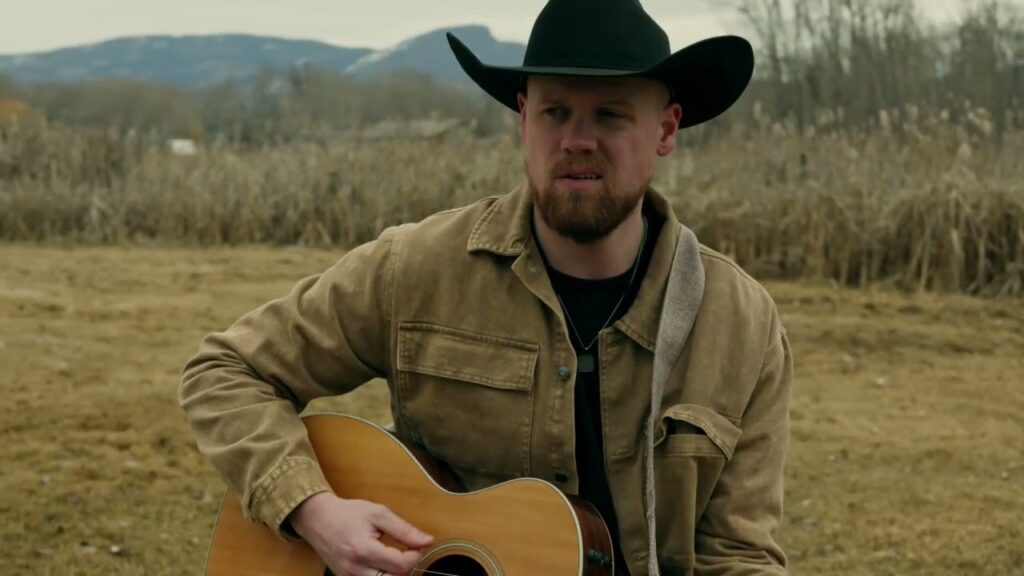
Zach McPhee delivers a masterclass in haunted restraint with “Tears That You’ll Never Find.” This one doesn’t knock on the door — it slips in through the cracks, quiet as regret, heavy as the kind of sorrow you don’t dare speak out loud. The track unfolds like a handwritten letter never sent — raw, reflective, and deeply personal. From the first acoustic pluck, it’s clear we’re not in radio-country territory. This is old-school heartbreak, dipped in minimalist production and drenched in honest-to-God pain. Lyrically, McPhee paints a picture of invisible grief — tears shed in silence, heartbreak never witnessed. It’s the kind of emotional honesty that feels like a risk in today’s polished country scene. There’s no blame, no vengeance — just a weary acceptance that the damage has already been done. It’s not just sad; it’s resolved sadness, which hits even harder. His voice — soft but worn — carries the weight of someone who’s held it together a little too long. There’s tremble in his phrasing, a deliberate fragility. He’s not performing for sympathy; he’s just telling the truth. Production-wise, it’s sparse, but with purpose. A gentle piano shadows the acoustic guitar, and subtle swells of strings echo like distant memories. It’s all carefully measured to give McPhee’s vocals center stage — and rightly so. This is a song where silence is just as important as sound. The video matches the tone — grainy, intimate, dimly lit. We see Zach mostly alone, surrounded by shadows and unspoken weight. There’s no need for narrative gimmicks. Just a man, a room, and the ache between the chords. Final Verdict: “Tears That You’ll Never Find” isn’t for everyone — and that’s the point. It’s for the bruised, the quiet, the ones who’ve learned how to cry without making a sound. Zach McPhee doesn’t chase the spotlight — he builds a space in the dark and sings for those still sitting there. Respect.
Lanie Gardner – “Takin’ The Slow Ride”
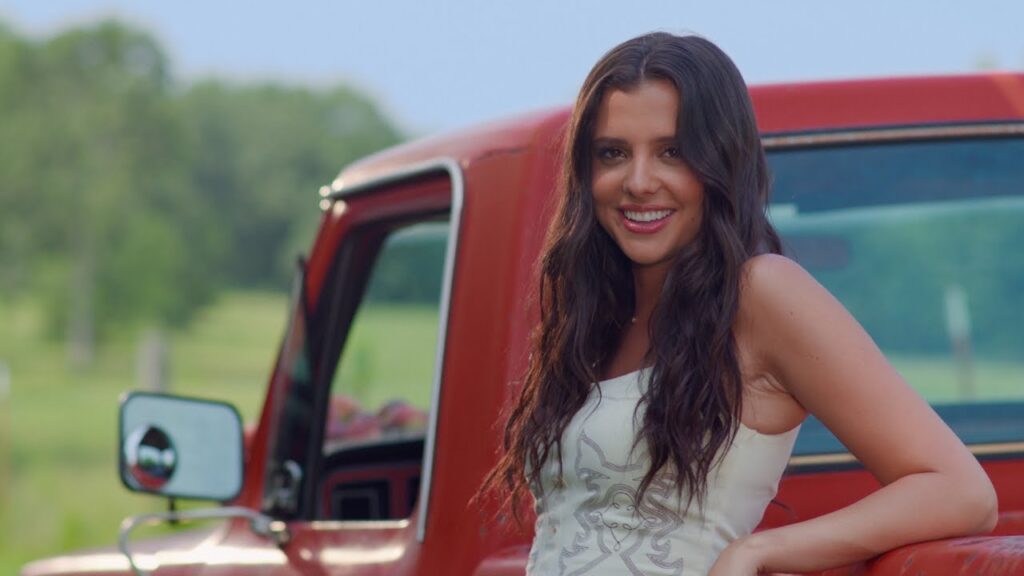
Lanie Gardner comes in like a whisper on the wind — but don’t be fooled. “Takin’ The Slow Ride” might sound gentle, but it carries the weight of someone who’s felt the dust settle after heartbreak and learned to breathe it in. This track rides that perfect middle lane between folk-country and dreamy Americana — think Kacey Musgraves on a back porch with a glass of sweet tea and a stare that sees through you. The arrangement is stripped but never empty: gentle guitar pickin’, a few brushstrokes of piano, and Lanie’s haunting vocal leading the way. Lyrically, it’s a meditation — not on escape, but slowing down. She’s not running from heartbreak or chasing some neon-splattered future; she’s sitting in the moment. There’s something quietly defiant in that. It’s not about forgetting the past. It’s about letting it breathe in the rearview while you cruise toward something softer, maybe even kinder. Her voice — delicate but anchored — is the kind that wraps around you without asking permission. There’s a subtle tension in how she phrases certain lines, like she’s still sorting through the hurt as she sings. It’s that vulnerability that sells the song. The video adds a cinematic layer — dusty roads, long horizons, soft sunlight on steel. It feels like a visual sigh. There’s no need for flash or dramatics — it’s all in the stillness. You’re not being shown a story, you’re being invited into a mood. Final Verdict: “Takin’ The Slow Ride” isn’t loud, but it’s damn powerful. In a genre that too often leans on tropes of trucks and tailgates, Lanie Gardner reminds us that restraint can hit just as hard. This one lingers long after the final chord — like a memory you’re not ready to let go of just yet.
Zach Top – “Good Times & Tan Lines”
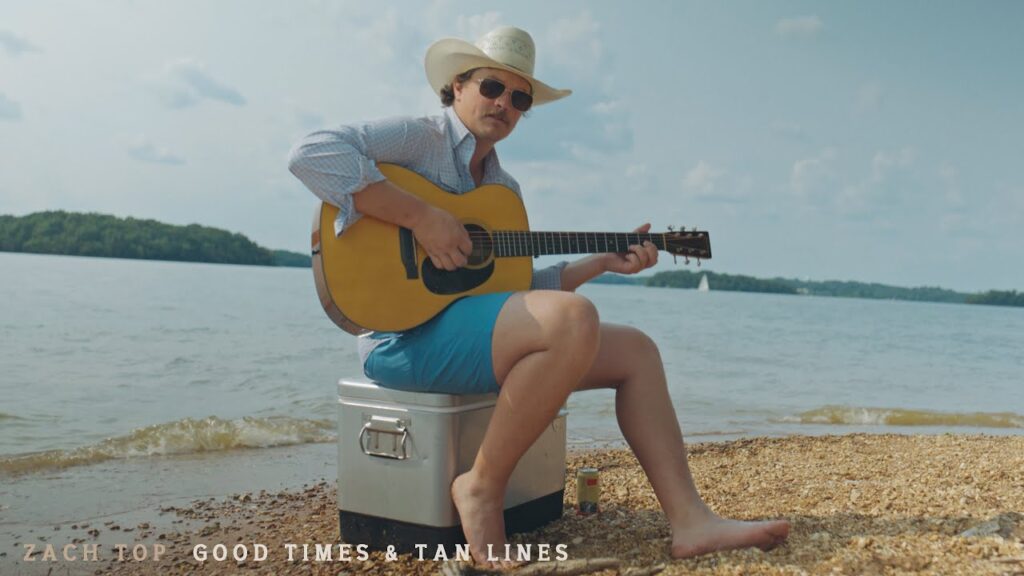
Zach Top doesn’t just flirt with throwback country — he dives headfirst into it, boots-first and sunburnt. “Good Times & Tan Lines” is a purebred slice of 1990s honky-tonk, soaked in neon nostalgia and beach beer buzz. Right out the gate, this track glides with a Gulf breeze — pedal steel slicing through a two-step rhythm like a dive bar jukebox set to Alan Jackson and George Strait back-to-back. It’s not trying to reinvent the wheel; it’s slapping a koozie on it and letting it roll straight to the shoreline. The lyrics are breezy but deliberate: tan lines, cold drinks, love on the rocks — it’s a well-worn theme, but Zach leans into it with a wink and zero irony. There’s an honesty in the delivery that sells it. He’s not mocking country tradition, he’s honoring it. With a voice that could’ve been cut from 1994 radio, Zach Top proves that smooth baritone swagger still goes a long damn way. Production-wise, it’s tighter than a fresh rope cinched to a hitching post. Every instrument sits just where it should — a crisp snare, that sunny steel guitar, and a walking bassline that keeps it all light on its boots. It’s the kind of mix you want blasting through a boat speaker, cold beer in hand, hat tipped low. The video doesn’t try to be artsy or overthought — it leans fully into the vibes. You’ve got beach hangs, dancing, sunsets, and just enough girl-next-door charm to keep it feeling real instead of commercial. It’s a postcard from a weekend you never wanted to end. Final Verdict: “Good Times & Tan Lines” ain’t gritty or raw, but not everything needs to come from a dirt road and a broken heart. Sometimes country just needs a damn good vibe — and Zach Top brings that with a smirk and a six-pack. This one’s made for your “FM After Midnight” playlist when the buzz is mellow and the sky’s just turning pink.
Aslhey McBryde – “Rattlesnake Preacher”
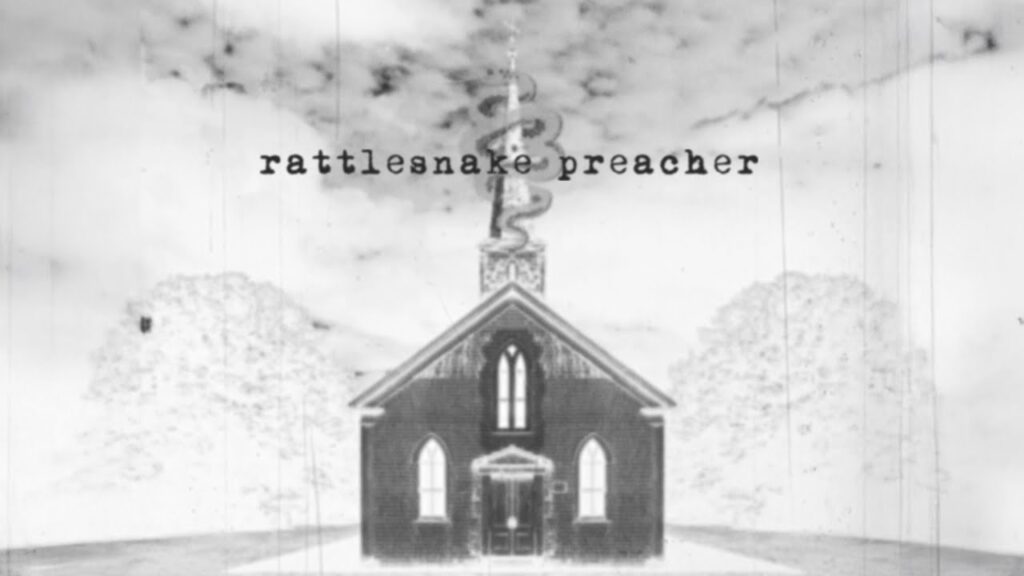
Ashley McBryde isn’t interested in being delicate — she’s interested in being honest. And “Rattlesnake Preacher” doesn’t just pull from the Southern gothic playbook — it rewrites it with a matchstick and gasoline. From the first guitar twang, you know this ain’t Sunday morning hymnal material. It’s something darker, something raw. The song slithers forward with a swampy stomp — a kind of Southern sermon soaked in sweat and spit. And McBryde? She’s not whispering the gospel. She’s growling it. Lyrically, “Rattlesnake Preacher” feels like a cautionary tale passed down over cheap whiskey and folding chairs behind the church. There’s a fire-and-brimstone intensity to every line — a preacher with “a Bible in one hand and a snake in the other,” and the kind of warning you only get once. This isn’t just storytelling — it’s a damn exorcism. McBryde delivers it with a gritty, possessed energy. Her voice is equal parts steel wool and soul. It’s the sound of someone who’s survived a few spiritual beatdowns and lived to tell the tale. And in this song, she’s not asking for salvation — she’s warning you about where not to look for it. The band leans into that mood hard — with slide guitar that hisses like a rattler and a beat that struts like it knows it’s wearing snakeskin boots. The whole production is tight but unhinged — polished just enough to get played loud, but with enough bite to make the Sunday school crowd uneasy. The video pushes the vibe even further. Filmed with a gritty cinematic sheen, it walks the line between revival tent and fever dream. We see McBryde in preacher mode, but it’s clear this isn’t about faith — it’s about power, control, and the cost of blind belief. Flash cuts of worshippers, snakes, and fire feel more like a Southern horror movie than a music video. And it works. It burns with intention. Final Verdict: “Rattlesnake Preacher” isn’t just a song — it’s a sermon for the disillusioned. Ashley McBryde steps fully into the outlaw storyteller role here, proving she doesn’t just sing country — she preaches it, with a raised eyebrow and a pocket full of venom. This one ain’t for the faint of heart — and that’s exactly the point. Let me know if you’d like this in HTML format for WordPress, or if you want to queue up the next review.