
Karley Scott Collins – “Cowboy Sh!t”

Karley Scott Collins brings swagger and sarcasm with “Cowboy Sh!t,” an unapologetically loud anthem that smirks at cowboy clichés while leaning hard into them. This track isn’t subtle—but that’s the point. It’s a fist-pump fueled by steel-toed boots and a wink that says she knows exactly what she’s doing. From the first twangy lick and gritty vocal growl, Collins sets the tone: no fluff, no apologies. She leans into the parody of the cowboy lifestyle—guns, dust, trucks—dripping with attitude and enough red-dirt energy to back it all up. The chorus is catchy and brash, but behind the bravado there’s a playful smirk, a knowing nod to the old tropes even as she rips into them. Production-wise, “Cowboy Sh!t” rides hard. The guitars are crunchy, the beat is lurching, and there’s a rawness that feels live—like she’s yelling this one straight into a barroom mic. It doesn’t try to gloss over what it is. Still, not everyone’s buying the concept. A recent community review panned it as “common country sound… nothing worth a listen” :contentReference[oaicite:1]{index=1}. That pushback comes from folks craving depth over flash—but let’s be honest: this track isn’t going for subtlety. It wears its satire on its sleeve and asks listeners to ride along. Final Verdict: “Cowboy Sh!t” is a wild ride—equal parts anthem and wink. Karley Scott Collins doesn’t apologize for the flash or the cowpoke clichés, but she does it with style, swagger, and just enough self-awareness to keep it interesting. If you’re in for irreverent fun wrapped in red-dirt swagger, saddle up. If you’re chasing introspection? Maybe choose a different trail.
David Morris – King Of The Heartland
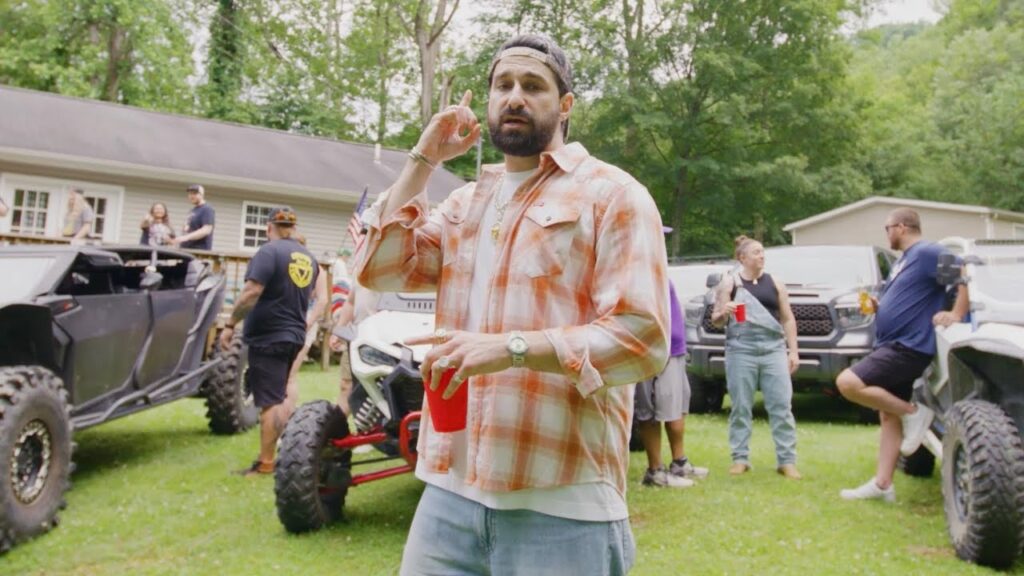
David Morris isn’t just riding the line between country and hip-hop — he’s turning it into his own backroad highway. “King of the Heartland” is a flex, sure, but not the city-slicker kind. It’s a pride anthem built on diesel smoke, football dreams, and the grit that comes from growing up where making it means never forgetting where you started. The track kicks off with a pounding beat and a smooth acoustic loop, a blend of backwoods swagger and streetwise bounce. Morris drops verses with confidence, each line a nod to hometown hustle and heartland hustle — where your name carries weight, even if it’s only in a 50-mile radius. His delivery feels natural, like a front porch storyteller who knows how to spit bars as well as swap them. But this ain’t just country rap for the sake of it. Morris brings sincerity underneath the bravado. “I was raised on love and hand-me-downs / Turned those hand-me-downs to a throne somehow.” It’s that blend of blue-collar resilience and dreamer’s ambition that gives the song its legs. He’s not trying to sound like Nashville. He’s sounding like *us* — the folks who built something out of what little we had. The video backs it up with crisp visuals of backroad cruising, high school football lights, and neighborhood pride — capturing the everyday royalty he’s singing about. No rented mansions. No bikini-clad extras. Just friends, family, and the kind of life where being known at the gas station means more than trending on TikTok. Production-wise, it’s slick but grounded. The beat slaps, but the acoustic elements keep it anchored in something real. Morris doesn’t overdo it — he lets the blend breathe. And that’s what sets this apart from the copycats: it’s not a gimmick. It’s a lifestyle. Final Verdict: “King of the Heartland” proves David Morris wears the crown of his corner of the world with pride — not because it was handed to him, but because he earned it. It’s outlaw in attitude and DIY in execution. A salute to the ones who stayed true and still made noise. Raise a toast, rev the engine, and turn it up.
Creed Fisher – “Wood Smoke”
Creed Fisher has built a reputation on grit, patriotism, and zero apologies — but with “Wood Smoke,” he leans into something quieter, more reflective. It’s not a surrender of his usual fire, just a moment where the smoke clears and something softer, more grounded, comes through. The track opens like a back porch confession — slow, steady, and wrapped in the kind of acoustic warmth that smells like pine and memory. A gentle guitar riff carries the weight of the song, but it’s Fisher’s unmistakable voice — rough-cut and soaked in truth — that anchors it. He’s not preaching this time, he’s reminiscing. Lyrically, “Wood Smoke” is a song about connection. Not to a person, but to place, to memory, and to something bigger than words. The wood smoke becomes a metaphor for home, for tradition, for roots that don’t need to shout to be strong. Lines like “It takes me back to granddaddy’s fire / Where the world made sense and the flames climbed higher” hit with honest nostalgia — the kind that earns its keep. The video supports that sentiment perfectly: old family footage, wide-open skies, and Creed seated with his guitar under a canopy of trees. No bells, no neon signs — just a man and the land that shaped him. It doesn’t feel like branding. It feels like belonging. Musically, the production is restrained and tasteful. A touch of steel guitar, a whisper of organ, maybe — but no flash. Just enough to fill the space without cluttering the message. That space matters. It lets the song breathe. Final Verdict: “Wood Smoke” shows another side of Creed Fisher — not a softer man, but one with layers beneath the hard edges. It’s a heartfelt outlaw hymn to place, legacy, and the simple things that stay with you long after the fire’s out. Crack a beer, light up some oak, and let this one simmer.
Dear MariBella And The Pigkickers – “Sailor’s Lament”

Dear MariBella and The Pigkickers might have the wildest name on this side of the honky tonk, but “Sailor’s Lament” proves they’ve also got soul, grit, and storytelling chops that run deeper than the ocean they’re singing about. This track isn’t your average Americana number — it’s a dusty sea shanty filtered through outlaw sensibilities and backroom bar acoustics. “Sailor’s Lament” opens slow and sorrowful, with acoustic picking that feels like waves lapping against a wooden hull. The lead vocals — raw, aching, and heavy with loss — tell a story soaked in longing and storm-tossed regret. It’s a song that feels ancient and brand-new all at once, like something you’d hear drifting through the mist on a foggy dockside night. Lyrically, it’s poetic without being pretentious. Lines like “The tide don’t care who you leave behind” and “Whiskey don’t warm like her hands did” anchor the song in pain and memory, but the delivery is never overwrought. There’s restraint in the emotion — a weary wisdom in the sorrow. You don’t cry about the storm when you’ve lived through a dozen. The production is stark in all the right ways. Sparse percussion, fiddle weeping like a widow, and background harmonies that feel more like echoes than voices. It leans into atmosphere, never rushing the story it wants to tell. It’s the sound of loneliness without self-pity — the kind that keeps moving forward because standing still hurts worse. The video — minimal and moody — matches the song’s tone with desaturated visuals, vintage textures, and just enough mystery to pull you into its world. It doesn’t try to explain everything, and that’s the point. Like any good lament, the meaning’s in the space between the verses. Final Verdict: “Sailor’s Lament” is ghostly, grounded, and gorgeously out of step with the mainstream. Dear MariBella and The Pigkickers have carved out their own sea-weathered corner of the outlaw world — and it’s worth getting lost in. Pour something dark, sit back, and let it take you under.
Trey Pendley – “Drunk As Any Rich Man”
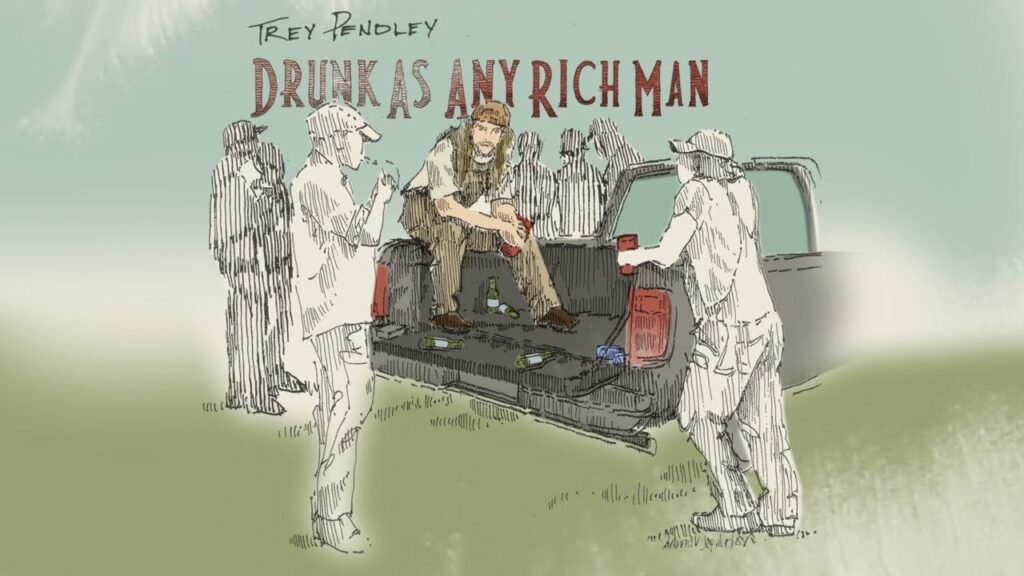
Trey Pendley might not be living in a mansion, but on “Drunk As Any Rich Man,” he reminds us that wealth ain’t always measured in dollars. This is honky-tonk philosophy at its finest — a dusty barstool anthem about finding freedom and joy in the simple, rowdy pleasures of life, no matter how broke you might be. The song rolls in with a grin and a swagger, the kind of twang-heavy electric guitar and upbeat shuffle that brings neon-lit dancefloors to life. Pendley’s voice fits right into the pocket — warm, slightly worn-in, and full of that classic small-town bar charm. He’s not trying to reinvent the genre — he’s reminding it of what made it good in the first place. Lyrically, it’s a celebration of outlaw contentment: “I ain’t got much, but I’m drunk as any rich man.” It’s about making peace with where you’re at — maybe even raising a toast to it. In a genre that’s sometimes guilty of glorifying the grind, this one flips it on its head. Pendley finds richness in camaraderie, cheap whiskey, and the kind of night you can’t buy but sure as hell can enjoy. The video leans fully into that vibe. Set in a packed country bar, it’s all boots tapping, beers clinking, and Pendley and his band pouring their hearts into a performance that feels both grounded and electric. There’s no fake polish here — just a snapshot of a good time being had by people who earned it the hard way. Final Verdict: “Drunk As Any Rich Man” is a toast to the everyman, the weekend warriors, and the ones finding joy on a budget. Trey Pendley doesn’t chase flash — he delivers heart, grit, and a good-time groove that feels like a Friday night done right. Pour another round and crank this one up.
Tori Darke – “My Boots Made Me Do It”
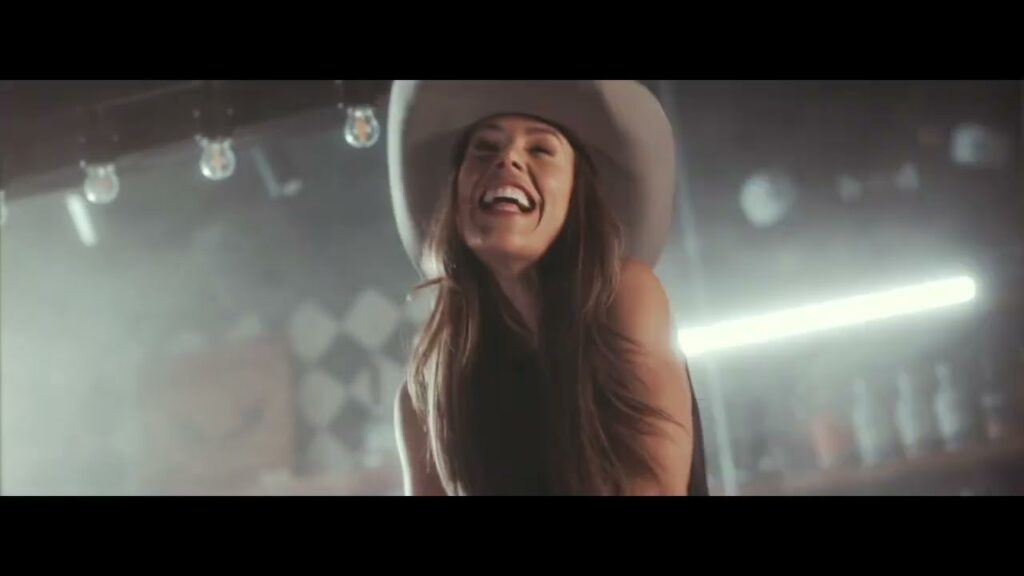
Tori Darke doesn’t ask for forgiveness — she stomps in unapologetically with “My Boots Made Me Do It,” a rowdy, high-octane firecracker of a track that blends honky-tonk grit with just enough bad-girl charm to earn her a permanent spot on the outlaw radar. This is country with a sly grin, a raised glass, and a don’t-mess-with-me two-step in steel-toed leather. From the jump, this one hits like a boot through a swinging saloon door. Fiddle blazing, twang-heavy guitars cutting through the beat like barbed wire — it’s pure dancehall energy with outlaw attitude. But it’s Darke’s vocal swagger that really drives the point home. She’s not sorry, not subtle, and definitely not pretending to be someone she ain’t. The lyrics ride that perfect line between defiant and playful: “Don’t blame me for gettin’ wild tonight / My boots made me do it.” It’s a nod to the classic rebel spirit — blaming the boots might be tongue-in-cheek, but the fire behind the words is very real. Darke’s delivery oozes personality, equal parts mischief and menace. This isn’t just about dancing — it’s about claiming space. The video leans hard into the Southern outlaw aesthetic — dusty dive bar lighting, whiskey shots, rowdy crowd, boots on the bar, and a confident-as-hell lead tearing through the chorus like she owns the damn place (because she does). There’s nothing overproduced here — just a live-wire performance that makes you wish you were on the floor when it was filmed. Final Verdict: “My Boots Made Me Do It” is rowdy, unapologetic, and fun as hell. Tori Darke nails that sweet spot where modern country meets outlaw edge — a little wild, a little whiskey-soaked, and 100% in control. If you’ve ever blamed your boots for your bad decisions, welcome home.
Molly Tuttle – “The Highway Knows”
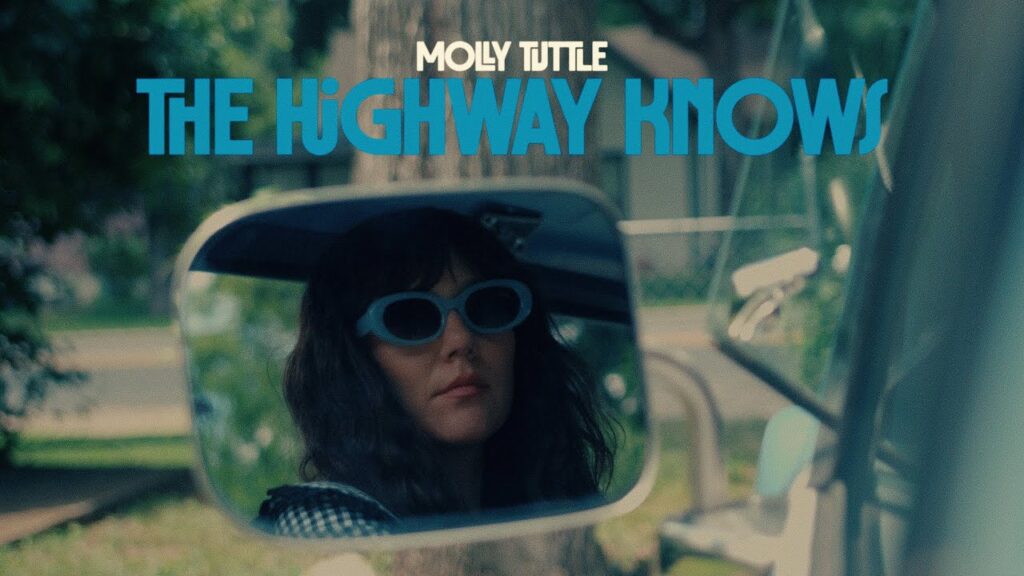
Molly Tuttle isn’t just walking the line between bluegrass and outlaw country — she’s blazing her own trail through the smoke. “The Highway Knows” is a haunting, rolling meditation on freedom, loneliness, and the kind of motion that doesn’t always bring peace. It’s music for those who can’t sit still, and maybe don’t know how to anymore. From the first pluck of strings, the track sets a tone — a restless rhythm that feels like wheels turning on a midnight drive. Tuttle’s voice is soft but certain, with just enough ache around the edges to let you know she’s lived what she’s singing. There’s something timeless in the way she delivers — not in a throwback sense, but in a soul-that’s-been-here-before kind of way. The lyrics feel like a confession whispered to the asphalt: “The highway knows what I don’t say / It sees the tears I wipe away.” It’s not about running from something — it’s about running because staying still never worked. Tuttle captures that particular kind of sadness only the road understands — the miles that stretch behind and the ones that haven’t healed you yet. The production is beautifully sparse. Acoustic guitars roll like tires over gravel. Fiddle and pedal steel sneak in like passing thoughts. Every note feels chosen, not layered for effect. This is roots music that’s not afraid to be quiet, and that makes it hit harder. The live video enhances the mood perfectly — stripped down and intimate, it gives the song room to breathe. Tuttle performs with eyes closed, lost in her own story, and it invites the viewer to do the same. The camera doesn’t try to do too much, which makes it all the more powerful. Final Verdict: “The Highway Knows” is a soft-spoken outlaw’s lullaby — not for sleep, but for wandering souls who need somewhere to put their ache. Molly Tuttle proves again that she doesn’t need flash to leave a mark. Sometimes all it takes is a voice, a guitar, and a road that never stops listening.
Cody Jinks – “The Others”

When Cody Jinks drops a song like “The Others,” you don’t just listen — you lean in. This one isn’t made for radio or riding trends. It’s a raw-boned hymn to the outsiders, the drifters, the half-wrecked hearts still beating in the back corners of this world. It’s outlaw country in its truest form — no polish, no pretense, just pain and purpose delivered with a steel gaze. “The Others” opens slow and deliberate, like a man who’s lived long enough to measure every word before he speaks. The instrumentation stays restrained — warm acoustic guitar, dusty slide, and just enough echo to feel like you’re sitting in a quiet room with Jinks himself. His voice? Still one of the best in the game — cracked in the right places, deep as a well, and full of quiet conviction. Lyrically, this is Cody doing what he does best: speaking for those who don’t get a verse in mainstream country. “We are the others / You won’t find us on the cover,” he sings, and it hits like truth. This song doesn’t romanticize the rough edges — it *honors* them. It’s a middle finger to the sanitized version of country that ignores the real grit. But it’s also a kind of embrace — for the ones who’ve been forgotten, left behind, or just never fit in. The accompanying video strips everything down even further — just Jinks, his guitar, and a camera. No distractions. The lighting is stark, the backdrop simple, and every visual choice keeps the focus on the words. It’s a performance, sure — but it feels more like a testimony. Final Verdict: “The Others” is vintage Jinks — defiant, heartfelt, and unflinchingly honest. It’s not just a song; it’s a quiet revolution against everything plastic in country music. It’s a reminder that the best stories aren’t always the loudest ones — sometimes, they’re the ones whispered by the folks just trying to make it through. If you’re one of the “others,” this one’s yours.
Miranda Lambert & Chris Stapleton – “A Song To Sing”
There’s a certain kind of magic that happens when two weathered voices meet in the middle of a song that *actually* says something. That’s what you get with Miranda Lambert and Chris Stapleton on “A Song to Sing” — a slow-burning ballad that doesn’t try to sell you anything but heart, soul, and the ache that comes with living too long in the margins. From the first few strums, the track wraps itself in restraint. No flash, no overproduction — just two of country’s rawest voices leaning on each other like barroom companions with too much history to explain. Lambert delivers with smoky softness, all bruised edges and backbone. Stapleton rumbles underneath her with that molasses-and-thunder tone that’s equal parts gravel and gospel. Lyrically, “A Song to Sing” is about music as survival — as salvation. It’s a nod to every broken soul who ever picked up a guitar or found themselves at the bottom of a bottle, just trying to keep the demons quiet. “I’ve always had a song to sing,” they confess, like it’s both a curse and a gift. And it is. The harmony between Miranda and Chris doesn’t feel rehearsed — it feels *lived in*. Like they’ve each carried the same melody through different storms and finally found each other on the same back porch. The space between the notes is where this one breathes. That’s where the real story lives. The music video strips everything down to its emotional bones — simple lighting, subtle tension, no distractions. Just two powerhouse artists letting the lyrics do the heavy lifting. There’s nothing theatrical about it — and that’s the point. This is outlaw country that doesn’t need costumes or cowboy clichés. It’s pure soul. Final Verdict: “A Song to Sing” is Miranda Lambert and Chris Stapleton at their most vulnerable, most powerful, and most honest. It doesn’t chase radio play or algorithm trends — it just *is*. A slow, aching testament to the power of melody in a world that doesn’t always make sense. Real music. Real voices. No bullshit.
Treaty Oak Revival – Name – Talco Tapes Verson
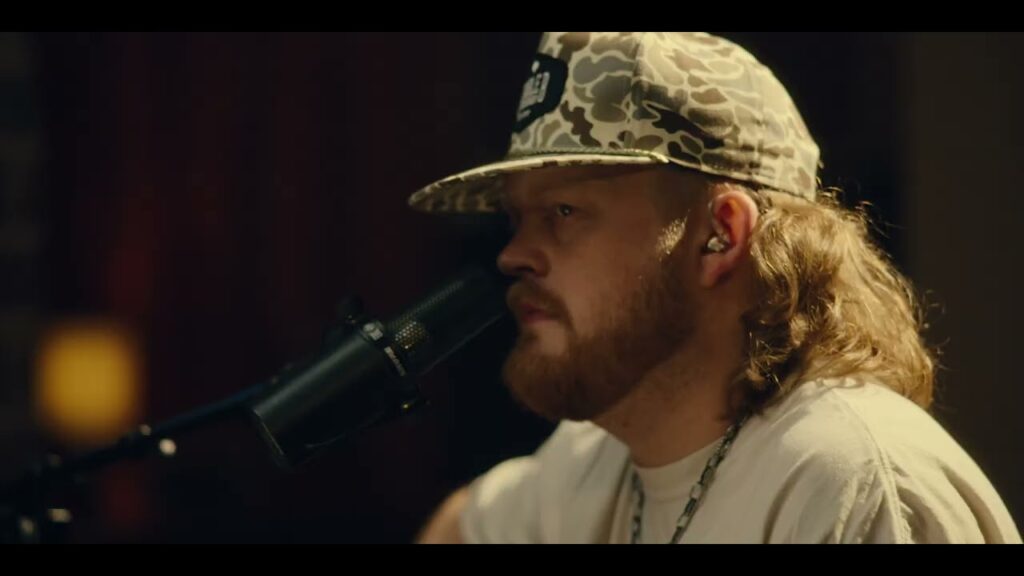
Now here’s something you don’t see every day — Treaty Oak Revival taking on a 90s alt-rock anthem and wrangling it into outlaw territory with surprising heart. Their Talco Tapes version of the Goo Goo Dolls’ “Name” doesn’t mock or modernize — it *roots* the track, giving it Texas dust and honky-tonk hurt without losing what made the original so damn powerful. What hits first is how stripped and earnest it feels. A few acoustic strums, a voice just ragged enough to sound like it’s been through some stuff, and suddenly you’re not thinking about 1995 anymore — you’re thinking about growing up in a small town, hiding parts of yourself, and hoping someone might really *see* you. Vocally, Treaty Oak Revival leans into vulnerability. It’s not over-sung, not dramatic — just raw. Lines like “I won’t tell them your name” land with a different kind of weight in this version. In the hands of this band, it doesn’t sound like an MTV-era breakup song — it sounds like a barstool confession, whispered just loud enough to be heard. Musically, they let the song breathe. Acoustic-driven, soft percussion, and the tiniest hint of slide guitar weaving in — enough to plant it firmly in outlaw country soil. It’s a respectful cover, but not a carbon copy. It’s got soul and sandpaper. The video — part of their ongoing *Talco Tapes* live session series — keeps it simple. Dim lighting, weathered walls, a few friends and instruments. No fluff, no edits — just a crew of outlaws channeling emotion through something unexpected. It’s intimate and human, and in that way, it may be even more revealing than the original. Final Verdict: Treaty Oak Revival covering the Goo Goo Dolls shouldn’t work — but it does. “Name” becomes a different beast in their hands: leaner, sadder, and more real. It’s a testament to what happens when a band respects the bones of a song but isn’t afraid to put their own bootprints on it. Call it outlaw, call it Americana — just don’t call it fake.