
Muscadine Bloodline – “Meant To Be Friends”

“Meant to Be Friends” might be the most grown-up thing Muscadine Bloodline has ever written — and I mean that in the best damn way. It’s not about wild nights or burning bridges. It’s about something quieter, sadder, and more familiar: letting go of someone with love still in your chest. Right from the jump, the tone’s set with soft guitar picking and a pedal steel that floats like a ghost through an empty room. There’s no swagger here. Just honesty. And that’s what makes it hit so hard. It’s a break-up song, sure — but not the kind that gets drunk and calls your ex. It’s the kind that folds the shirt they left behind and sets it gently on the porch. The lyrics are sharp as ever. “We were never lovers / but we weren’t just friends / Some blurry little something / that came and went again.” That’s pure outlaw poetry. The kind of line you jot down at 2 a.m. and stare at for an hour. It’s not bitter — it’s reflective. Like they’re not mad it ended, just sad it never really started right. Vocally, Charlie and Gary do what they do best: blend like brothers, but each carrying their own weight. One voice sounds like it’s trying to be strong, the other like it already knows it’s lost. That push and pull is what gives the song its soul. It’s not just about what they’re saying — it’s how they’re feeling it in real time. The arrangement never overwhelms. It’s lean, letting every word breathe. Acoustic-driven, with soft drums and just enough steel to keep it country. There’s a maturity in how they let the song exist without dressing it up too much. They trust the feeling to carry it. The video is equally stripped-down — shots of old memories, empty chairs, and little moments that once meant everything. No big narrative, no overblown drama. Just two guys telling the truth in the simplest way possible. That simplicity? It’s exactly what makes it resonate. Final Verdict: “Meant to Be Friends” is a quiet storm. No fireworks, no fire and brimstone — just two voices sorting through the wreckage of a “what could’ve been.” It’s the kind of song you play when you’re not angry anymore — just tired and trying to move on. Muscadine Bloodline proves once again they’ve got range, soul, and more than enough heart to carry this genre forward.
Lukas Nelson – “Born Runnin’ Outta Time”

Lukas Nelson doesn’t just carry the family name — he carves his own path with a boot knife and a poet’s heart. And in “Born Runnin’ Outta Time,” he offers a road-weary anthem that feels like it was pulled straight from a motel notepad off Route 66. The song opens with a lazy, rolling groove — half desert rock, half country croon — and from the first line, you can feel the clock ticking. Lukas isn’t just singing about time slipping away; he’s living it. Every note carries a sense of urgency wrapped in a shrug, like a man who knows he can’t outrun fate but ain’t about to stop running either. Lyrically, it’s heavy with duality — hope and resignation, motion and meaninglessness. He sings about movement like it’s survival, and maybe it is. “Born runnin’ outta time” isn’t just a hook, it’s a mantra for anyone who’s ever felt like the world gave them a head start and a curse all at once. What really sells it, though, is Lukas’s delivery. There’s just enough scratch in his voice to remind you this life has mileage. He’s not mimicking his dad, but there’s that same sense of lived-in wisdom, like the truth comes easier with a little dust on it. The video takes that feeling and amplifies it with stark imagery — Lukas riding solo across the open plains, train tracks stretching endlessly behind him, neon signs glowing in the rearview. It’s all classic outlaw symbolism, but it never feels staged. It feels earned. The video complements the song perfectly: wide, lonely, and rolling toward something you’ll never quite reach. There’s no bravado here. No cowboy posturing. Just a man, a guitar, and the burden of knowing the clock doesn’t care if your song is finished. Final Verdict:“Born Runnin’ Outta Time” is modern outlaw philosophy — low on flash, high on truth. It’s for the wanderers, the road dogs, the ones who know you can’t beat the clock but you can damn sure leave a trail behind. Lukas Nelson proves once again he’s not just Willie’s kid. He’s a prophet in his own right — one with a full tank, a busted compass, and a hell of a story to tell. Let me know if you’d like to pair this with an image or need it formatted for WordPress.
Lainey Wilson – “Somewhere Over Laredo”
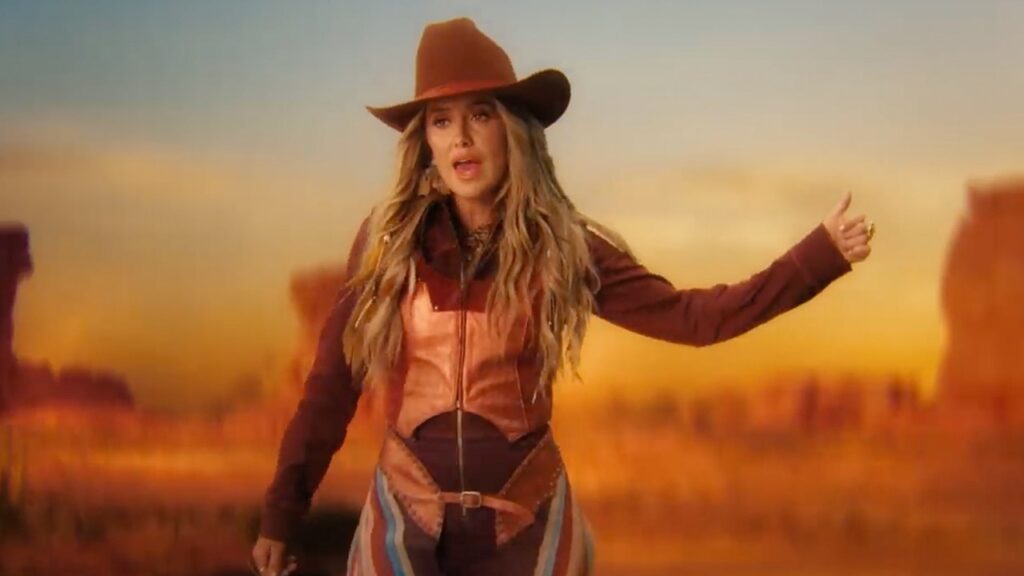
Lainey Wilson doesn’t just sing a song — she embodies it. And with “Somewhere Over Laredo,” she steps into full-blown storyteller mode, spinning a Western tragedy that drips with dust, danger, and desire. It’s less a love song and more a goodbye letter scribbled in blood, wrapped in velvet harmony and soaked in outlaw sorrow. This track unfolds like a slow pan across a border town at dusk. The guitars are patient and full of space — twanging in just the right places without crowding the story. A soft snare shuffles underneath like distant hoofbeats, and a forlorn steel guitar weeps in the background like it’s trying to warn you about what’s coming. Lainey’s vocal is where it all lives. She doesn’t belt — she breathes this song out like a last confession. Her drawl is soft and measured, but it carries weight, every syllable dipped in regret and resignation. You can hear the character she’s singing as — a woman caught in something deep, doomed, and already written in the stars. Lyrically, it’s a damn short story disguised as a song. “He said he had to leave me for the money / Said he’d send for me after the job” — that’s all it takes to set the stakes. She’s left behind, watching her man ride off for something he thinks will fix everything. But there’s a shadow over it from the first verse, and by the time the song ends, you know that “somewhere over Laredo” ain’t where he found redemption — it’s where he disappeared. The chorus aches without begging. “Somewhere over Laredo, he’s lying in the sun / With a bullet in his back and a story left undone.” That’s pure outlaw country — poetry with dirt under its nails. Production-wise, the song keeps it sparse and tasteful. It gives Lainey’s voice room to paint the scene, and it never tries to overpower her. The atmosphere is the secret weapon — it doesn’t tell you how to feel. It just sets the stage and lets the story do the rest. “Somewhere Over Laredo” feels like something Willie might’ve sung in his prime, or a lost Emmylou Harris deep cut. It’s got classic bones with modern blood — a sad little masterpiece hiding in plain sight. This isn’t just a highlight on Whirlwind. It’s a masterclass in how to tell a heartbreaking story without screaming — just whispering it in the right direction.
The Wilder Blue – “Los Diablos Tejanos”
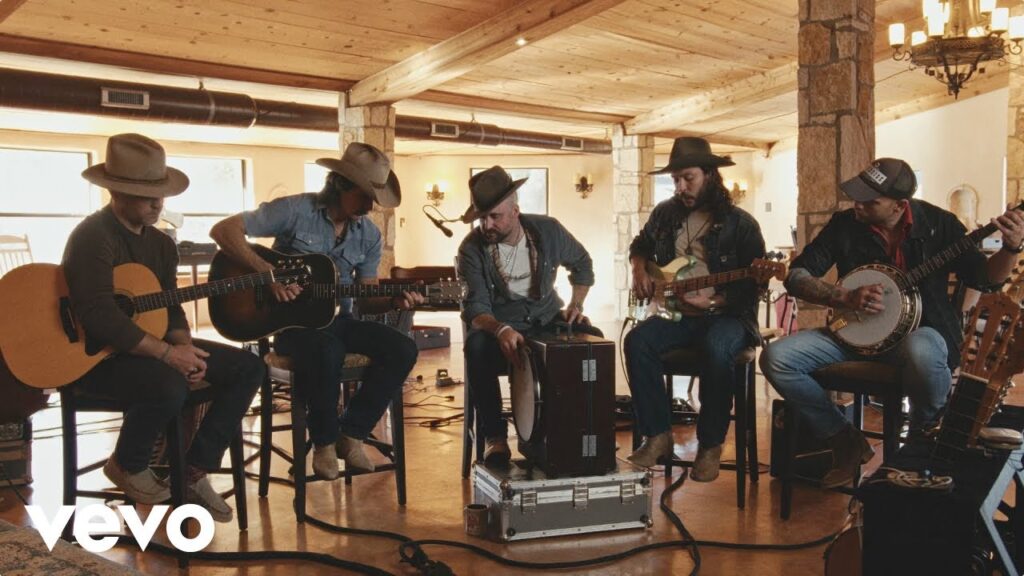
“Los Diablos Tejanos” feels like a Texas ghost story told with harmonies and heat. The Wilder Blue — a band already known for their sharp storytelling and vocal tightness — take a turn toward myth and menace on this track, spinning a tale that’s equal parts outlaw folklore and desert hymn. Right from the start, the vibe is dusty and cinematic. There’s a slow-roll groove to the instrumentation — not quite mariachi, not quite country rock, but something sunburnt and wild in between. A reverb-soaked electric guitar snakes its way through the verses like a rattler in the dirt, and the percussion’s got just enough shuffle to feel like the sound of boots kicking up trouble. Then the vocals hit — layered, haunted, and beautifully delivered. The Wilder Blue are a harmony band, and this track proves why that matters. When they sing “Here come the Tejano devils, ridin’ low across the flame,” it sends a chill up the spine. You don’t just hear the story — you see it. The lyrics paint a picture of a gang of devil-masked outlaws tearing across the Texas landscape, raising hell and disappearing into legend. But like any good outlaw tale, there’s subtext. These devils aren’t just literal — they’re metaphors for fear, rebellion, and what happens when good men get pushed too far. There’s a sense of both reverence and warning in every line. Musically, the band stays tight and restrained. No flash, no overdrive — just steady, thoughtful playing that lets the words and atmosphere carry the load. The bridge drops into a minor-key lull before the final chorus explodes with layered vocals and a hard strum that feels like a showdown at sunset. This song feels like it belongs on vinyl. It’s cinematic in scope but grounded in grit — the kind of track that plays while the credits roll on a Western you didn’t expect to end the way it did. And while the concept may be a little off the beaten path, make no mistake: this is still outlaw country at heart. It’s about standing outside the law, the town, the system — and becoming something that can’t be forgotten. “Los Diablos Tejanos” isn’t a radio single. It’s a campfire legend. A borderland lullaby with spurs on its heels and stories in its smoke.
Jamey Johnson – “Someday When I’m Old”
When Jamey Johnson sings about growing old, you stop what you’re doing and listen. “Someday When I’m Old” isn’t just a song about time — it’s a meditation on what’s left behind. It’s the kind of track that creeps up on you like age itself: slow, quiet, and full of truths you weren’t ready to hear until they already came true. It opens like the wind blowing through a screen door. Sparse acoustic guitar, soft steel behind it like a shadow, and then that voice — deep, cracked, half smoke and half sermon. Johnson doesn’t rush. He’s not trying to sell you anything. He’s just telling it the way only someone who’s lived through it can. The lyrics are simple, but they carry more weight than most ten-dollar words ever could. “I won’t care how fast my truck was / I’ll just hope it still starts” — that line alone says more about growing older than most whole albums. It’s not just about mortality. It’s about perspective. About watching the wildness of youth fade into something quieter, and maybe a little more meaningful. The production is classic Johnson — organic, unvarnished, real. No polished studio sheen, no digital tricks. Just wood, wire, and soul. It sounds like it was recorded in a single take, in a room where everyone knew to keep their damn mouths shut and let the man sing. There’s a warmth to it, though. This ain’t a sad song. It’s not bitter. It’s grateful, even when it aches. Johnson sings like a man who’s seen what matters get stripped away — and found peace in what remains. That’s the outlaw ethos at its most refined: not raising hell, but surviving it, and maybe even growing from it. The chorus doesn’t soar — it settles. And that’s perfect. It doesn’t need to blow you away. It just needs to stay with you. And it will. “Someday When I’m Old” doesn’t just hit the ears — it hits the gut. It’s for the late nights when you realize you’ve got more memories than dreams. For the mornings when the hangover lasts longer than the party did. For the fathers, the sons, the friends who’ve walked away — and the ones who stayed. Jamey Johnson’s never been interested in trends. He’s been interested in truth. And this song is full of it — raw, unfiltered, and aging just right.
Pink Beard – “Mine, Lord Willing”
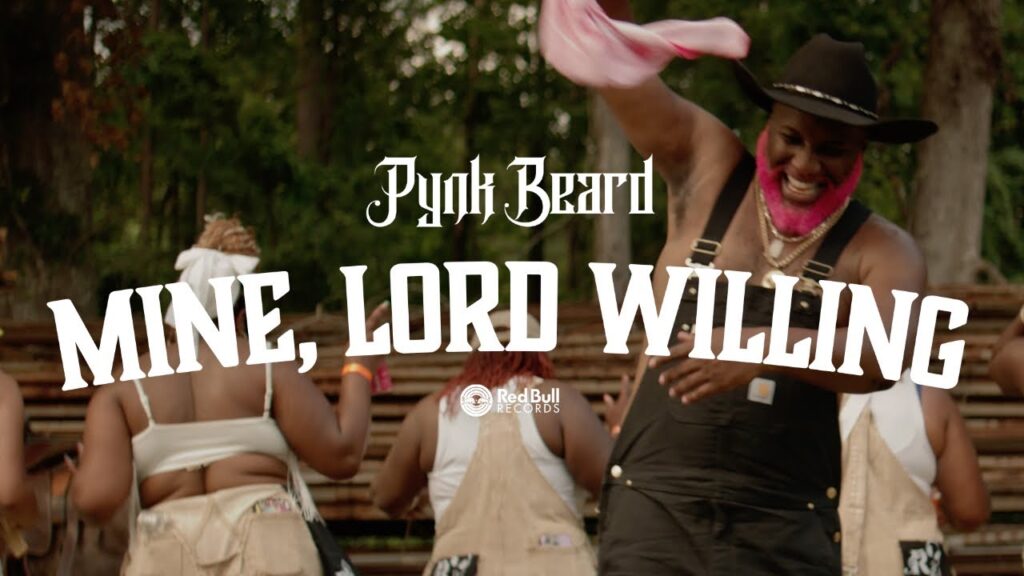
“Mine, Lord Willing” by Pynk Beard isn’t just a song — it’s a neon-lit daydream laced with gospel dust and whiskey echoes. Equal parts playful and reverent, it walks that razor-thin outlaw line between tongue-in-cheek and open-heart — and somehow manages to stick the landing without slipping into parody or preachin’. The track opens soft — almost deceptive — with a laid-back, acoustic shuffle that hints at old-time folk but quickly layers into something more modern and unpredictable. There’s a touch of ragtime in the rhythm, maybe a little Tom Waits-style mischief if you listen close, but it all holds together thanks to one thing: personality. And that’s Pynk Beard’s secret weapon — he’s got character. He doesn’t sound like he’s trying to be anyone else. He’s not cosplaying outlaw or doing karaoke cowboy. He’s telling a story in his own damn voice. Raspy but not rough. Worn, but not weary. It’s the kind of delivery that says: “I’ve seen things… and I’m still laughing.” Lyrically, this one’s deceptively sharp. On the surface, it’s a love song — or maybe a faith song — or maybe a drinking song dressed up in Sunday best. That’s the thing. The lines blur. “If she’s mine, Lord willing, then I’ll pray a little more / And if not, I’ll learn to dance with the devil by the door.” That’s a hell of a line. Not just clever — human. There’s a kind of spiritual ambiguity to the whole thing. It nods to grace, winks at sin, and invites both to sit at the table. And in the world of outlaw music, that’s holy ground. The instrumentation stays light, but not flimsy. Upright bass walks steady, the piano slides in with a few tasteful flourishes, and the guitar keeps things grounded. No frills, no filler. Just a clean, character-rich arrangement that lets the lyrics do the talking. And that chorus — it’s sticky. Not in a pop-radio way, but in a soul way. The kind that shows up later in your head when you’re alone on a porch with no one to impress but the moon. “Mine, Lord Willing” doesn’t sound like anything else on the air right now — and that’s its power. It’s old-fashioned without being dusty. Smart without being smug. And most importantly, it sounds like it came from someone who meant it. Pynk Beard may not be playing stadiums, but with songs like this, he’s carving out something even better: authenticity.
Dierks Bentley feat. John Anderson & Riley Green – “Broken Branches”
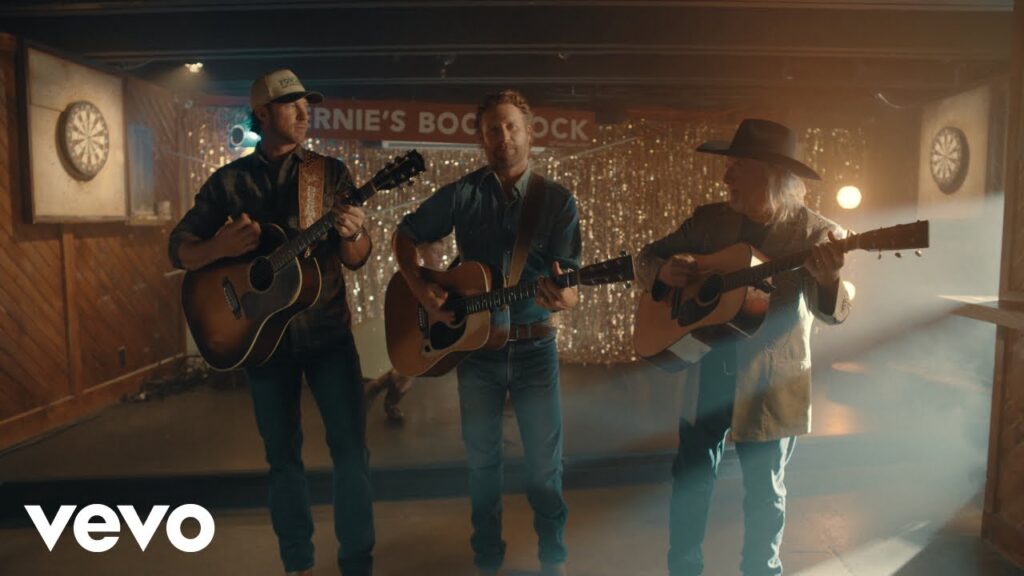
“Broken Branches” is more than a collaboration — it’s a generational torch pass, lit with sorrow and reverence. When you put Dierks Bentley, John Anderson, and Riley Green on a track together, you’re not just making a song — you’re stitching together a story that spans decades of country grit and grace. This one’s all roots, no gloss. From the first guitar strum, you feel it — the weight of time. The arrangement is sparse but full: acoustic guitar and steel weep together under a slow-moving rhythm that never tries to rush the pain. It’s the kind of track you play with the windows down on a cold morning, just to feel something real again. The title “Broken Branches” works on every level. It’s about family trees damaged by time, distance, and bad choices. It’s about the pieces we try to mend — and the ones we learn to live without. It’s personal, but the kind of personal that hits everybody square in the chest. Bentley handles the first verse with that smooth, modern-outlaw touch he’s perfected — a little weathered, a little clean. Anderson steps in like a damn ghost from the glory days, voice cracking in all the right ways, full of worn-out wisdom. And Riley Green brings it home with that youthful but grounded tone, tying the old and the new together like a backroad fence post lashed with baling wire. The chorus lands with quiet devastation:“Some names carved in the bark are fading / Some stories we never got to hear / Broken branches don’t grow back / But I still keep ‘em near.” That’s not songwriting — that’s truth. The kind you hear at funerals and family reunions. The kind you carry with you long after the music stops. Production stays respectful — no over-polish, no Nashville pop shine. Just space, breath, and emotion. The harmony sections are raw enough to feel human, and clean enough to honor the craftsmanship. You can hear the air in the room, and that’s exactly how it should be. This song isn’t made to chart. It’s made to last. To be played when you’re sitting in your truck outside the house you grew up in, wondering why things couldn’t stay simple. It’s made for the folks who’ve got pictures in shoeboxes and empty chairs at the table. “Broken Branches” is a slow-burning tribute to the things that made us — and the pieces we carry when they fall apart. And with these three voices on the mic, it’s as close to country gospel as modern outlaw music gets.
🎵 Adam Gabriel & The Cavaliers – “Still Standing”
There’s a lot of noise out there — especially in the independent outlaw world — but every now and then, a voice cuts through it like a bootheel through brush. That voice belongs to Adam Gabriel, and in “Still Standing,” he doesn’t just introduce himself — he declares himself. This isn’t just a song about survival. It’s a fist raised from the dirt, bloodied but proud. From the first few bars, you get the feeling this track’s gonna hit differently. The guitars don’t strut — they stomp. The percussion’s got that slow, heavy roll that feels like it’s dragging chains behind it. It’s southern rock swagger dipped in molasses — thick, deliberate, and full of fire. Gabriel’s voice is gravel-drenched and ragged in all the right ways. It’s not perfect — it’s honest. You can hear the miles in his throat. The road. The struggle. The failure. And more importantly — the refusal to let any of that define him. When he hits the chorus — “Still standing, still fighting, still got more to give” — it doesn’t sound like a line. It sounds like a damn oath. Lyrically, the song walks that fine line between vulnerability and defiance. He’s not pretending everything’s okay. He’s not pretending the past didn’t try to break him. But he’s also not letting it win. There’s power in that — especially in a genre where too many guys are either drowning in self-pity or chest-thumping without a cause. “Still Standing” feels like it comes from the middle — the place where real people live. The folks who’ve taken the hits, but keep showing up. The ones who know what it feels like to be down to their last dollar and last ounce of pride — and still lace up their boots and face the damn day. Production-wise, The Cavaliers give Gabriel a rock-solid foundation. There’s a unity in the sound — no one overplaying, no gloss layered on top. Just grit, soul, and a slow-building storm that leaves room for the words to land. This song might not top charts. Hell, it might not even hit the mainstream. But it will hit people — the right people. The ones who need to hear that they’re not the only ones still scraping by, still standing tall even when the wind won’t let up. Adam Gabriel isn’t just another outlaw voice trying to be heard. With this track, he’s proved he deserves to be listened to.
Shooter Jennings feat. Waylon Jennings – “Songbird”
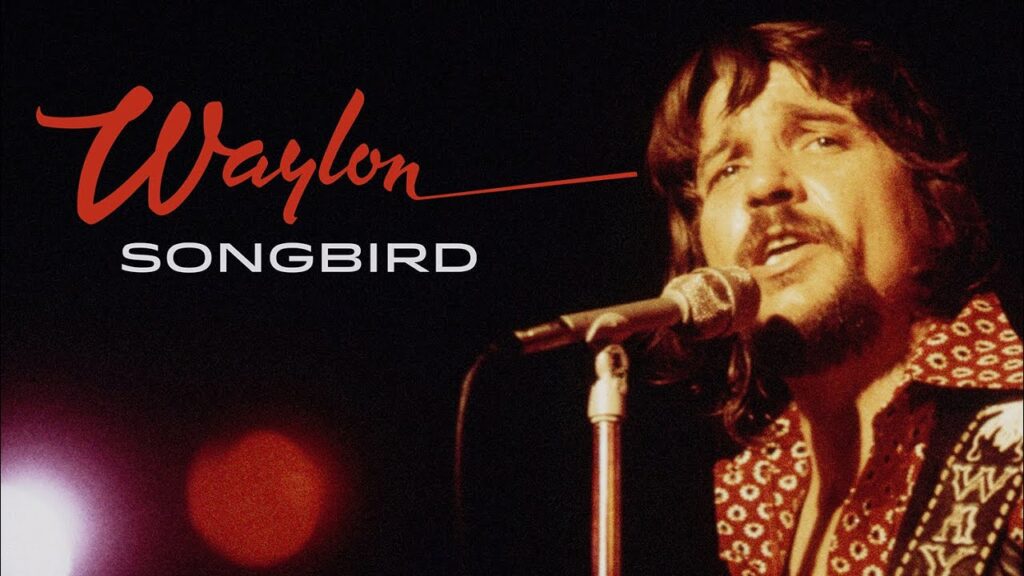
“Songbird” hits like a message from beyond the grave, and damn if it don’t make the hair stand up on your arms. Shooter Jennings teams up with his legendary father, Waylon, to breathe life into a track that’s less about music and more about legacy. It’s haunting, heartfelt, and built like a slow-burning fire in the corner of a dimly lit barroom. You hear that familiar grit in Waylon’s voice — the one that shaped generations of outlaws — and you can’t help but stop what you’re doing. He’s not just singing. He’s testifying. Shooter doesn’t try to outshine him. Instead, he weaves his own soul into the gaps, like a son finishing a story his father started long ago. Musically, “Songbird” moves slow, but not sleepy. It’s wrapped in pedal steel and piano, carried on a breeze of acoustic guitar that feels more Southern gospel than honky-tonk. There’s no rush. No flash. Just weight. You can almost smell the cigarette smoke and old wood in the studio. The real heart of the track lies in its tone. This isn’t a power duet or a flex. It’s Shooter sitting across from the ghost of his father, saying, “I remember.” And Waylon? He answers, not with thunder — but with calm, steady truth. “Songbird” sounds like it was always meant to exist. Like it was just waiting for the right moment, and the right bloodline, to bring it out of the ether. Lyrically, it’s tender — not the kind of thing either Jennings is most known for, but that’s what makes it special. “Fly away, songbird, into the night / Let your melody carry me through the fight” — that’s not outlaw bravado. That’s a man looking for peace. There’s no doubt about it: this is a song born of love, loss, and the kind of reverence you only carry for someone who shaped your soul. It’s raw in a way that doesn’t beg for attention. It just is. And that’s about as outlaw as it gets. “Songbird” doesn’t scream. It whispers. And in doing so, it echoes louder than most tracks ever could. This is blood, spirit, and southern grace all stitched into one damn fine song.
Hudson Westbrook – “Texas Forever”
“Texas Forever” lands like a dust storm rolling across the Lone Star State — unapologetically big, heartfelt, and sticky with the pride of roots. It’s the kind of title track meant to define a moment, and for Hudson Westbrook, it arrives as both a love letter to home and a reflection on life’s road. He grew up writing with friends before dipping into the major-label machine; this song captures that tension exactly en.wikipedia.org+9musicrow.com+9youtube.com+9. Instrumentally, the track feels warm and organic — mandolin, guitars, chills of fiddle — the kind of arrangement that honors red-dirt tradition while letting the voice lead. Westbrook’s voice has that raw, slightly nasal drawl — Texas through and through, but delivered with surprising emotional nuance . When he sings, “Well, the highway’s in my veins, but you’ll always have my heart,” he stakes his claim: he may ramble, but his roots — and love — aren’t going anywhere holler.country. Lyrically, there’s a genuine simplicity that cuts. He isn’t shaping lavish metaphors — he’s painting his world plainly. Lyrics like “Where we grew up, fell in love, is forever in my bones” aren’t just poetic: they feel like truths held in sweat and sunburns. It’s this grounded sincerity that gives the song its punch. The song was penned with Neil Medley and Andrew DeRoberts and produced by Lukas Scott, giving it both collaborative depth and sonic polish holler.countryfullaccessdetroit.com+3musicrow.com+3holler.country+3. It’s the kind of refined songwriting that’s still held together by clothespin grit and hometown pride. But what really makes “Texas Forever” resonate isn’t its production — it’s the feeling it leaves behind. It works on two levels: a personal vow to someone special, and an anthem to all the places and people who shaped him. For a debut title track, that’s committal — and brave. In a time when country songs spin between pop sheen and retro kitsch, this stands firm. It’s not flaunting trends — it’s honoring what matters. Whether this becomes a crossover radio hit or a folksy festival favorite, it speaks with the voice of someone who’s lived both the amber sunrise and the long highway nights. “Texas Forever” might not stop you mid-scroll, but it’ll hit when you listen through the night — the kind of song that finds its way into the memory well and stays there.